

| Dimensions | N/A |
|---|---|
| Marca | |
| Artista | |
| Atmosfera | |
| Museo d'arte | British Museum, London, Hakone Museum Japan, Metropolitan Museum of Art, New York |
| Occasione | |
| Dimensioni dell'opera | 25.7 cm × 37.9 cm |
| Difficoltà | |
| Numero pezzi | |
| Formato | |
| Movimenti artistici |
5 motivi per acquistare i nostri puzzle d'arte





 Hot
Hot
23,90€ – 25,00€Price range: 23,90€ through 25,00€
23,90€ – 25,00€Price range: 23,90€ through 25,00€
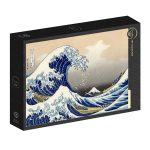
Discover the style of 19th-century Japanese art with the magnificent woodblock print by Japanese master Katsushika Hokusai in Onda Hokusai puzzle.
Puzzle Arte is pleased to offer you this art puzzle that pays homage to the great Japanese artist who revolutionized modern art.
Questo puzzle è momentaneamente esaurito.
Nel frattempo, ti suggeriamo alcuni puzzle d’arte che potrebbero piacerti!
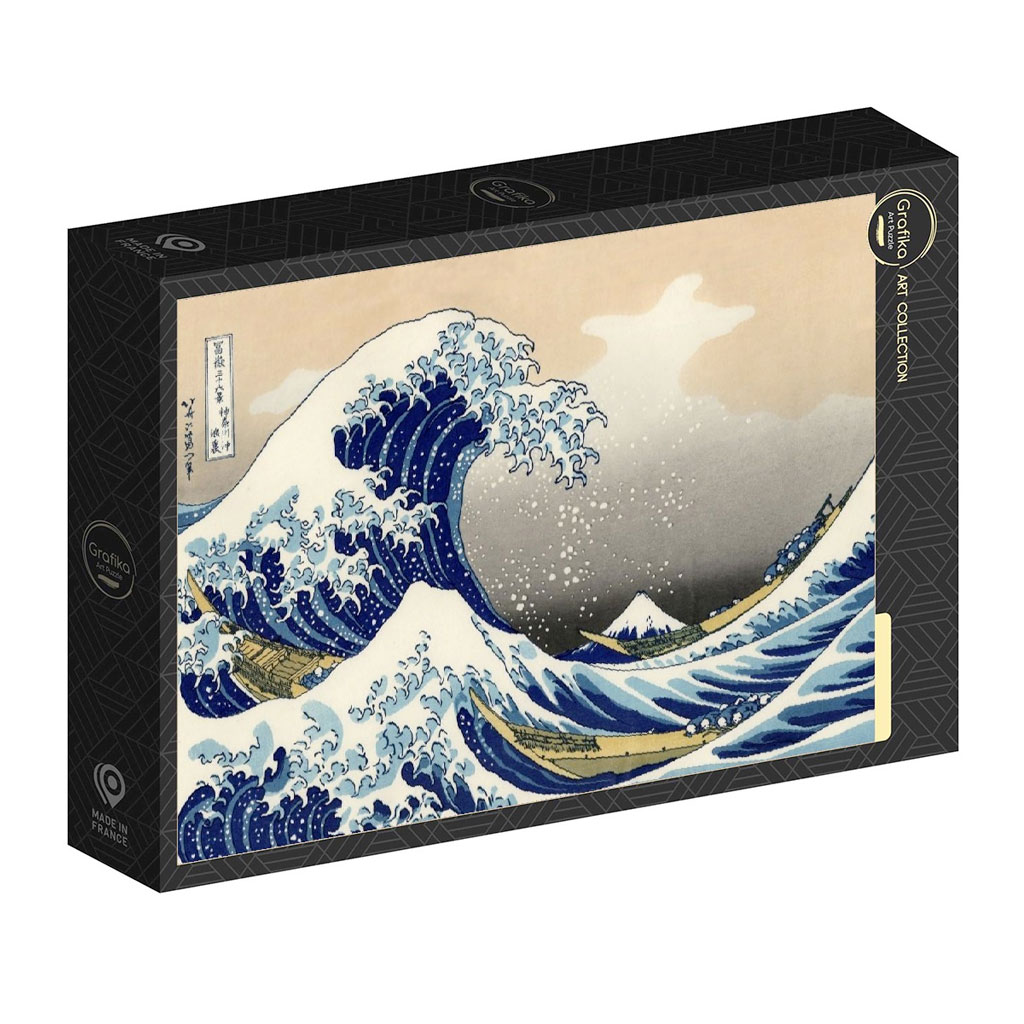
The Hokusai Puzzle Wave near the Coast of Kanagawa is a woodblock print from the series Thirty-six Views of Mount Fuji dated circa 1830–1832 by the Japanese artist Katsushika Hokusa i.
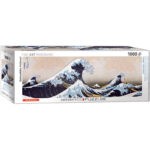
This is probably Hokusai’s most famous work and is often considered the most recognizable Japanese artwork in the world. That’s why we’ve chosen this stunning puzzle: the 1000-piece Hokusai Wave panoramic puzzle. Each high-quality piece, made of recycled paper, will allow you to discover Japanese art piece by piece.
The 500-piece Hokusai Wave puzzle by Japanese master Katsushika Hokusai from Grafika is a splendid example of a 19th-century oriental art and Japonism puzzle.
Puzzle Art, thanks to the new splendid edition of the Grafika brand, is pleased to offer you this art puzzle that pays homage to the great Japanese artist who revolutionized modern art.
The puzzle’s colors are very bright and the details are extremely accurate and refined. The puzzle pieces are sturdy and fit together perfectly.
 | Number of pieces 500 |  | Brand Grafika |
 | Puzzle dimensions (cm) 48 x 35 |  | Box dimensions (cm) 35 x 13 x 9 |
Elegant box
gift idea
Famous work of art
Japonism
500-piece puzzle
Standard grid
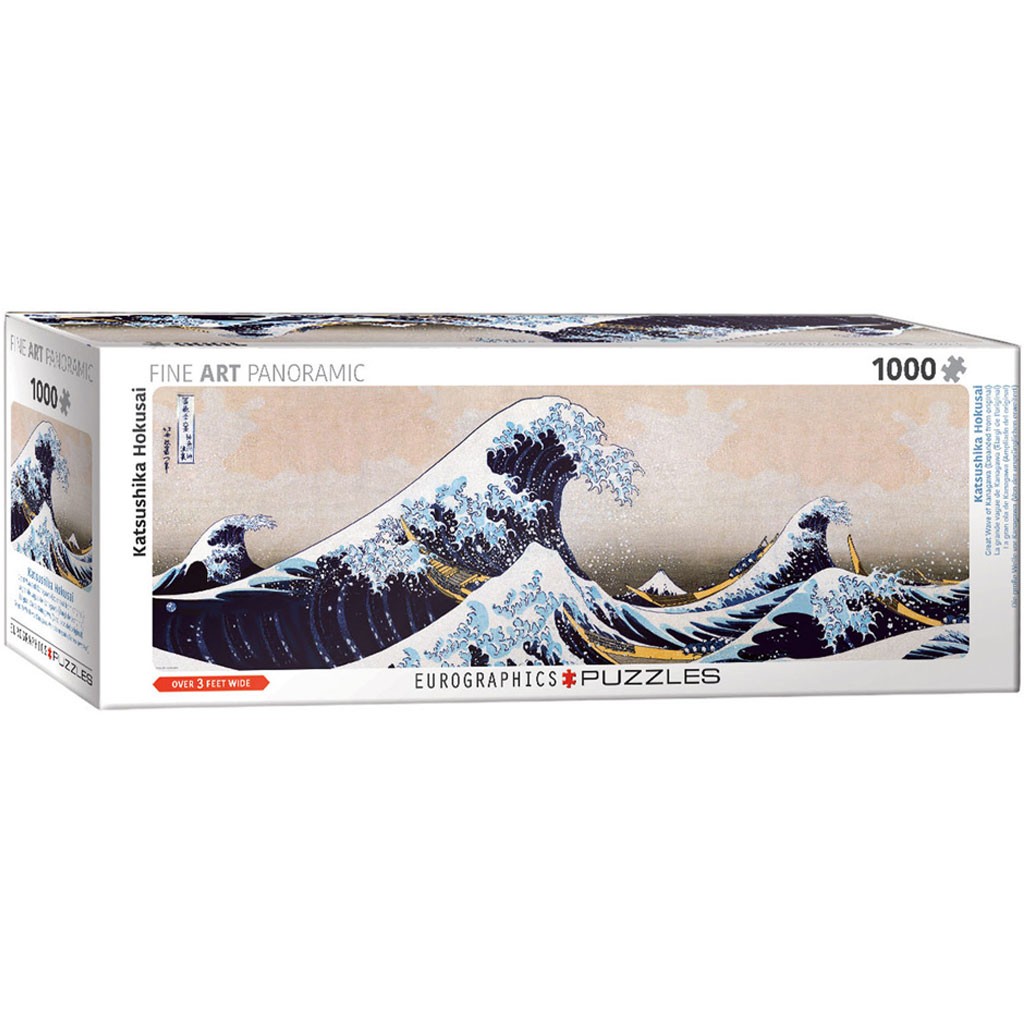
The 1000-piece Hokusai Wave puzzle by Japanese master Katsushika Hokusai from Eurographics in panoramic format is a splendid example of a puzzle of 19th-century oriental art and Japonism.
Puzzle Art thanks to the new splendid edition of the Eurographics brand Panoramico is pleased to offer you this art puzzle that pays homage to the great Japanese artist who revolutionized modern art.
The colors of the puzzle are very bright and the details are extremely accurate and refined.
The puzzle pieces are sturdy and fit together well.
| Number of pieces 1000 | | Brand Eurographics |
| Puzzle dimensions (cm) 96 x 32 | | Box dimensions (cm) 35 x 13 x 9 |
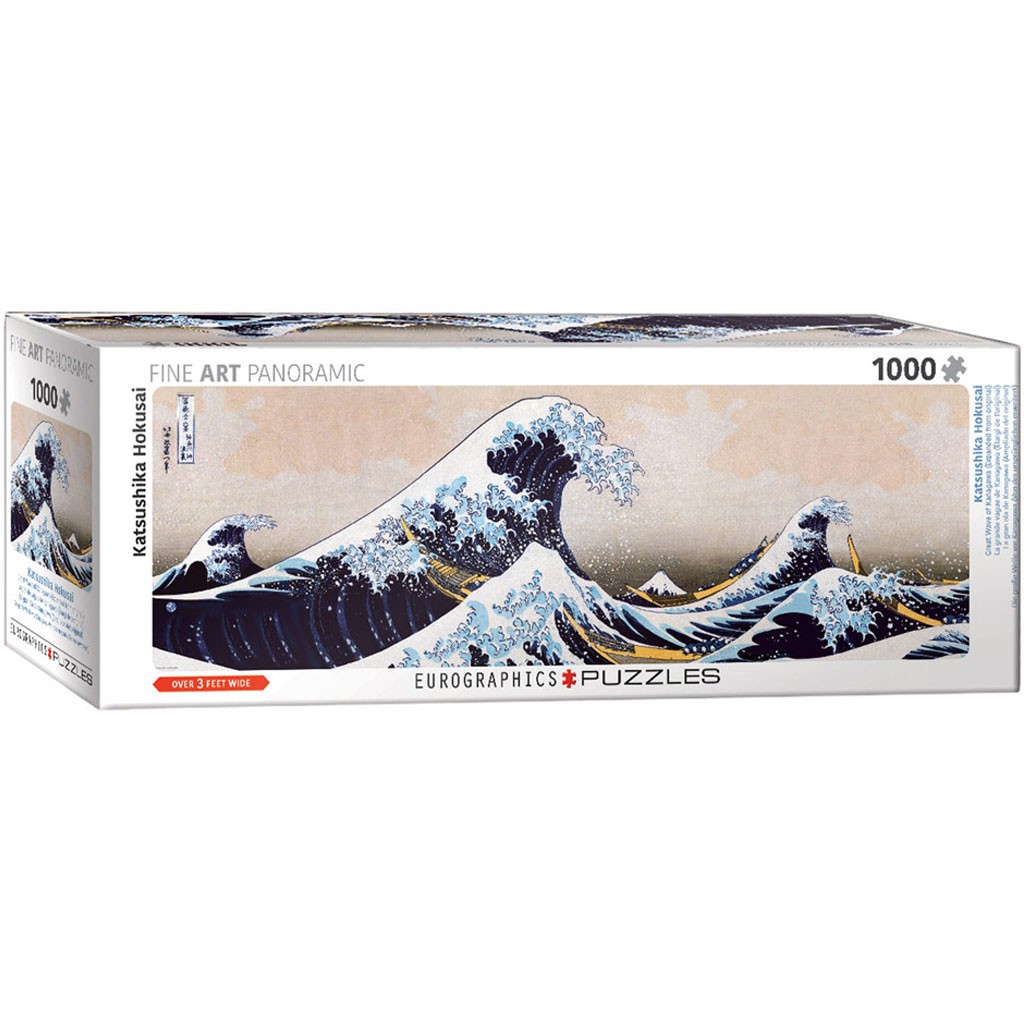
Panoramic box
less cumbersome
Famous work of art
a "must have"
1000 piece puzzle
Panoramic puzzle
The Great Wave off the Coast of Kanagawa is a woodblock print from the series Thirty-six Views of Mount Fuji, dated circa 1830–1832, by the Japanese artist Katsushika Hokusai .
It was published between 1829 and 1833 in the late Edo period as the first print in the Thirty-six Views of Mount Fuji series. The picture depicts a huge wave threatening three boats off the coast of Sagami Bay in Kanagawa Prefecture, with Mount Fuji rising in the background.
It is sometimes assumed that a tsunami inspired the artist, but it is more likely that the wave was a large rogue wave .
This is probably Hokusai’s most famous work and is often considered the most recognizable Japanese artwork in the world .

Measuring 25.7 cm × 37.9 cm, it depicts a stormy wave threatening several ships off the coast. Although it is seen as the work that most represents Japanese art, it actually combines equally traditional elements of Eastern painting and typical Western features. It achieved immediate success both in Japan and in Europe, contributing to the birth of Japonism in the second half of the 19th century.
The Great Wave off the Coast of Kanagawa is a print (yoko-e), that is, a horizontal format produced in the ōban size, approximately 25 cm x 37 cm.
The composition is made up of three main elements : the sea lashed by a storm, three boats , and a mountain . The signature is also present in the upper left corner.
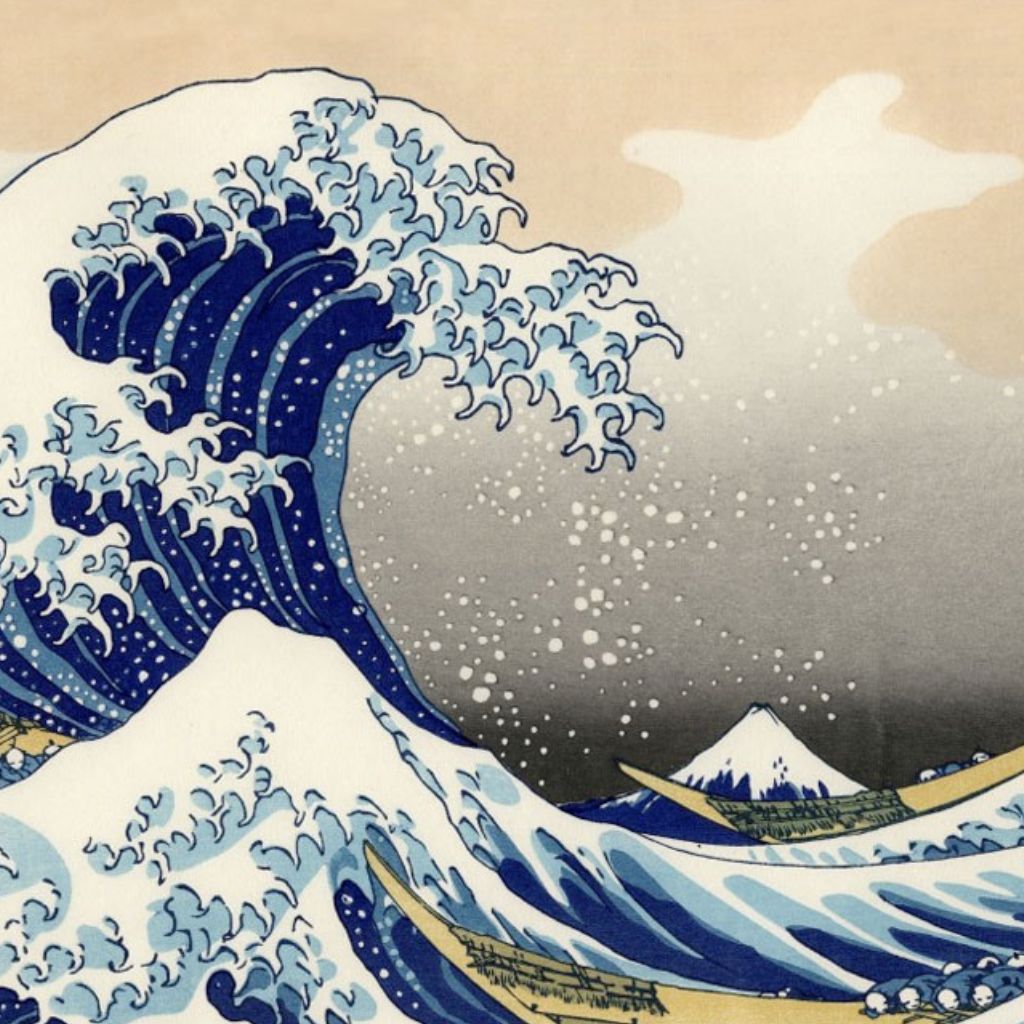


The first mountain with a snow-capped peak is Mount Fuji , which in Japan is considered sacred and a symbol of national identity , as well as a symbol of beauty.
Mount Fuji is an iconic figure in many Japanese depictions of famous landmarks.
The dark color surrounding Mount Fuji seems to indicate that the scene takes place in the early morning, with the sun rising from behind the viewer, illuminating the mountain’s snow-capped peak. While cumulonimbus clouds appear to hover in the sky between the viewer and Mount Fuji, no rain is visible either in the foreground or on Mount Fuji, which itself appears completely cloudless.
Also featured in the painting are three oshiokuri-bune , fast boats that are used to transport live fish from the Izu and Bōsō peninsulas to the markets in Edo Bay.
The boats, oriented southeast, are returning to the capital. There are eight rowers per boat , clinging to the oars. There are two more passengers in the front of each boat, bringing the total number of people in the image to thirty .
Using the boats as a reference, one can approximate the size of the wave: oshiokuri-bune were generally between 12 and 15 metres (40 and 50 feet) long, and noting that Hokusai stretched the vertical scale by 30%, the wave must have been between 10 and 12 metres (33–39 feet) high .
The thirty-six views of Mount Fuji are in many ways the Japanese artist’s most celebrated masterpiece. Hokusai’s Great Wave off the coast of Kanagawa, in particular, is an image that has now entered the world’s collective imagination.
It sublimates the power of nature to which man must submit; it emphasizes the art of Hokusai, who instead manages to dominate nature, through an aggressive and majestic graphic style and the choice of elegant and unobtrusive colors.
Hokusai’s skill was not only to create an extraordinary composition : he was also able to revive a theme such as that of the landscape which had in the past been a predominant motif in both Japanese and Chinese art.
If The Great Wave is the masterpiece and is so popular thanks to the success it enjoyed in the West at the end of the nineteenth century, all the other forty-five compositions in the series demonstrate the sublime level achieved by Hokusai: inimitable ability to synthesise, never banal simplicity, feeling and suggestion, as if the artist were able to permeate the views with his own interiority.
Furthermore, many of the characteristics of his art, already developed previously, are present, evolving to reach pure heights of poetry, serenity, and spiritual elevation. The perfect cone of Fuji naturally dominates the compositions, albeit with different dimensions: life radiates all around, and the spaces between the world of nature and the world of man narrow to become one, an unfolding of experiences filtered through the imagination of a great artist.
The early years of the 1840s were certainly the most important in Hokusai’s long and prolific career, thanks to the publication of several works that made his fortune and made him an internationally renowned artist, images that have become true symbols of art not only in Japan, but throughout Asia.
In 1830 Hokusai began publication of Thirty-six Views of Mount Fuji (Fugaku sanjūrokkei) for the Edo publisher Eijudo.
The original plan was for Hokusai to produce thirty-six views that would all have in common the presence of Fujiyama , the highest mountain in the country and at the same time a cultural and religious symbol of all Japanese.
Initially, the prints were made using only Prussian blue , which had recently arrived in Japan.
However, the great success with which they were received pushed the publisher to opt for a richer polychromy.
But, as time passed and sales increased, the number of views exceeded the thirty-six expected units.
Eijudo intended the series to be expanded beyond one hundred images, but in reality it stopped at forty-six , perhaps by choice of Hokusai himself who preferred to dedicate himself to something else, or as some maintain, to avoid direct comparison with Utagawa Hiroshige (1797-1858) who in those same years was producing his most successful landscape prints.


Finally, the sea and the wave dominate the composition, like a wave stretching on the verge of breaking. In the moment captured in this image, the wave forms a circle around the center of the drawing, framing Mount Fuji in the background.
A seascape with Fuji . The waves form a frame through which we see the mountain. The gigantic wave is a yin-yang of the empty space beneath the mountain. The inevitable break we await creates tension in the painting.
In the foreground, a small wave forming a miniature Fuji is reflected by the distant mountain, which itself is reduced in perspective. The small wave is larger than the mountain.
The small fishermen, clinging to flimsy fishing boats, slide down a seamount, trying to avoid the waves. The violent yang of nature is overcome by the yin of these expert fishermen’s confidence.
Oddly enough, despite a thunderstorm, the sun is shining brightly.
Show reviews in all languages (13)
Complimenti!
hai una vera passione per l'arte!
Visto che sei arrivato fino a qui, meriti un premio!
Ecco uno sconto del 10% per il tuo prossimo capolavoro! ✨

49,99€
45,00€ Original price was: 45,00€.39,99€Current price is: 39,99€.

Reviews
There are no reviews yet.