

| Numero pezzi | |
|---|---|
| Marca | |
| Artista | |
| Movimenti artistici | |
| Museo d'arte | |
| Dimensioni dell'opera | 89.5 cm x 115.3 cm |
| Difficoltà | |
| Dimensioni puzzle | 50.8 x 63.5 cm |
| Dimensioni scatola | 33 x 25 x 5 cm |
5 motivi per acquistare i nostri puzzle d'arte





25,00€
25,00€
3 in stock
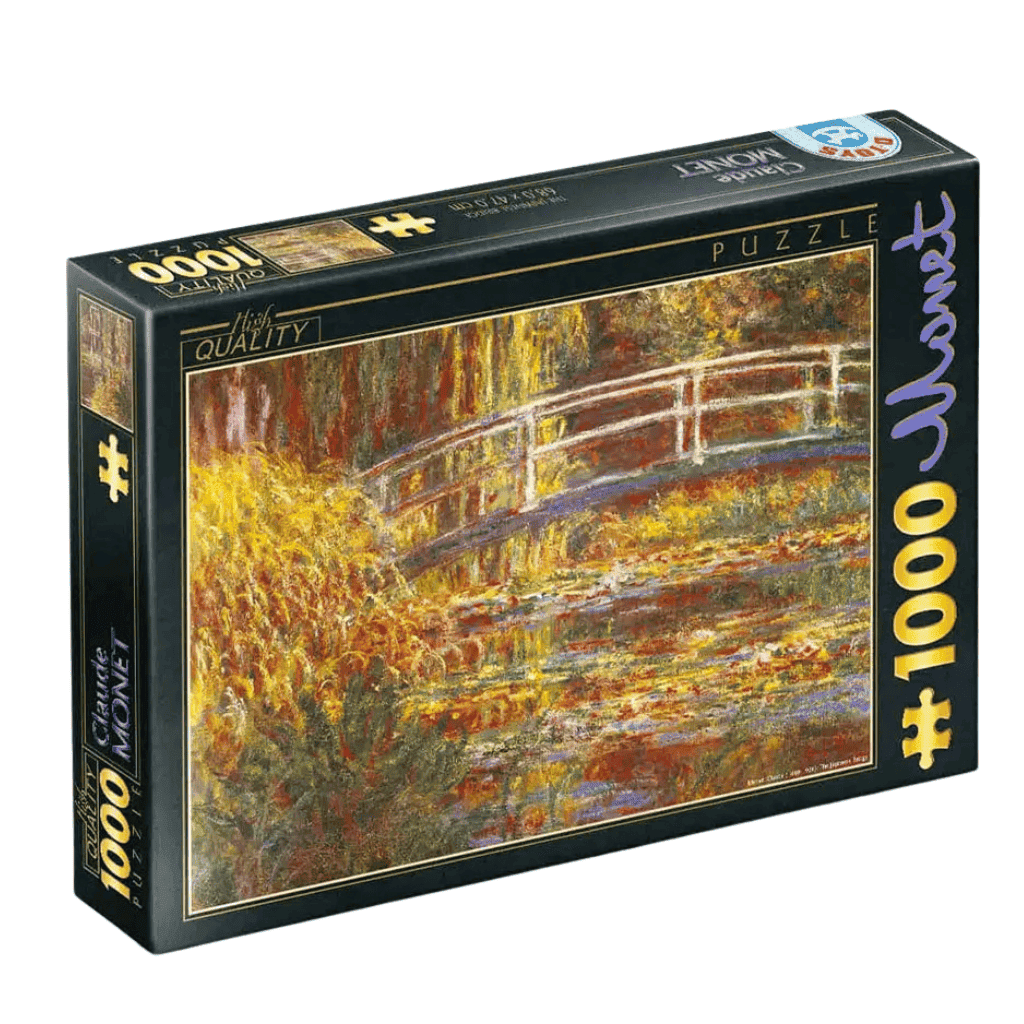
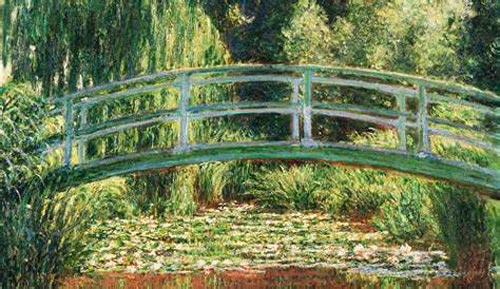
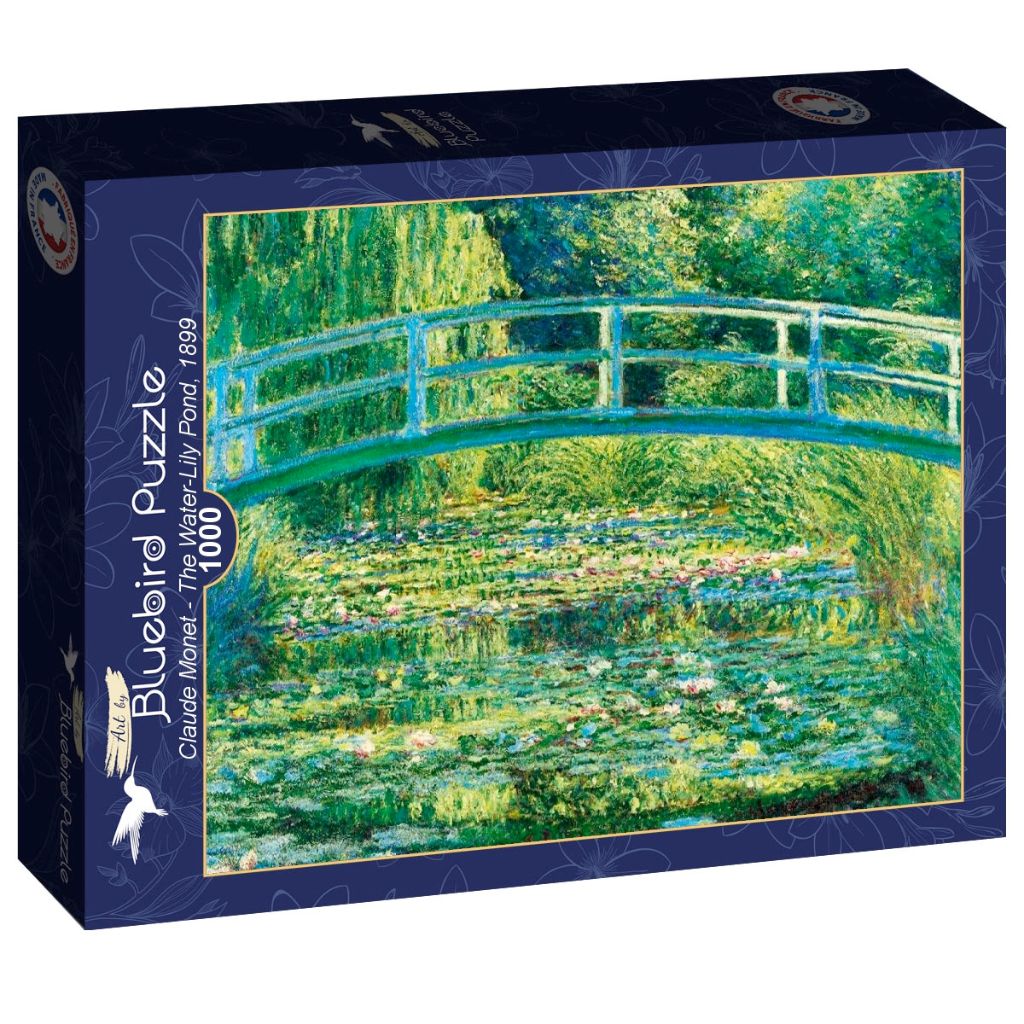
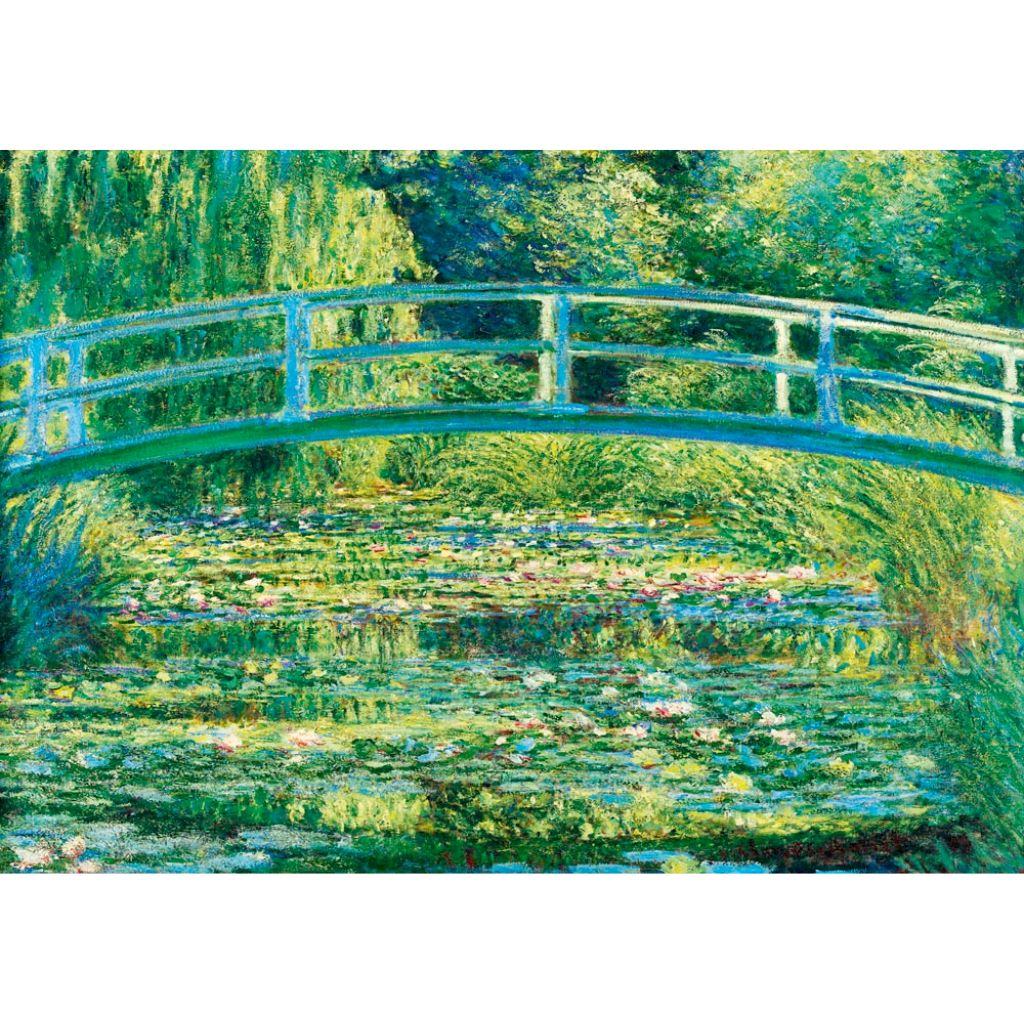
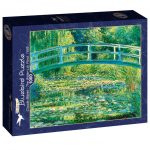
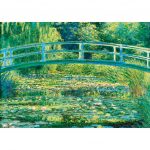
The 1000-piece Bluebird Monet Japanese Bridge puzzle depicts one of the most beautiful and sought-after subjects from Claude Monet’s Water Lilies series.
The beauty of The Japanese Catwalk lies in the fact that this painting is well characterized by the wise use of colors and the beautiful effect of light that the latter are able to give, creating a very natural scene with strongly impressionistic characteristics.
In fact, the play of light, the bright colors , and the intensity of the brush strokes make this art puzzle a true masterpiece to complete and hang in your home: a true work of art.
Questo puzzle è momentaneamente esaurito.
Nel frattempo, ti suggeriamo alcuni puzzle d’arte che potrebbero piacerti!
The 1000-piece Monet Japanese Bridge puzzle from French brand Bluebird is a beautiful impressionist art puzzle.
The subject is highly sought after and we offer it in the exclusive Bluebird edition.
The colors of the puzzle are vivid and very faithful to the original painting, the details and printing are very accurate.
The puzzle pieces are thick and sturdy and fit together perfectly.
 | Number of pieces 1000 |  | Brand Bluebird |
 | Puzzle dimensions (cm) 69 x 48 |  | Box dimensions (cm) 33 x 25 x 5 |
Elegant box
Wonderful gift idea
Famous work of art
Elegant painting
1000 pieces
Standard grid
Monet’s Japanese Bridge , preserved in New York at the Museum of Modern Art , is one of the most famous paintings by the impressionist painter Claude Monet.
This 1899 painting belongs to the late period of the French artist’s artistic career, when he decided to buy a property in the picturesque town of Giverny.
In this Normandy village, located halfway between greater Paris and his beloved Rouen, he spent the last forty years of his life with his second wife and his daughter.
The painting in question is part of a series of 12 paintings that represent a panorama always seen from the same point of view.
His painting depicts the Japanese-style wooden bridge that the artist had built in the garden of his villa in Giverny, surrounded by the numerous exotic plants that he grew and the water lilies that were dear to him.
In particular, within this painting, Monet focuses above all on the very particular color of the bridge, which blends between blue and green, without however neglecting the entire unique scene that comes to life beneath the bridge itself, as if those aquatic plants constituted a true world unto themselves.
The beauty of The Japanese Catwalk lies in the fact that this painting is well characterized by the wise use of colors and the beautiful effect of light that the latter are able to give, creating a very natural scene with strongly impressionistic characteristics.
The artist designed every single feature within this composition, leaving no detail untouched, ensuring that when transposed onto the canvas, every natural and artificial element was in the right place, guaranteeing the best possible result.
If until now, in other paintings, it appeared transparent, in this painting Monet shows us the depth of the water .
In perfect Impressionist style, the brushstrokes are fast, intense and in various directions, with the aim of giving movement to the painting.
Monet painted at different times of the day to observe the changes in sunlight. By observing the scene, we can perceive the changes in the nature he portrays:
“I am forced into constant transformation, because everything grows and becomes green again. Through these transformations, I follow nature without being able to grasp it, and then this river that descends, ascends, one day green, then yellow, this afternoon dry, and tomorrow it will be a torrent.”
The painting conveys a sense of calm and tranquility: a bridge surrounded by greenery, the harmonious colors and the lights that spread throughout the space transport the observer into the “window of paradise” that Monet created.
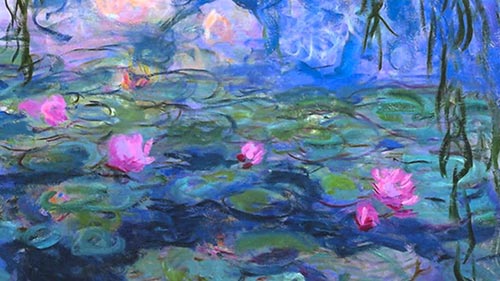
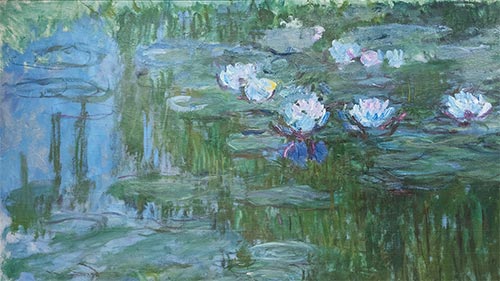
The true and ultimate meaning of “ en plein air ” painting, which Monet had practiced throughout his life, finds its full realization and its ideal culmination in the choice to paint that extraordinary work that he himself constructed, invented and made harmonious and pictorial, the garden of Giverny .
Precisely by immersing himself in that imagined and designed space , in that enclosed paradise of his artistic imagination, Monet managed to perfectly integrate a physical and real place with his painting, developing the natural subject to be portrayed before the painting itself was created.
This operation, which appears to be entirely intellectual, actually contains the poetic and ideal essence of all of Monet’s work, aimed at a continuous search for fusion with the elusive beauty of nature .
Monet dedicated the last twenty-nine years of his life to painting the famous Water Lilies, two hundred and fifty pictorial variations on a single, poetic theme, which marked the artist’s creative and expressive peak and his official entry into the new century.
You can admire the little bridge that crosses the lake and the surface of the water punctuated by the scaling of water lily leaves.
The scenes are each characterised by dominant shades including: red, yellow, green or blue.
Monet, once again, gives us small, irregular brushstrokes using splashes of color and painting a glimpse of nature that is, in the eyes of those who admire it, unparalleled.
The shades used most by the artist are those of green: they blend together creating a suggestive and unique symphony of colors.
In the summer of 1897, Monet invited Maurice Guillemot, a journalist from the Revue Illustrée, to his home in Giverny to document the beginning of this extraordinary series. The journalist described the painter painting on his boat in the middle of his water garden, moving from one canvas to another as the hours passed.
In fact, the Water Lilies project was born as a natural consequence of the botanical transformation of the garden of the Giverny estate, which Monet had carried out with great care and passion.
Furthermore, for Monet, gardening was in keeping with his chromatic and pictorial sensibility and his artistic culture. The colorful flowerbeds, the numerous floral species, the wisteria, the irises, the hedges, the lawn, the shrubs with their shady branches and the famous poplars were the elements of a harmonious and impressionistic composition.
In fact, the creation of works with a vegetal character was perfectly constituted by a “ blotchy effect ” of bright and luminous colours.
However, it was the water lily pond, built on land adjacent to the villa’s garden, beyond the railroad tracks, that particularly stimulated Monet’s pictorial imagination and study of “aquatic” composition. For this reason, in addition to the water lilies floating on the pond, Monet planted weeping willows and exotic plants all around it, even building a small bridge typical of Japanese gardens.
Light was the most important element for the Impressionists. It was the fundamental variable in the interpretation of nature and reality and in defining the atmospheric effect in pictorial composition.
Furthermore, painting directly from life, in the open air and faced with the changing nature of the subject, the Impressionists felt the need to use a new palette . The colors and chromatic tones chosen were unprecedented, such as emerald green, cadmium yellow, zinc yellow, and ultramarine blue.
The use of these synthetic oil colours , widespread between 1840 and 1860 and available in practical, easily transportable tubes , had further encouraged interest in the rendering of the multifaceted instantaneity of the image and of sunlight.
However, Monet thought that these colours were too greasy and often diluted them with water or squeezed them onto absorbent paper before using them to extract the oil.
Monet’s painting technique essentially revolves around varying degrees of color saturation , that is, the contrast between a luminous, transparent brushstroke and another that is opaque and thick. The thin layers of color appear luminous through the white primer of the canvas, to the point that the grain remains visible.
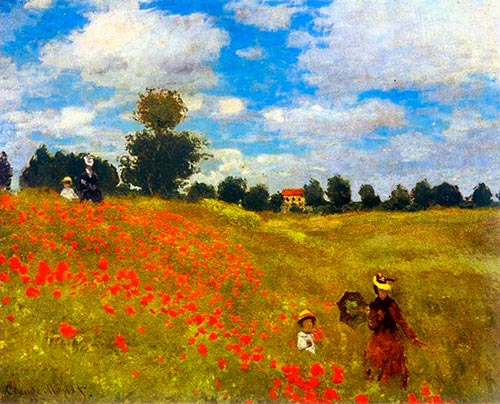
Furthermore, Monet’s works demonstrate complete adherence to contemporary optical theories of the juxtaposition of complementary colours , such as, for example, Poppy Field near Giverny , 1885, which is entirely based on the symmetrical alternation of the complementary chromatic tones of red and green.
Finally, the final chapter in Giverny, dedicated to the picturesque garden and the evocative water lily pond, will bring Monet’s pictorial process to full maturity. Indeed, during this period, he reached the pinnacle of his form, consisting of free, abstract, and timeless brushstrokes.
Complimenti!
hai una vera passione per l'arte!
Visto che sei arrivato fino a qui, meriti un premio!
Ecco uno sconto del 10% per il tuo prossimo capolavoro! ✨
45,00€ Original price was: 45,00€.39,99€Current price is: 39,99€.


 Hot
Hot

Reviews
There are no reviews yet.