

| Numero pezzi | |
|---|---|
| Marca | |
| Atmosfera | |
| Artista | |
| Occasione | |
| Museo d'arte | |
| Dimensioni dell'opera | 82.3 cm × 101.7 cm |
| Movimenti artistici | |
| Difficoltà | |
| Dimensioni puzzle | 68 cm x 48 cm |
| Dimensioni scatola | 38 cm x 26.5 cm x 5.5 cm |
| EAN | 4062069357019 |
5 motivi per acquistare i nostri puzzle d'arte





25,00€
25,00€
Out of stock
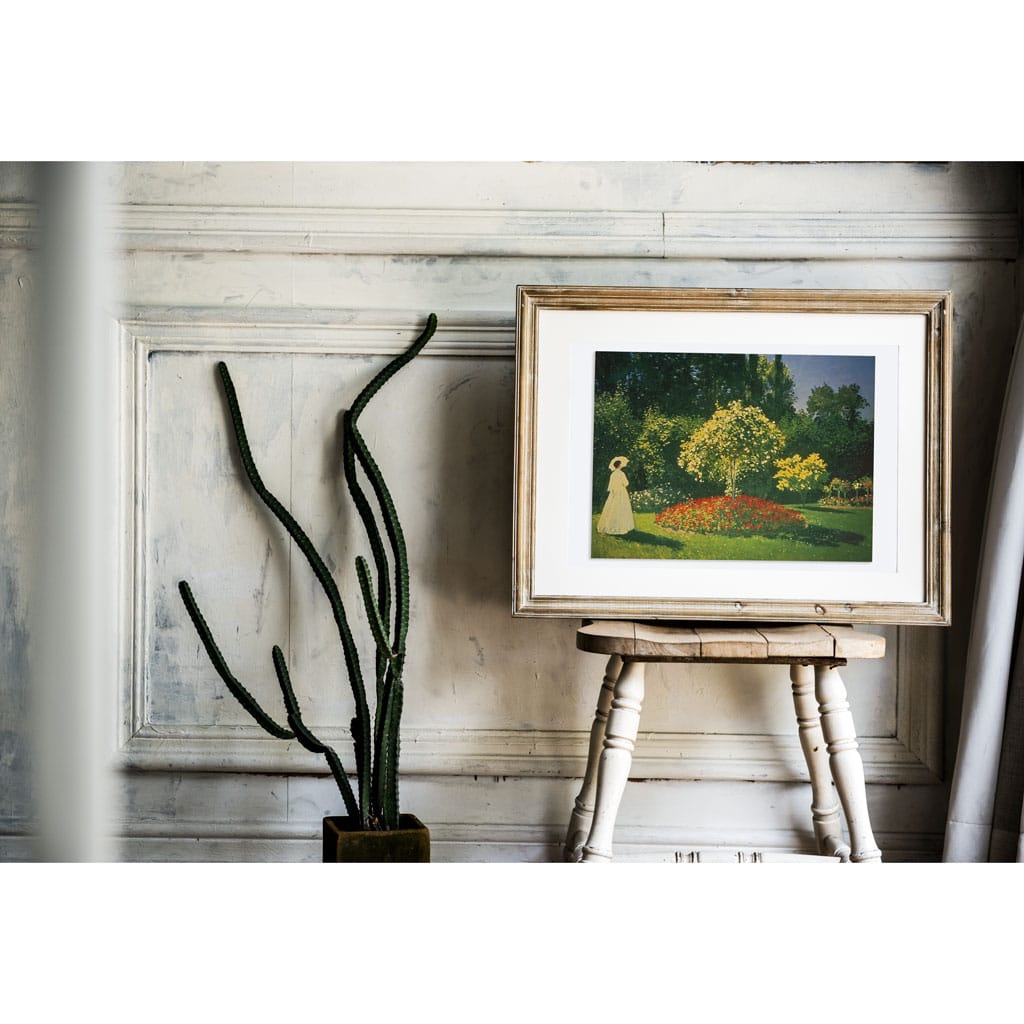
Relive the power of Expressionist art with one of the first “en plein air” works by the French painter Monet.
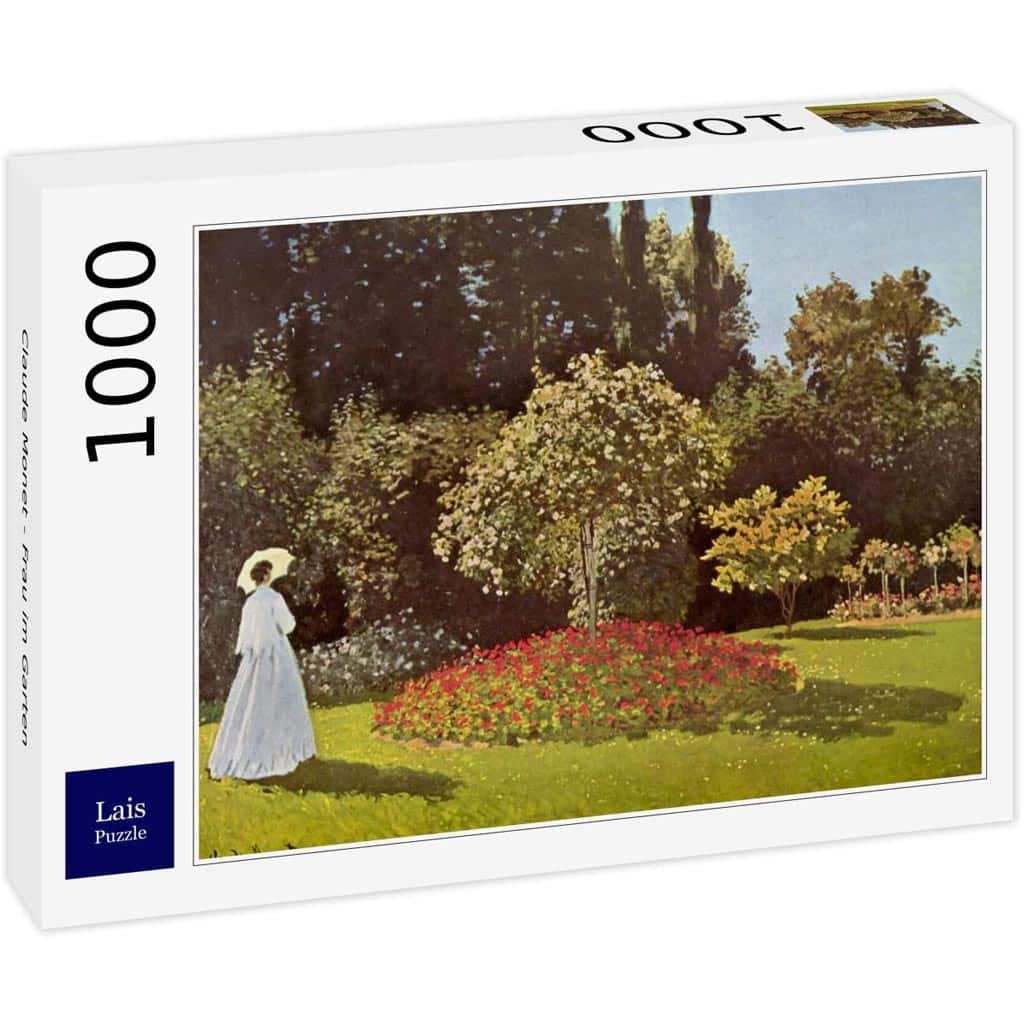
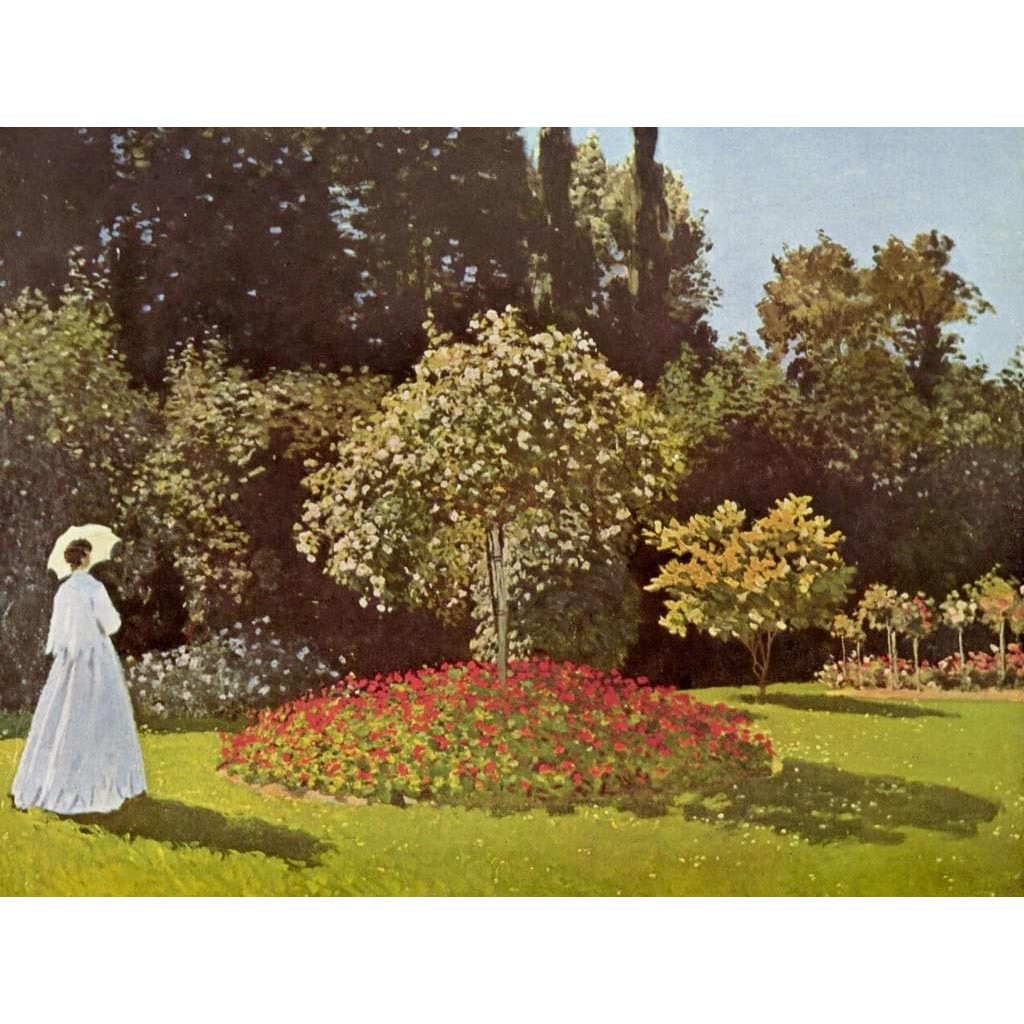
The 1000-piece puzzle Lady in the Garden at Sainte-Adresse by Lais opens a window onto a splendid bucolic and idyllic view.
With each piece you will discover all the details of this splendid work of art: a wonderful masterpiece of the Impressionist movement.
What better way to discover a work of art than by putting together a puzzle!
Questo puzzle è momentaneamente esaurito.
Nel frattempo, ti suggeriamo alcuni puzzle d’arte che potrebbero piacerti!
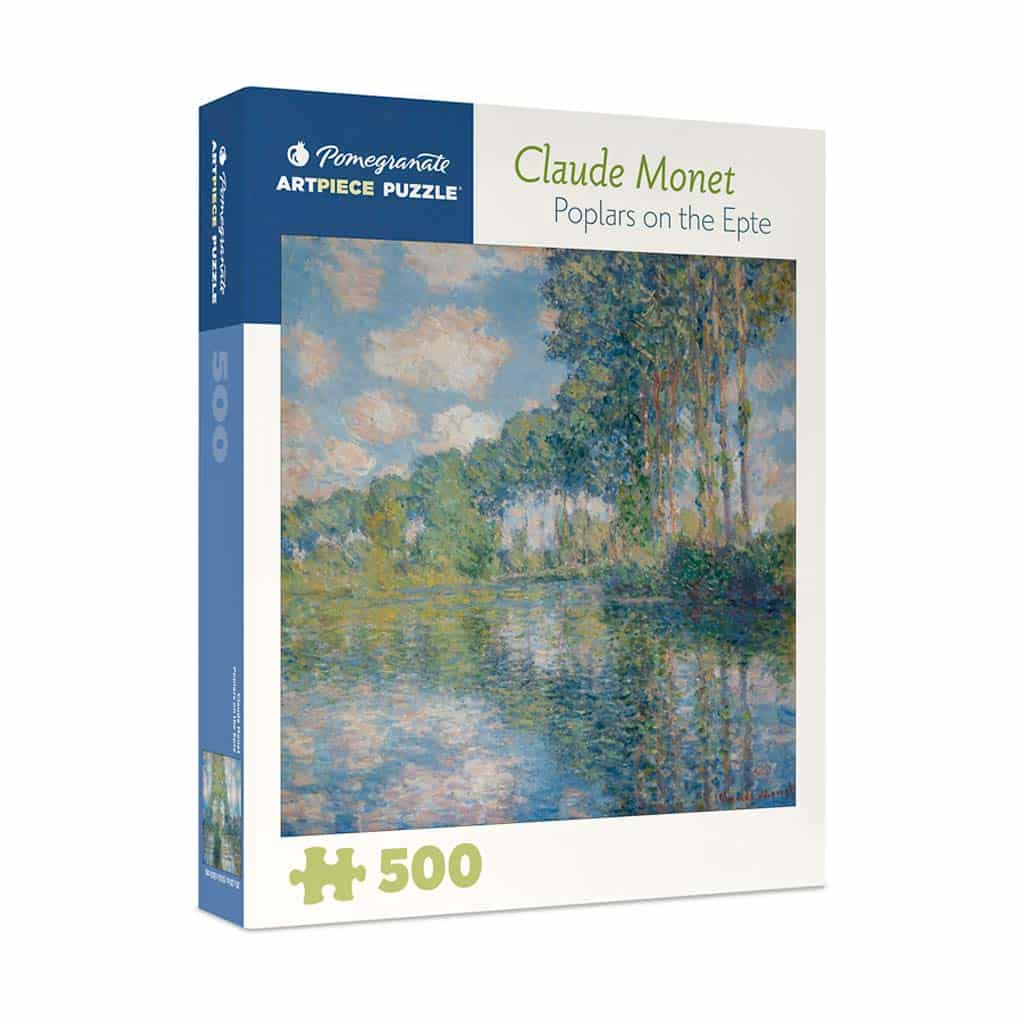

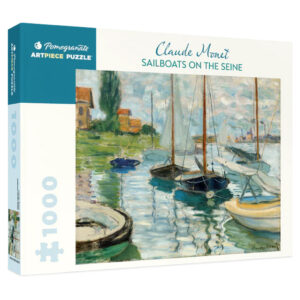
The Lady in the Garden at Sainte-Adresse puzzle is a splendid example of Claude Monet ‘s “en plein air” paintings. Our suggestion for this wonderful work of art is the 1000-piece puzzle by Lais. The colors of this edition fully reflect the expressive power of the French painter’s brushstrokes. The level of detail is very high, and the printed image is of excellent quality.
By building this puzzle you will discover piece by piece all the wonder of Expressionist art.
The 1000-piece Lais puzzle Lady in the Garden at Sainte-Adresse is a splendid example of an impressionist puzzle.
The subject is very rare and unique, resembling a “minor” masterpiece by Monet. One of the Parisian painter’s first views, it demonstrates the full power of his expressive power.
The colors of the puzzle are very bright and the details are extremely accurate and refined. The puzzle pieces are thin but sturdy and fit together perfectly.
 | Number of pieces 1000 |  | Brand Lais |
 | Puzzle dimensions (cm) 68×48 |  | Box dimensions (cm) 38 x 26.5 x 5.5 |

Well finished box
Wonderful gift idea
Rare work of art
Natural colors
1000 pieces
Standard grid
Lady in the Garden at Sainte-Adresse is an Impressionist work dating back to Claude Monet’s early plein air studies. As with all paintings from this beautiful artistic movement, the artist captures inspiration directly on site using canvas, paintbrushes, and tubes of paint (an invention dating back to the late 19th century).
Sunlight floods the paintings of the Impressionists, who did most of their painting outdoors, directly from nature.
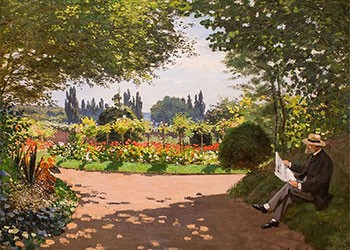
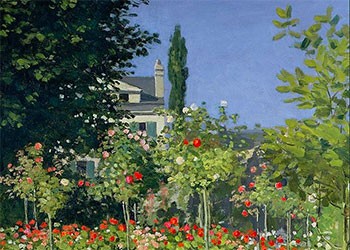

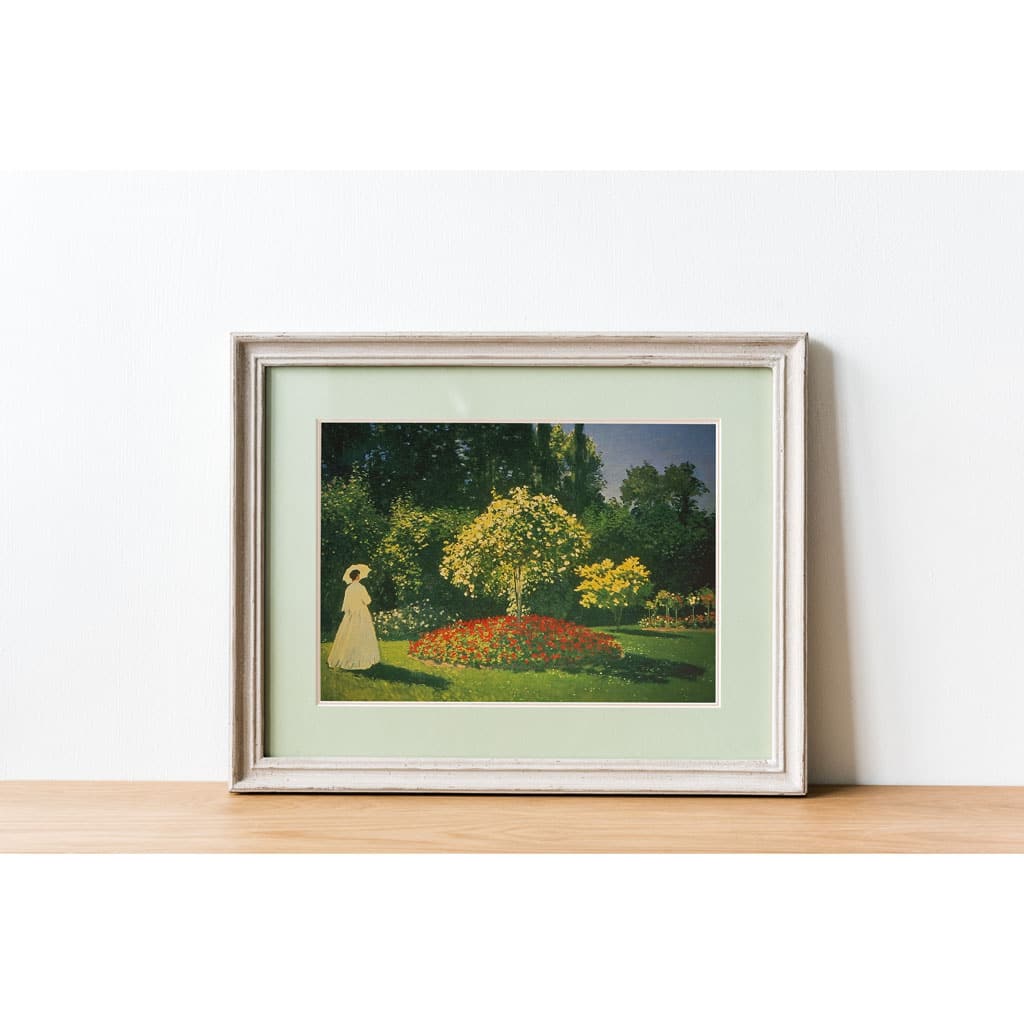
Lady in the Garden at Sainte-Adresse (also known as “Lady in the Garden”) is a beautiful oil on canvas painting measuring 82.3 x 101.5 cm, created in 1867 by the great Impressionist painter Claude Monet . It is housed in the Hermitage Museum in St. Petersburg and is considered a very important painting for the history of Impressionism and for Monet’s artistic growth.
In this painting, the young Monet attempts to master the arduous task of integrating figures into a landscape while conveying the impression of air and light. Indeed, for the French painter, light was an essential element in the composition and creation of a plein air painting.
Later in his career he will come closer to the concept that the same subject should be painted repeatedly under all possible types of light and in this way he will give life to the beautiful cycle of paintings in the Rouen Cathedral.
In Lady in the Garden, Monet finds an answer by painting the shadows and colored lights , the glimpses of sunlight filtering through the foliage, the clear reflections in blurred outlines in the dim light.
A hallmark of Monet’s painting was the exquisite interplay he created between light and shadow, and in this painting, though still in its infancy, we can already see his mastery of light and vivid colors. Indeed, this was his great skill, capturing the painter’s sensations when faced with nature on canvas.
Monet was at the beginning of his career at the time, experimenting with methods and subject matter. His earlier paintings had been successful at the Paris Salons.
However, once finished in the workshop, the painting was rejected by the jury of the 1867 Salon who, in addition to the absence of the subject or narrative, deplored the exposed brushstrokes which were a sign of unscrupulousness and imperfection.
That very imperfection that the jury criticized would become Monet’s great fame today. That rapid, almost dirty brushstroke , always seeking an immediate impression of reality rather than its studied studio representation.
Impressionism is a pictorial movement that emerged in Paris towards the end of the nineteenth century. It officially began on April 15, 1874, during an exhibition held in photographer Nadar’s studio by a group of artists rejected by the Paris Salon, the recognized and official temple of painting to which all artists of the time adhered.
For this reason, Impressionism is often considered the first artistic avant-garde. Indeed, its unconventional approach to painting and its relationship with the artwork itself have earned it incredible fame to this day.
However, the first exhibition had a disastrous outcome and provoked fierce controversy.
Inspired by the title of Claude Monet’s painting Impression, Rising Sun, the art critic Leroy ironically defines these painters as impressionists.
In fact, the aim of these artists is to capture the visual impression of reality; hence the need for rapid execution, without preliminary drawings, retouching, or shading.
The foundation of the Impressionist technique is the study of light and color; to give maximum luminosity to their paintings, the Impressionists placed pure colors directly on the canvas (this technique gave rise to the Divisionism and Pointillism movements of which Giovanni Segantini and Georges Seurat were part).
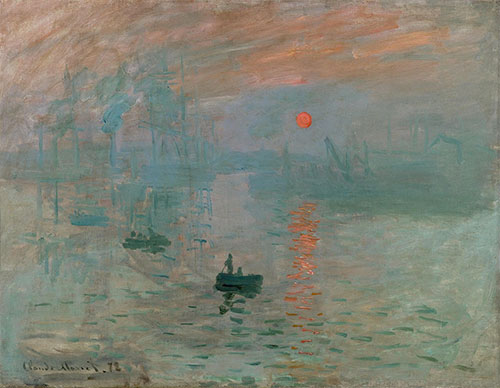
The Impressionists abolished the use of black to create shadows, which were rendered by combining different colors, a technique also used by their contemporary Florentine Macchiaioli . However, unlike the Macchiaioli, the Impressionists depicted the same subject at different times of day to demonstrate how light, in its constant flux, transforms things and colors.
In 1866, Claude Monet began painting from life, in the garden of the house he rented in the Parisian suburbs. Monet’s goal was not only to make the painting as immediate as possible.
But the young Monet’s ambition was this: how to integrate characters into a landscape while giving the impression of air and light.
The painter finds an answer by painting the shadows and colored lights , the rays of sunlight filtering through the foliage, the clear reflections in blurred outlines in the dim light. Émile Zola writes of Monet’s paintings:
The sun fell straight on the dazzlingly white skirts; the fading shadow of a tree cast a great gray veil over the avenues, over the dresses made brilliant by the sunlight. Nothing could be stranger. One must love one’s time immeasurably to dare so much, dresses that the shadow and the sun split in two.
Characteristics of Monet’s painting were the contrasts of light and shadow, the strong, vivid colours, which would fix on the canvas the painter’s sensations in front of nature.
Color itself was used in a revolutionary way: light tones contrast with complementary shadows, and trees take on unusual hues. Indeed, black, the total absence of light, is excluded, preferring shades of darker blue or brown.

Show reviews in all languages (2)
Complimenti!
hai una vera passione per l'arte!
Visto che sei arrivato fino a qui, meriti un premio!
Ecco uno sconto del 10% per il tuo prossimo capolavoro! ✨
45,00€ Original price was: 45,00€.39,99€Current price is: 39,99€.
 Hot
Hot


Reviews
There are no reviews yet.