

| Numero pezzi | |
|---|---|
| Marca | |
| Atmosfera | |
| Museo d'arte | |
| Occasione | |
| Difficoltà | |
| Dimensioni puzzle | 68 cm x 47 cm |
| Dimensioni scatola | 38 cm x 26.5 cm x 5.5 cm |
| EAN | 5947502876748 |
| Artista |
5 motivi per acquistare i nostri puzzle d'arte





25,00€
25,00€
5 in stock
Discover the Austrian master’s Secessionist art style with Schiele’s famous 1000-piece Vienna House Wall on the River puzzle .
Puzzle Arte, thanks to the new splendid edition of the Deico brand, is pleased to offer you this art puzzle that pays homage to the great artist Egon Schiele, who was able to express his emotions with his brush.
Questo puzzle è momentaneamente esaurito.
Nel frattempo, ti suggeriamo alcuni puzzle d’arte che potrebbero piacerti!
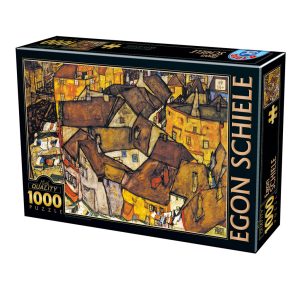
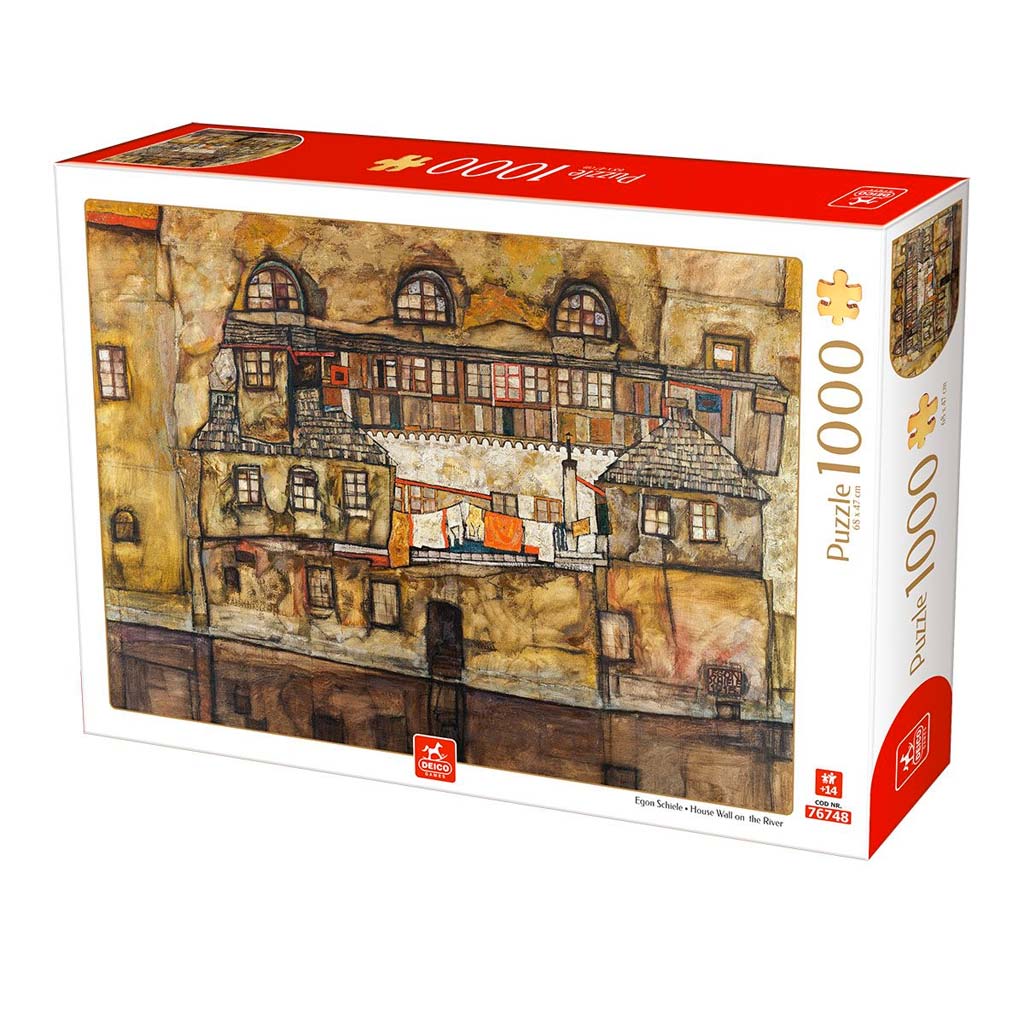
House Wall on the River is an oil on canvas painting by the Austrian painter Egon Schiele, created in 1915. Its dimensions are 1400 x 1095 cm and it is preserved in the Leopold Museum in Vienna.
Thanks to this wonderful 1000-piece art puzzle from Deico you can discover all the strength and impetus of Schiele’s faces and forms.
House Wall on the River is a cityscape painting by Schiele Vienna.
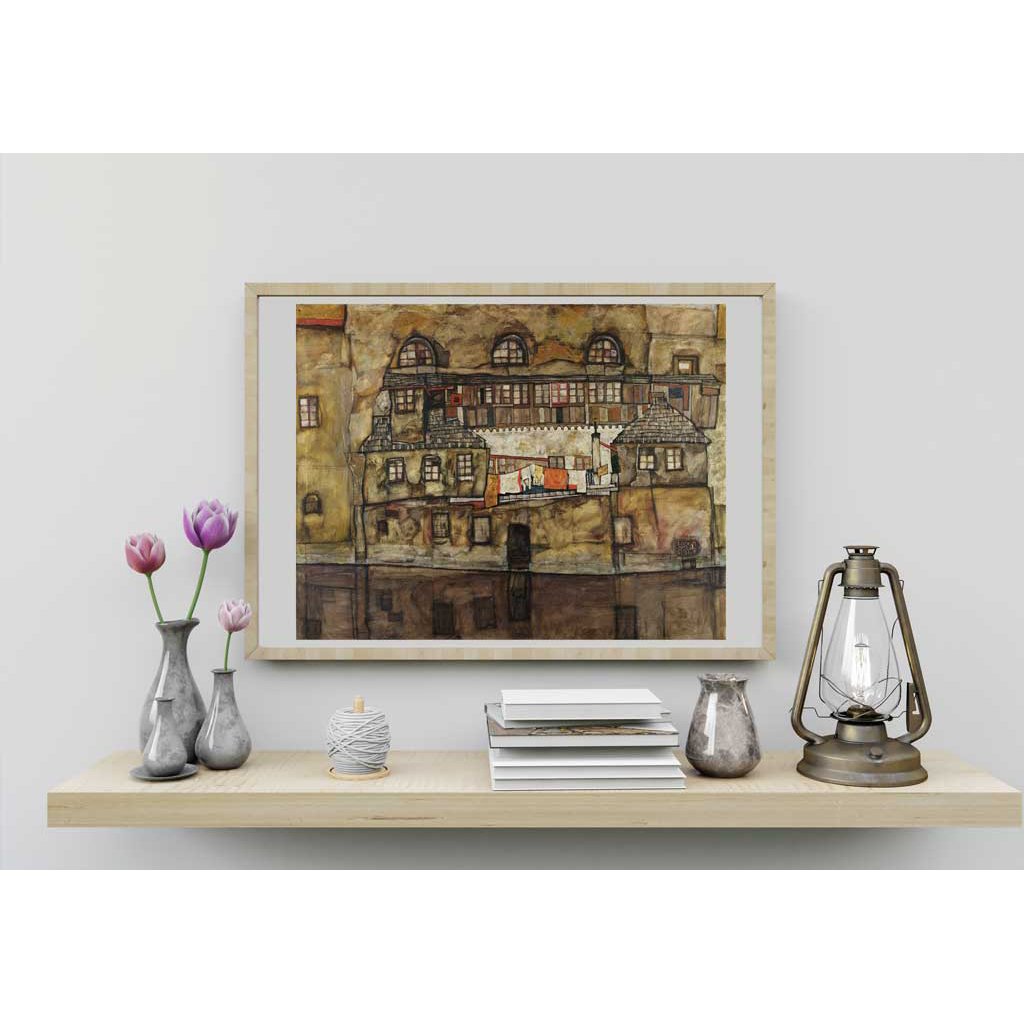
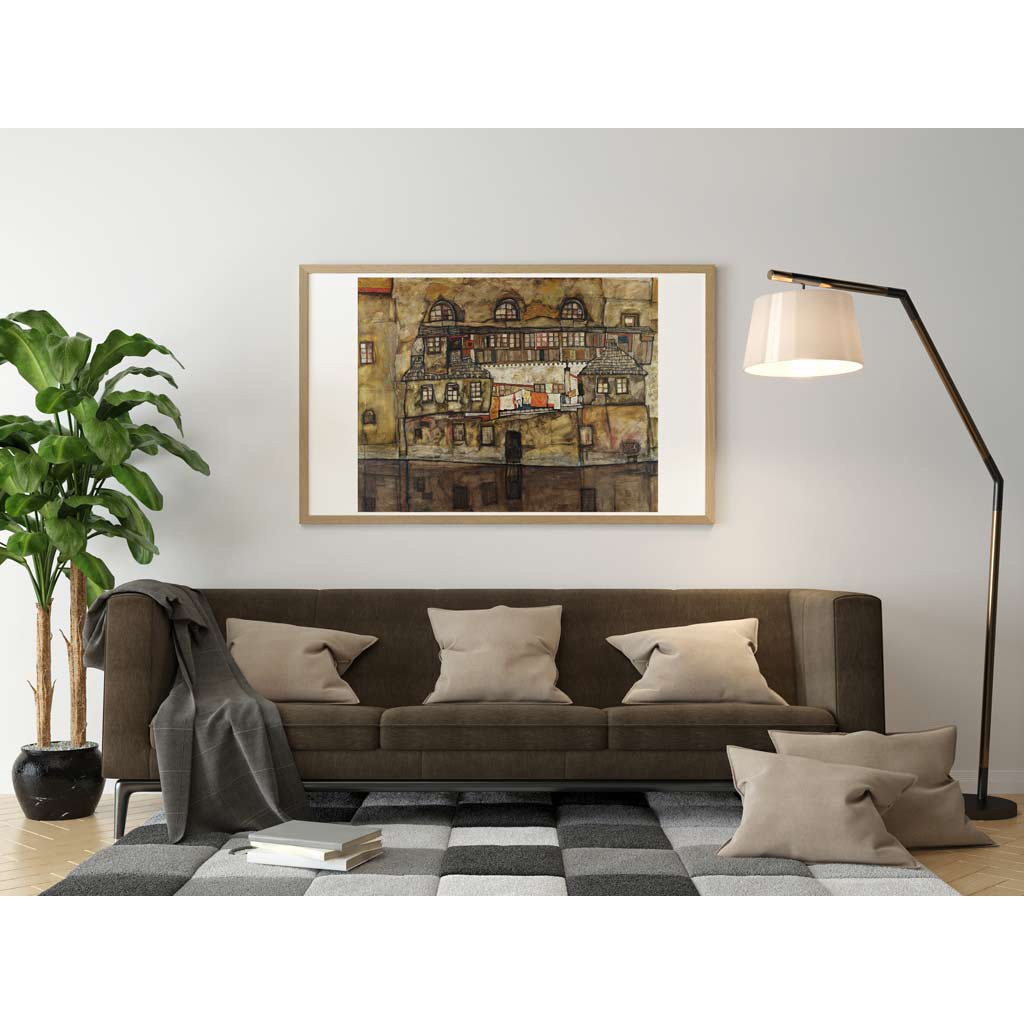
Schiele depicts the lines of each window and panel on the wall of a house, reflecting the river below. He uses a variety of brown and red hues, differentiating each detail of the house from the next.
This puzzle is suitable for both experienced puzzlers and beginners thanks to its detail. The color areas are bold and well-defined, yet leave plenty of room for details to be discovered.
The 1000-piece Schiele Vienna House Wall on the River puzzle from Deico is a stunning example of a modern art puzzle.
The great painting by the Austrian secessionist master is an example of Egon Schiele’s emotionality and expressive ability.
The colors of the puzzle are very bright and the details are extremely accurate and refined. The puzzle pieces are sturdy and fit together well.
 | Number of pieces 1000 |  | Brand Deico |
 | Puzzle dimensions (cm) 68 x 47 |  | Box dimensions (cm) 38 x 26.5 x 5.5 |

Well finished box
Wonderful gift idea
Masterpiece of art
Challenge for enthusiasts
1000 pieces
Standard grid
House Wall on the River is a cityscape painting by Schiele Vienna.
Schiele depicts the lines of each window and panel on the wall of a house, reflecting the river below. He uses a variety of brown and red hues, differentiating each detail of the house from the next. The line of clothing is the only element with a high level of vivacity, yet it still connects with the colors of the rest of the painting.
Schiele’s Vienna, Houses on the River, belongs to a large group of cityscapes that Egon Schiele painted throughout his career. For a long time, it was mistakenly identified as a cityscape of Wachau, a town in Lower Austria where Schiele painted on several occasions, until it was later proven that the scene actually depicted Krumau, a small Bohemian village on the banks of the Vltava River. After Schiele visited it with his friends Anton Peschka and Ervin Osense in the summer of 1910, he decided that this village, where his mother was born, was a perfect refuge from bustling Vienna.
He settled there permanently in 1911 with his model Wally Neuzil, and its narrow streets, the geometry of its buildings, and its medieval constructions soon became one of his favorite motifs. However, this idyllic relationship was short-lived. His bohemian and libertine lifestyle led to serious problems for him in Krumau.
Schiele’s works , as a whole, cannot leave us indifferent: they have outraged, moved, shocked.
Today, they are striking above all for their tension and coherence, the product of a straightforward Expressionism, free of coloristic exaggeration or graphic shamelessness. Schiele, like Klimt, died in 1918, along with the Austro-Hungarian Empire. The former in the prime of his youth, the latter already mature and laden with honors. Both experienced its final splendor and suffered its agony, simultaneously embodying its most ancient soul and its most modern and revolutionary expression.


Charged with nervous energy, Schiele’s model seems to look the viewer in the eye, her gaze as erotic as her attitude.
The rough features, the anguishedly contracted hands, the twisted neck: everything contributes to making this painting disturbing, with its wonderfully compact structure, which expresses human feelings with naked brutality, like all of Schiele’s images.
Influenced by Freud’s theories of the unconscious, Schiele’s work gave form to his anxieties and insecurities. The exaggerated, nervous intensity of his style makes him one of the leading representatives of Expressionism, a movement with which, however, he never explicitly identified.
Having died of influenza at a time when his work was gaining ground, Schiele nevertheless painted many works in his short career, often marked by an explicit sexual charge, to the point that, accused of being the author of obscene paintings, he even faced prison time.
Schiele’s Embrace is an oil painting from his very last years, and the artist reaches one of his moments of highest and most dramatic expressive synthesis.
Two lovers clasp each other, naked, in an embrace that is more of desperation than love. The tense muscles of the man’s left arm and the woman’s left hand, tense on her partner’s shoulders, convey the sensation of a painful grip, the kind that heralds a heartbreaking farewell.
Around the two bodies, created with a nervous painting, with exaggeratedly marked contours, a large crumpled sheet is all that remains of the love that once was.
A sort of chaotic battlefield in which the two characters, despite their almost wild intimacy, find themselves alone and distant, locked in an embrace that would like to unite their souls but, instead, fails to unite even their bodies.
Show only reviews in English (0)
Complimenti!
hai una vera passione per l'arte!
Visto che sei arrivato fino a qui, meriti un premio!
Ecco uno sconto del 10% per il tuo prossimo capolavoro! ✨
25,00€
22,90€
 Hot
Hot

Micaela Catanese –
Proprio un bel puzzle da non perdere questo raffigurante un particolare di Krumau, villaggio boemo sulle rive del fiume Moldava. Nell’opera di Schiele le tonalità di colore, pur non essendo particolarmente vivaci, sono veramente affascinanti.