




Additional information

Numero pezzi

Marca

Atmosfera

Artista

Occasione

Museo d'arte

Dimensioni dell'opera

96 cm ×130 cm

Difficoltà

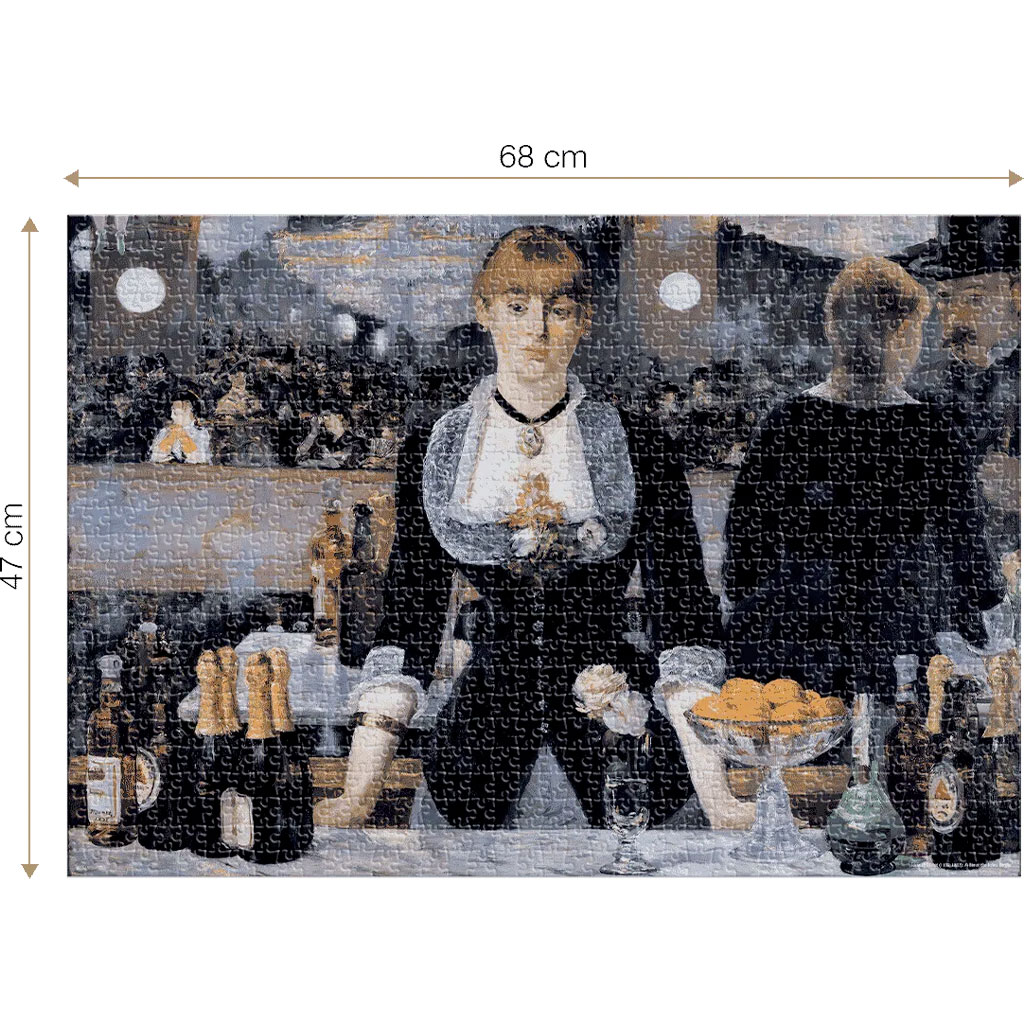
Dimensioni puzzle

68 cm x 47 cm

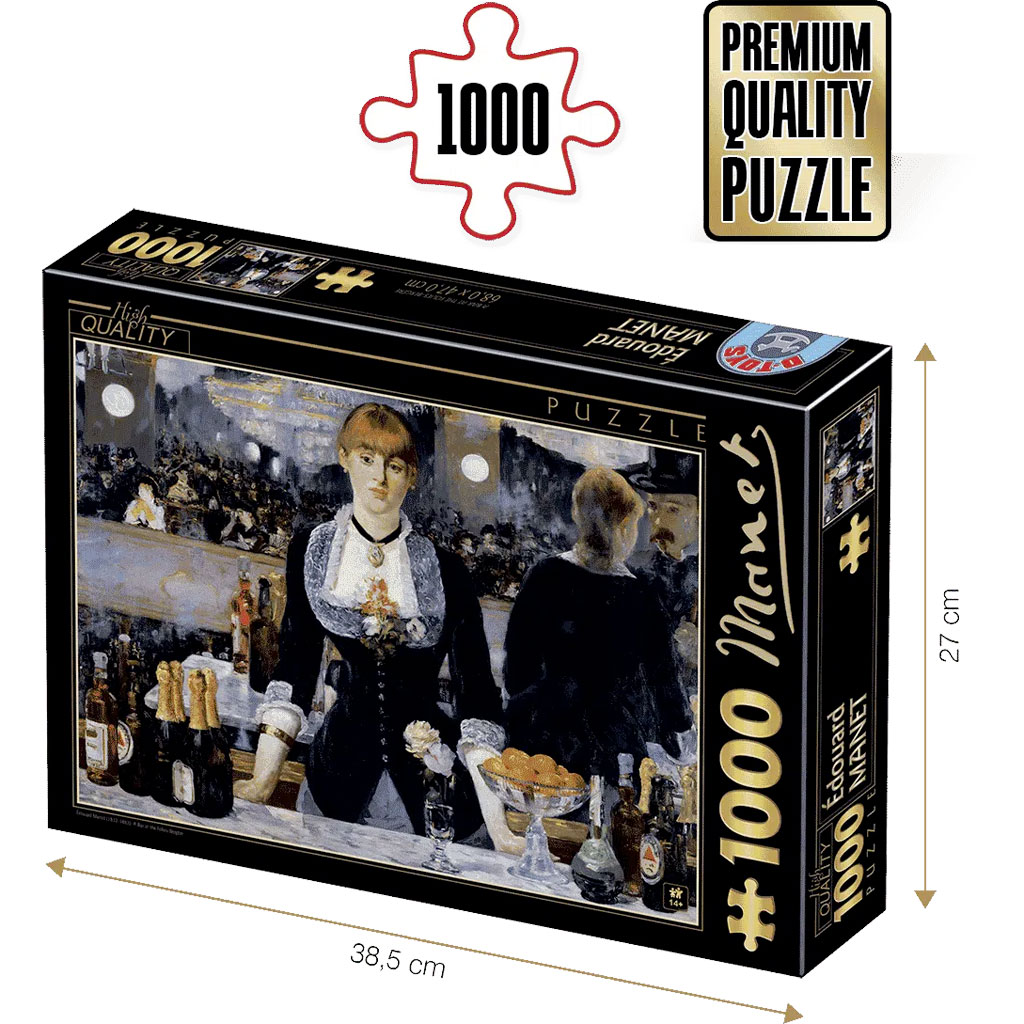
Dimensioni scatola

38 cm x 26.5 cm x 5.5 cm

Movimenti artistici

EAN

594750287306801

5 motivi per acquistare i nostri puzzle d'arte

Puzzle Ricercati Puzzle Arte

Puzzle d’arte rari e ricercati

Spedizione Gratuita Puzzlearte

Spedizione gratuita sopra i 50€

Consulenza Puzzlearte

Consulenza e assistenza da veri esperti

Progetti Rimboschimento Puzzlearte

Progetti di rimboschimento

Bambini Puzzlearte

Progetti educativi per i più piccoli

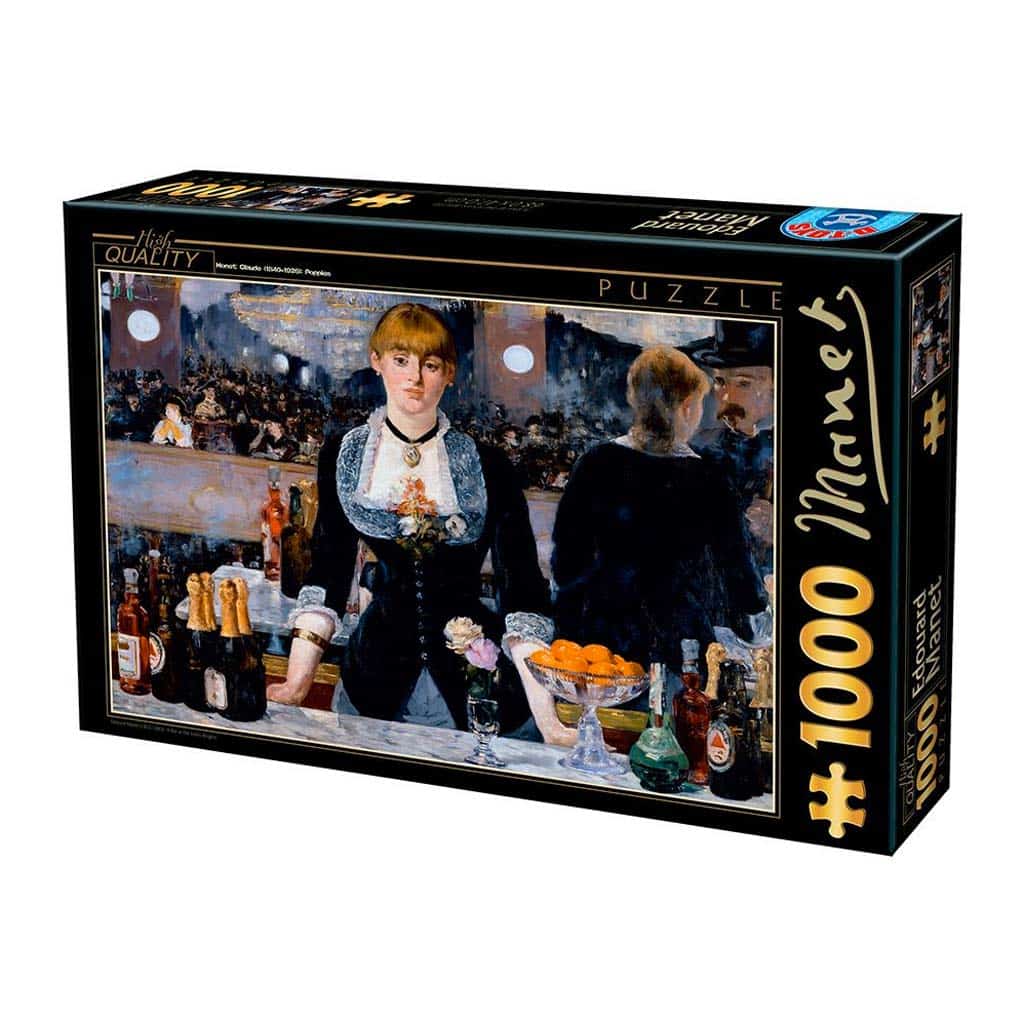
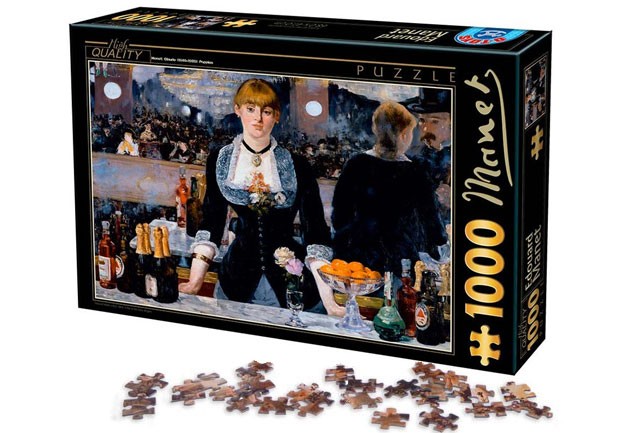
The bar of the Folies Bergère Manet – puzzle 1000 pieces

(1 customer review)
Novità!

25,00

25,00

3 in stock

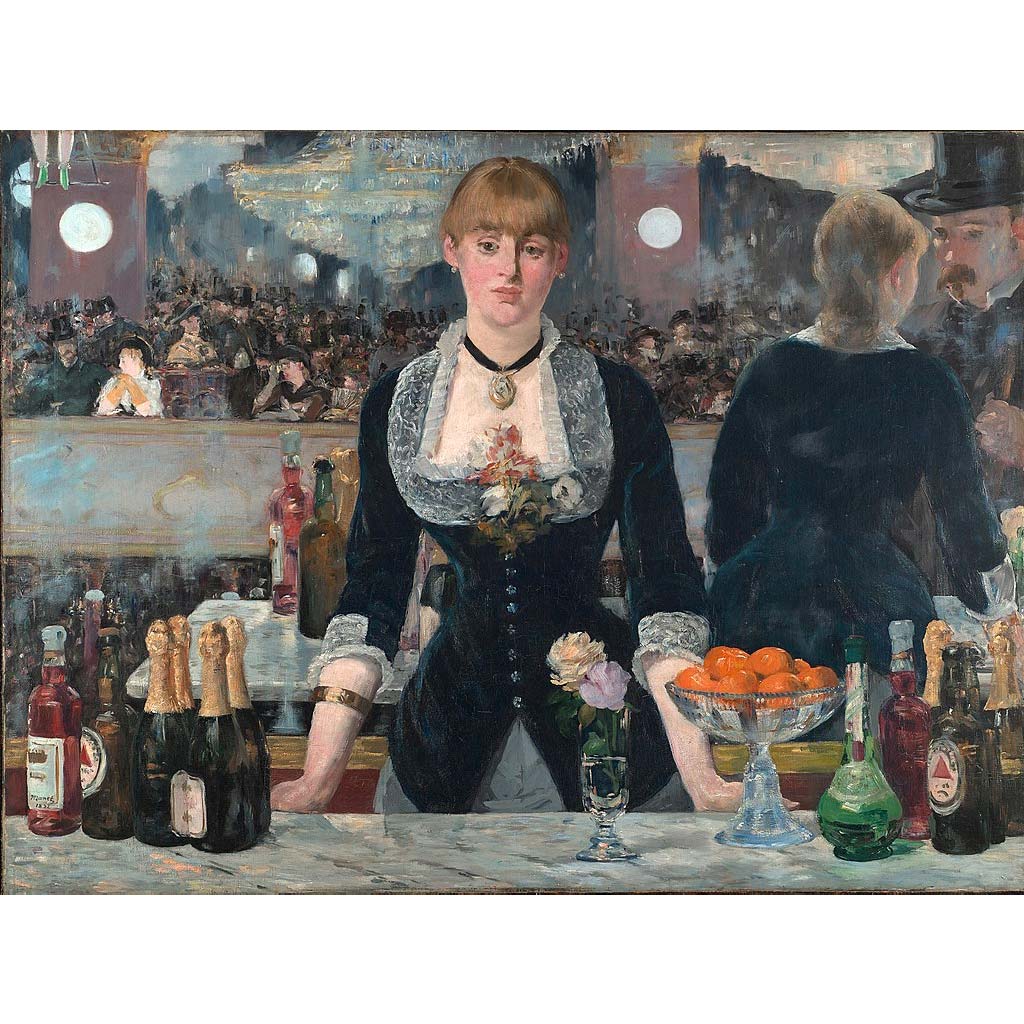
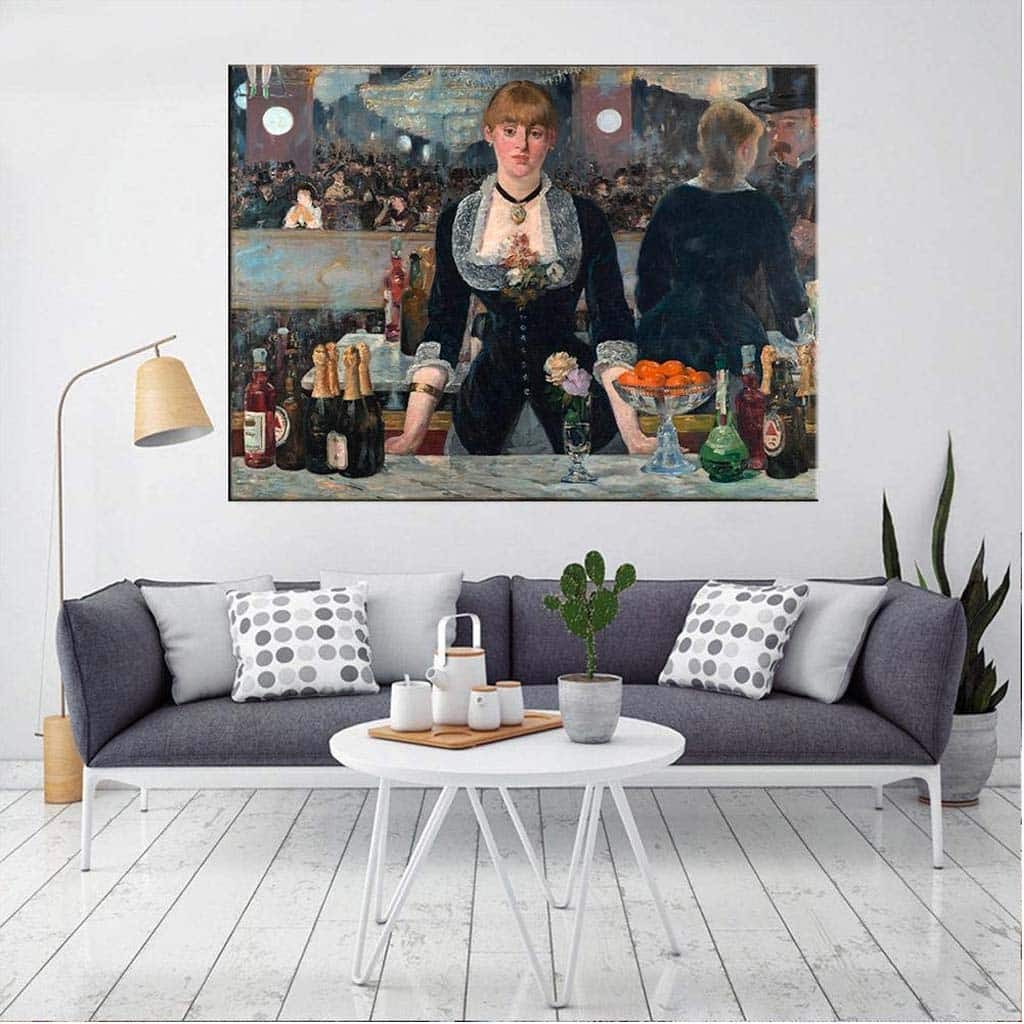
Discover the style of modern art and challenge yourself with the famous 1000-puzzle puzzle The Bar at the Folies Bergère Manet .
Puzzle Art, thanks to the new splendid edition of the D-Toys brand, is pleased to offer you this art puzzle that pays homage to the great French artist who was able to express his pain with his brush.

Questo puzzle è momentaneamente esaurito.

Nel frattempo, ti suggeriamo alcuni puzzle d’arte che potrebbero piacerti!

Altri puzzle di Manet

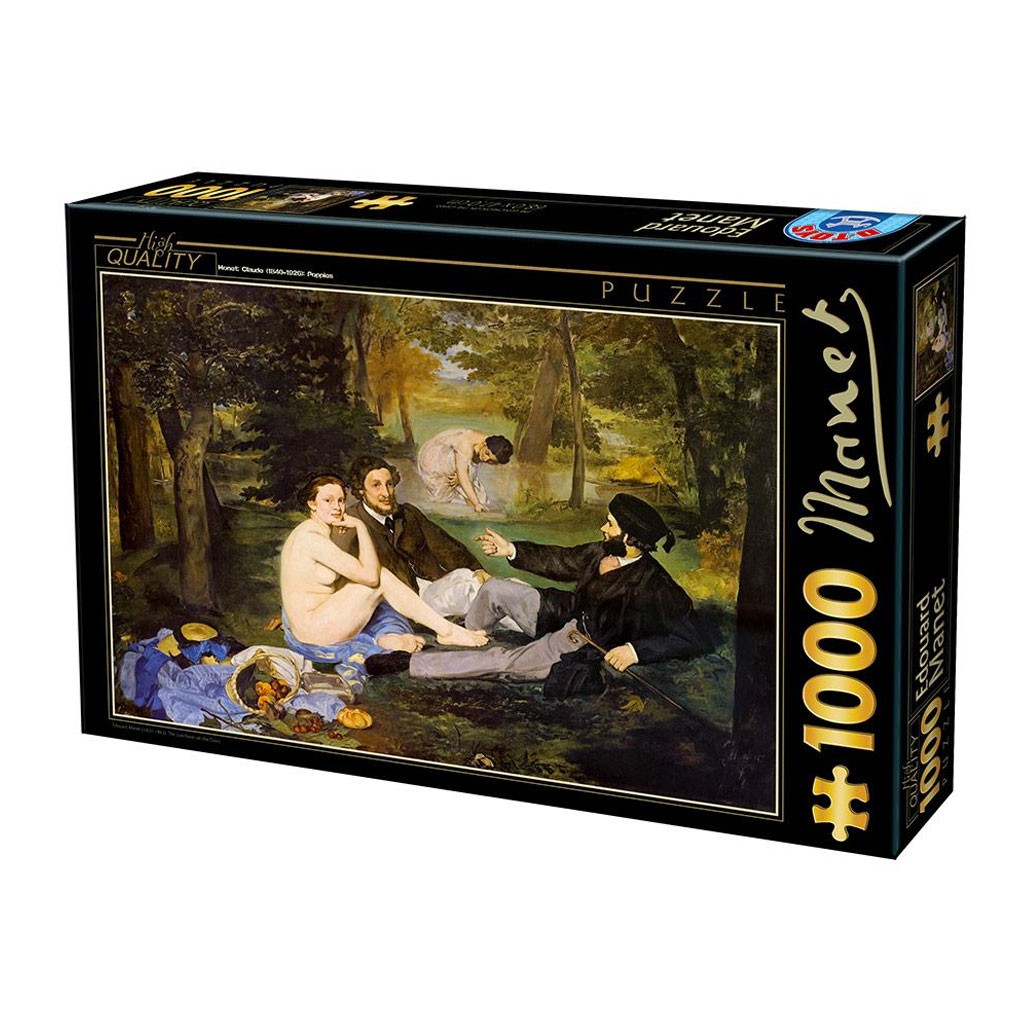
Manet Puzzle Luncheon on the Grass
Luncheon on the Grass – Manet 1000-Piece Puzzle
25,00
Edouard Manet.jpg
Edouard Manet 1000-piece puzzle – The banks of the Seine at Argenteuil
25,00

Puzzle Features

With this wonderful 1000-piece art puzzle from D-Toys, you can discover the wonderful work The Bar at the Folies Bergère by Manet. The painting The Bar at the Folies Bergère by Manet is an oil on canvas by the French painter Édouard Manet, created in 1881-1882 and housed at the Courtauld Gallery in London.

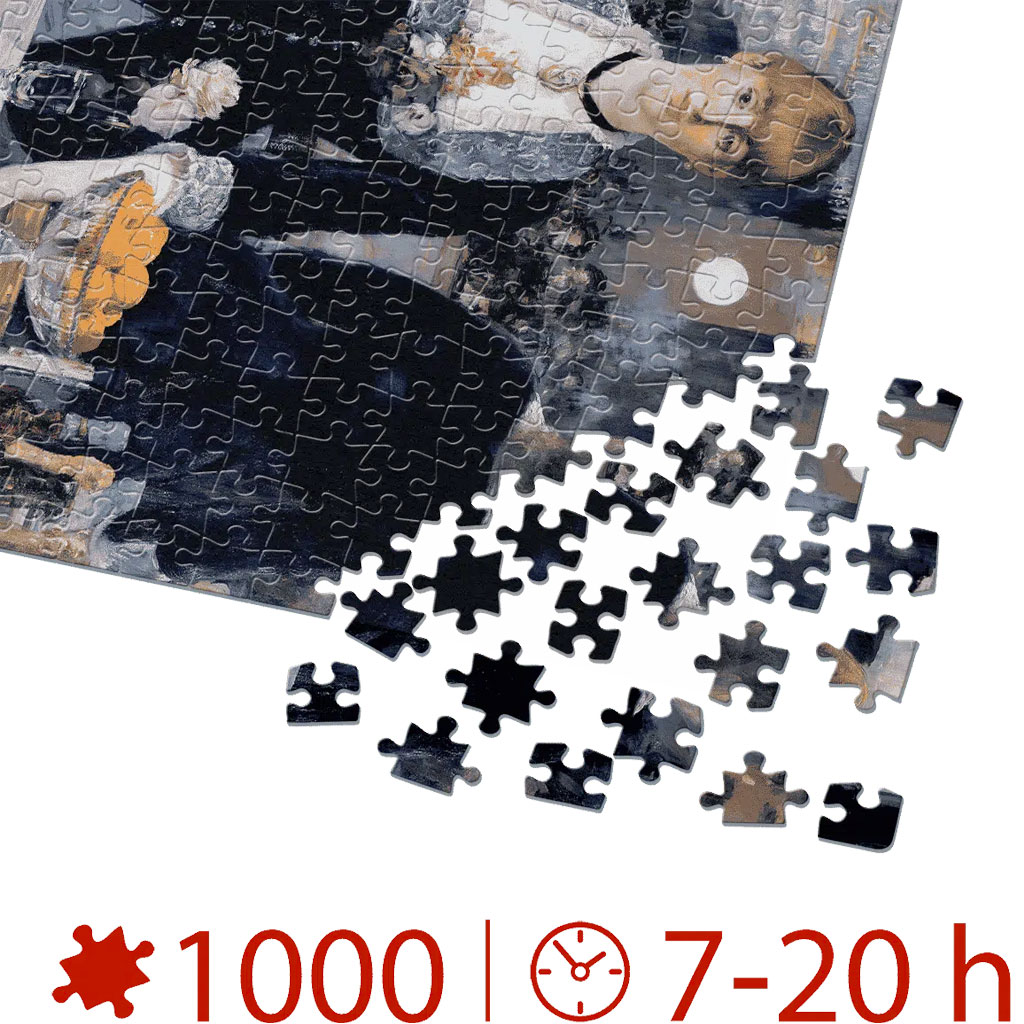
This puzzle is suitable for both experienced puzzlers and beginners thanks to its incredible detail and meticulous features. In fact, in the work, set in a Parisian café, the details and scenes are so dense that each piece is unique and richly detailed.

The puzzle The bar of the Folies Bergère Manet

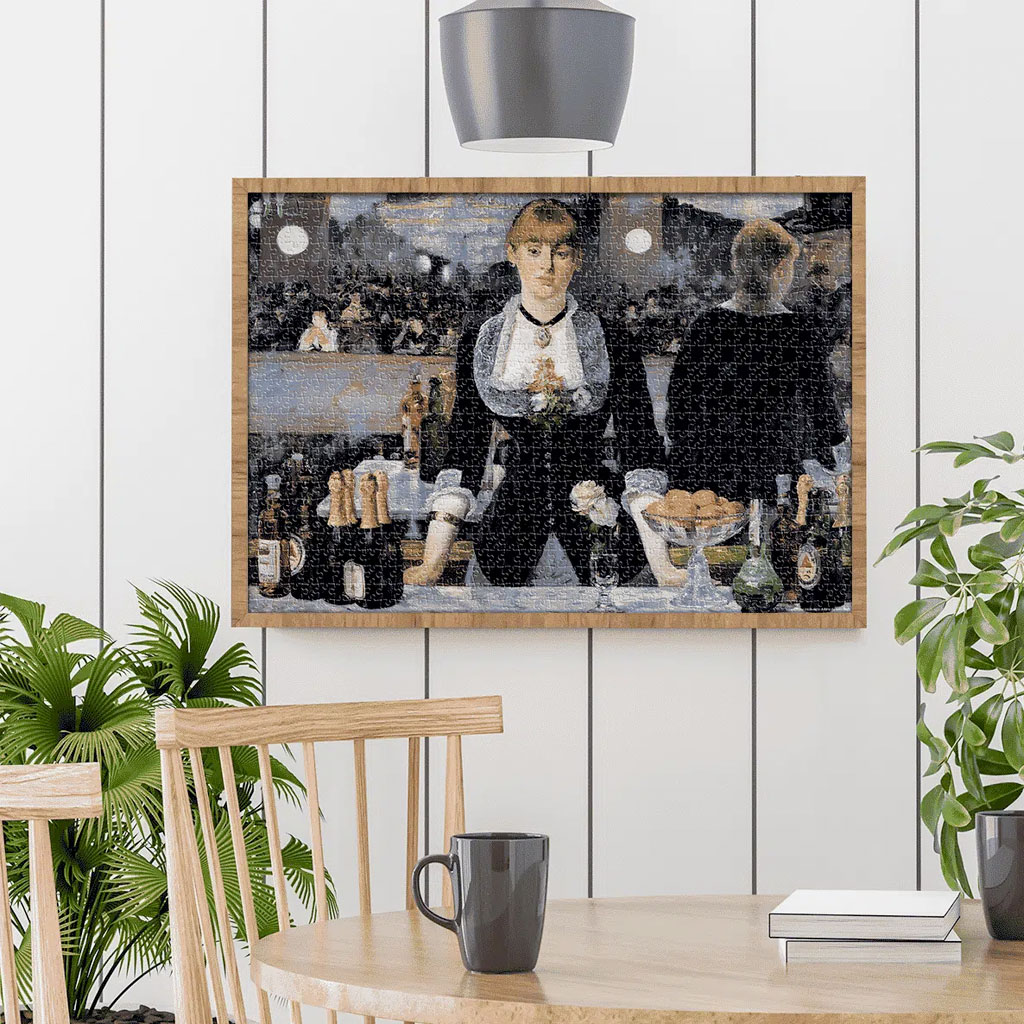
The 1000-piece Manet Bar at the Folies Bergere puzzle from D-Toys is a splendid example of a modern art puzzle.
The magnificent painting by the great French master, a forerunner of modern art and Impressionism, is a magnificent work for discovering the beauty of art piece by piece.
The colors of the puzzle are very bright and the details are extremely accurate and refined. The puzzle pieces are sturdy and fit together well.

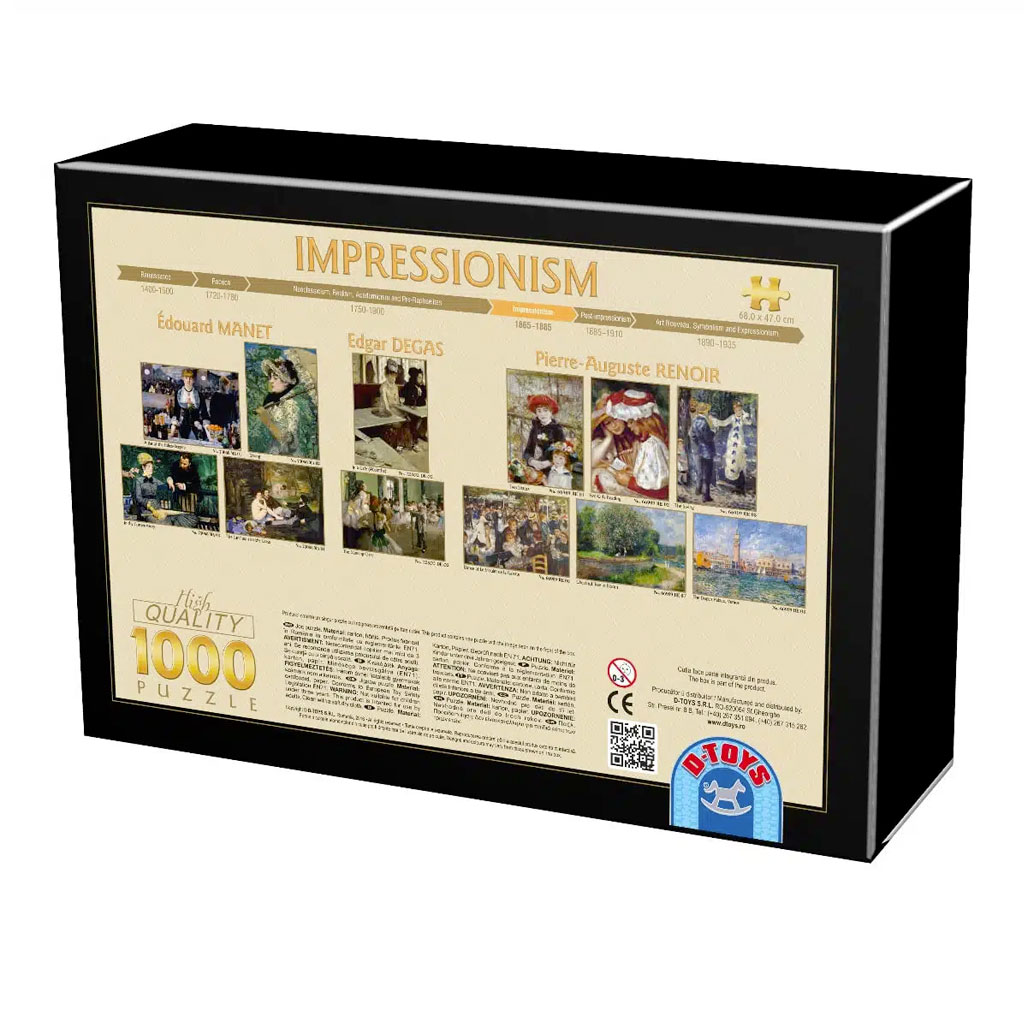
Number of Puzzle PiecesNumber of pieces
1000
Puzzle BrandsBrand
D-Toys
Puzzle DimensionsPuzzle dimensions (cm)
47 x 68
Puzzle Box DimensionsBox dimensions (cm)
38 x 26.5 x 5.5

Well finished box
Wonderful gift idea

Famous work of art
Great masterpiece

1000 pieces
Standard grid

Description of the artwork

The Bar at the Folies Bergère was the last painting produced by Eduard Manet in 1881-1882 before his death and is often considered his artistic and spiritual testament.

Manet, despite great physical suffering, completed the painting in 1882 and exhibited it at the Salon of the same year, where, however, it was not welcomed as the legacy of a great master.

Indeed, the artist, now at the end of his career, was once again disappointed by the obtusely conservative public’s interpretation of his work. He wrote about the 1882 Salon:

“I wouldn’t mind finally reading, while I’m alive, the amazing article that will consecrate me after I’m dead.”

In fact, the brushstrokes of this painting bring together in a great and integrated way the various stylistic elements that characterised Manet’s artistic universe.
Among these we must certainly mention the use of black , the love for everyday themes , the use of flat and homogeneous colours and the taste for calibrated compositions and still lifes.

The Bar at the Folies Bergère by Manet

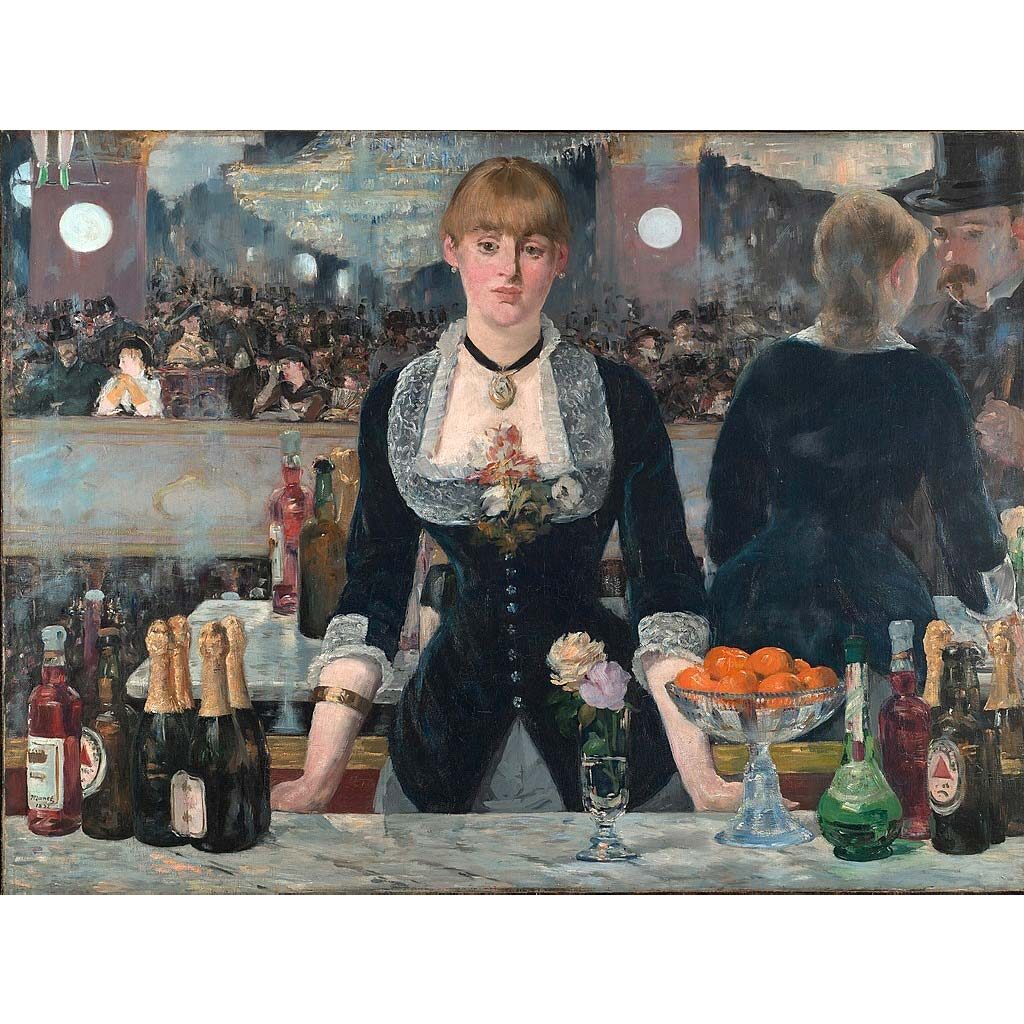
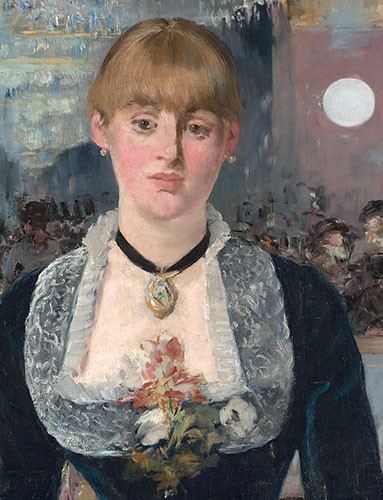
Edouard Manet ‘s painting, A Bar at the Folies Bergère , 1882, is an oil on canvas measuring 96 x 130 cm and housed in The Courtauld Gallery, London.

In the work, what at first glance appears to be the interior of a simple bar is actually a snapshot of a late nineteenth-century meeting place.
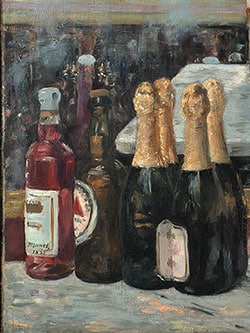
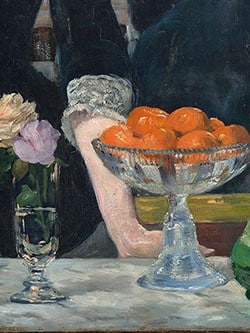
Indeed, in the foreground, the waitress is standing still. Bottles of champagne and beer are placed on the marble counter in front of her. Mandarins are displayed on a stand, while two roses protrude from a glass.

Despite the seemingly bustling crowd behind her, the waitress is the only truly real character. Indeed, behind her is a large mirror that takes up the entire wall.
The observer can only guess at the thoughts of this girl, perhaps tired of her job, disillusioned with her life, and preoccupied by the ambiguous and disturbing world of the bar’s patrons.

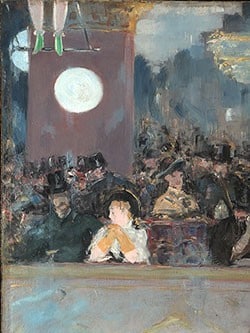
Behind her extends a mirror, reflecting the image of the vast salon of the Folies-Bergère.

Manet’s Second Thoughts

Manet made some changes while he was painting the work, as demonstrated by an X-ray of the canvas, in which we can see that the artist initially painted the barmaid with her arms crossed at her waist, with her right hand clasped around her left wrist.
This gesture further underlined an attitude of protection from the outside, but also of dissatisfaction.
The inaccuracy of the waitress’s reflection, shifted too far to the right in the mirror, also sparked much debate.
Yes, because besides Suzon, the protagonists of the work are the mirror that reflects the joyful life of the place and the still life on the counter in front of the young woman who presents us with ordinary objects such as bottles of champagne, liqueurs, a crystal fruit bowl full of oranges and a glass with flowers.

The mirror of the bar

The mirror expands the painted space , showing the observer what is in front of the frontal area of ​​the painting: in this way, what would technically lie outside the painting is drawn inside it in a game between appearance and reality.
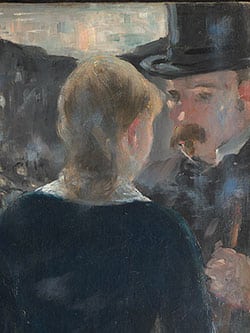
It is clear that it is a mirror by looking to the right, where you can see the reflection of the back of the servant and the face of a mysterious supporter with a top hat who is giving her the order.
Upon closer observation, moreover, one realizes that the position of this man actually coincides with that of the observer himself.

With the mirror, populated by a phantasmagoria of lights and brushstrokes, Manet suggests the festive presence of the audience at the Folies-Bergère, illuminated by the incandescent light of the chandeliers.
This time too, the colours are applied to the canvas without any glazing to give them a chiaroscuro effect, with a technique that is already almost impressionist.
In this way, what when seen up close appear to be disordered and incoherent patches of color, when viewed from a distance, acquire a suggestive and pulsating effect of realism.

This effect, which has been criticized, actually fits very well with the sonic impression of a gathered crowd talking, listening, watching and enjoying life.
The room, in fact, is a multiplicity of small tables around which sit men in elegant black top hats and women armed with binoculars, intent on watching a show. What kind of show it is, you can understand by looking at the top left, where you can glimpse the legs of a trapeze artist performing her acrobatics, showcasing her talents to the delighted audience.

The optical solution of the mirror was used as early as 1434, the year of execution of the Arnolfini Portrait, and in numerous other paintings of the following years, such as Las Meninas by Diego Velázquez, and Absinthe by Edgar Degas, two works that Manet knew and which probably served as inspiration for The Bar at the Folies Bergère.

In the mirror, however, we also glimpse a customer approaching Suzon and in this moment we understand that we too are protagonists of the painting, ideally finding ourselves in the same position as the gentleman in the top hat.
A play of reflections that recalls the famous Arnolfini Portrait, and numerous other paintings such as Las Meninas by Diego Velázquez, and Absinthe by Edgar Degas.


1 review for The bar of the Folies Bergère Manet – puzzle 1000 pieces

  1. Italian

    Micaela Catanese

    Grazie ad una visita guidata, ho avito occasione di scoprire molti dettagli di questo vero capolavoro di Manet. Ottima l’idea di averla in casa, seppure ricreata con il bel puzzle.

Show only reviews in English (0)

Add a review

Your email address will not be published. Required fields are marked *

Complimenti!

hai una vera passione per l'arte!

Visto che sei arrivato fino a qui, meriti un premio!
Ecco uno sconto del 10% per il tuo prossimo capolavoro! ✨

Cosa se ne pensi di questi puzzle d'arte simili...

Novità!
Hot Hot

25,00

Novità!

49,99

25,00