

| Numero pezzi | |
|---|---|
| Marca | |
| Atmosfera | |
| Artista | |
| Occasione | |
| Movimenti artistici | |
| Museo d'arte | |
| Dimensioni dell'opera | 48.2 cm x 56.5 cm |
| Difficoltà | |
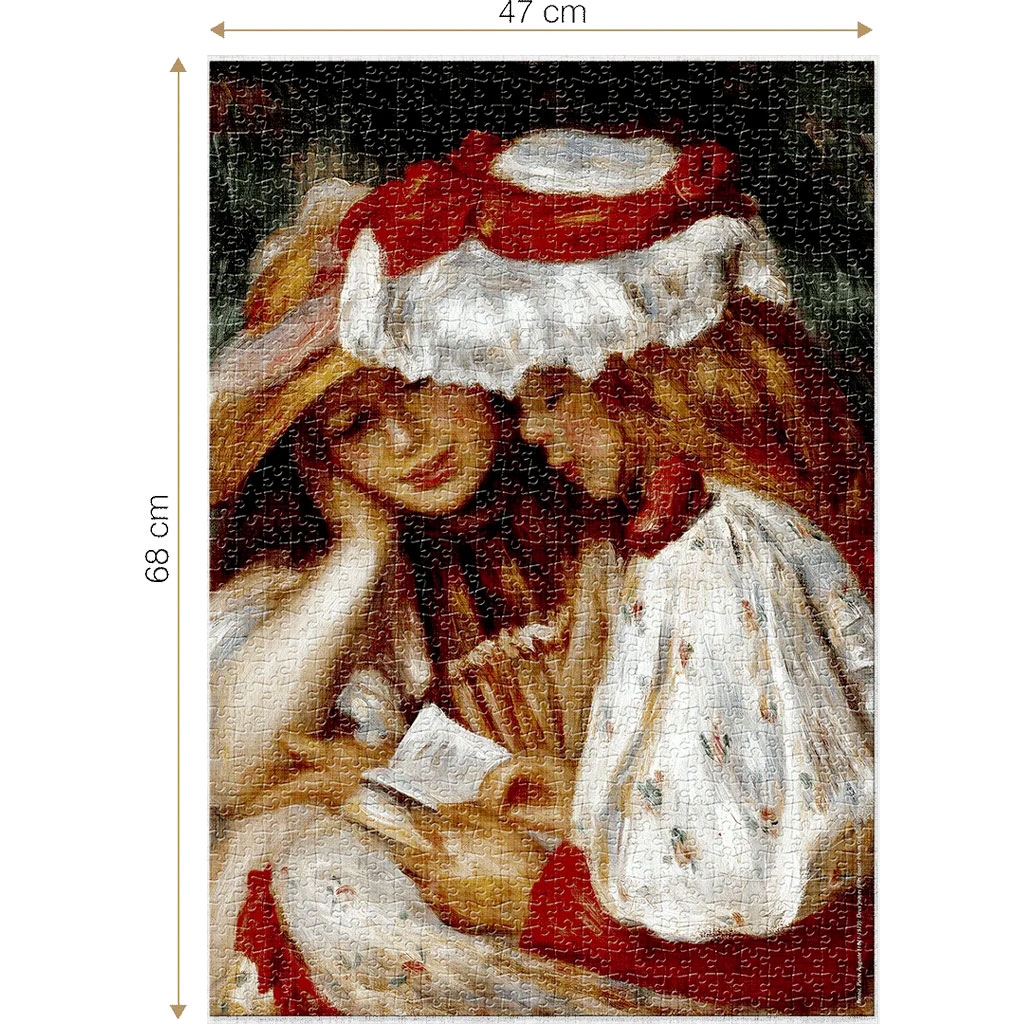
| Dimensioni puzzle | 68 cm x 47 cm |
| Dimensioni scatola | 38 cm x 26.5 cm x 5.5 cm |
| EAN | 5947502870289 |
5 motivi per acquistare i nostri puzzle d'arte





25,00€
25,00€
Out of stock
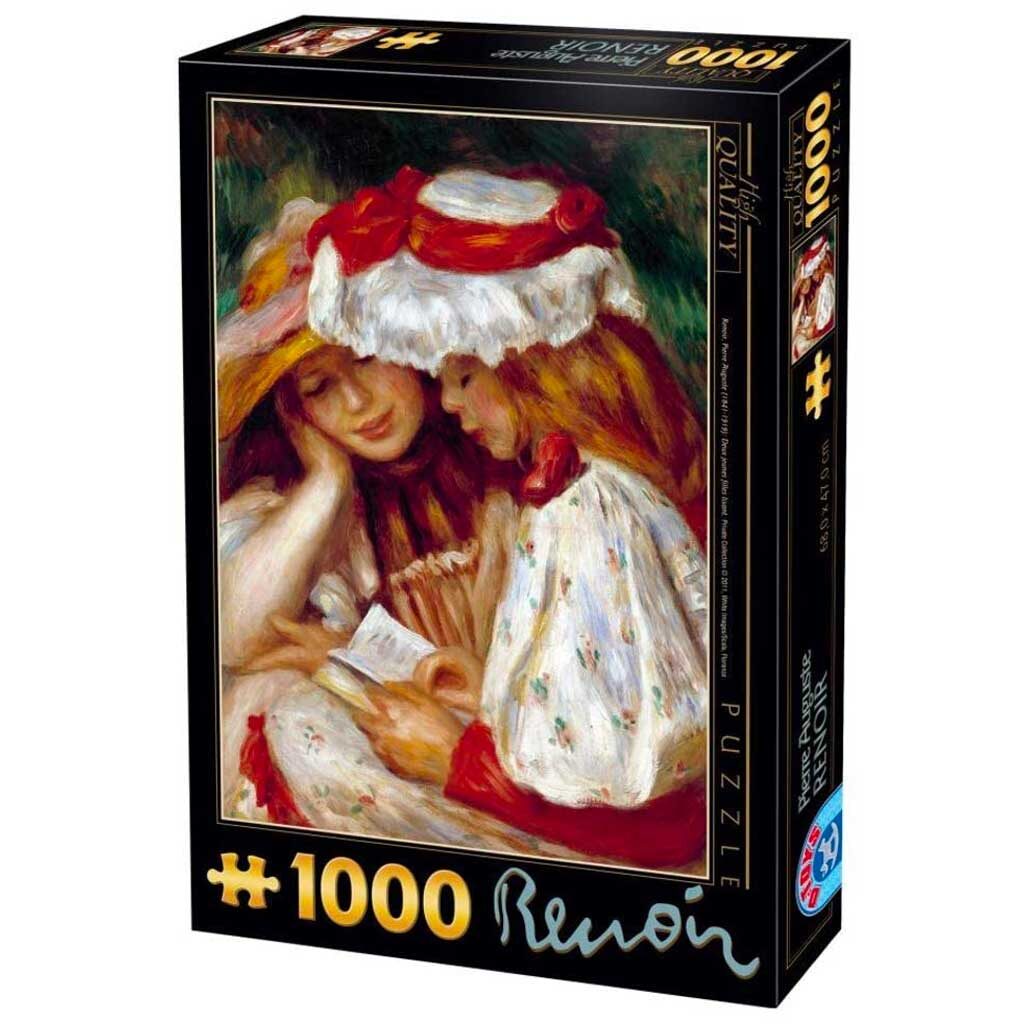
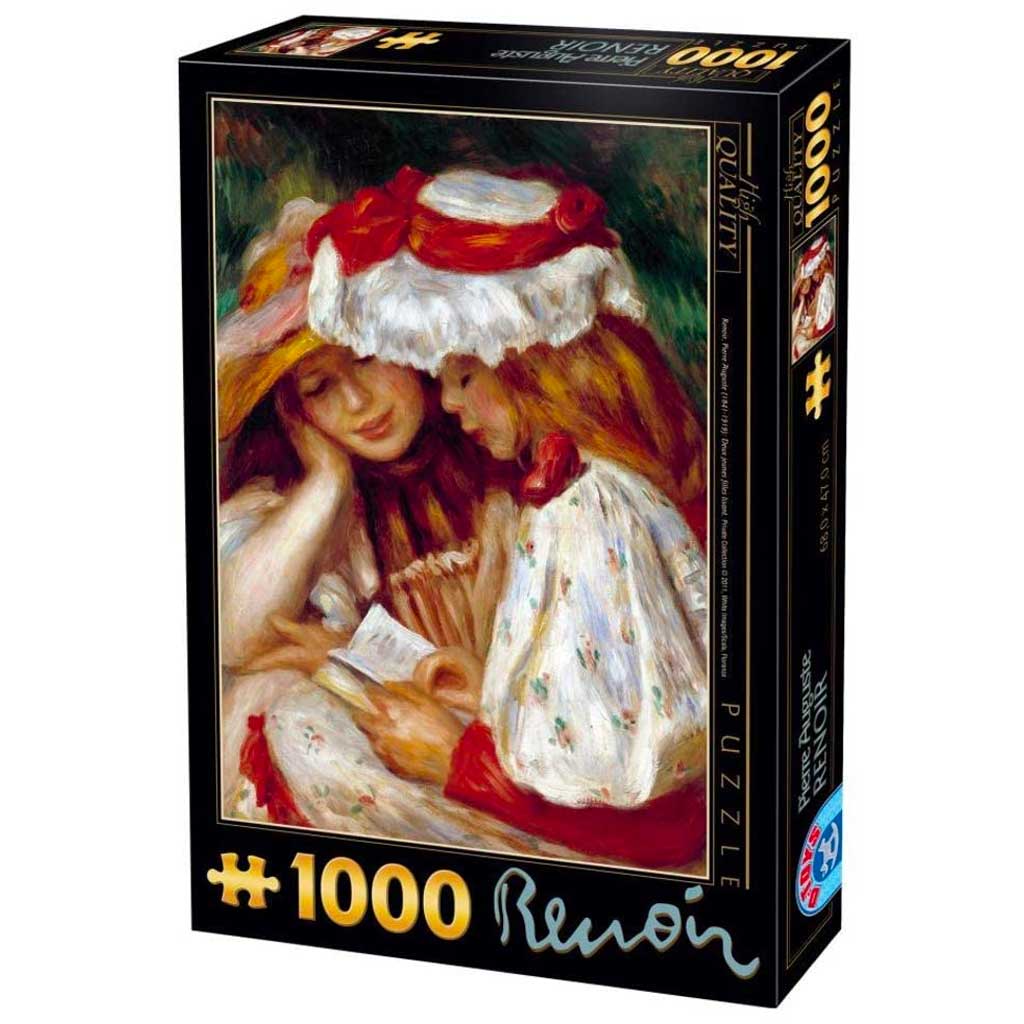
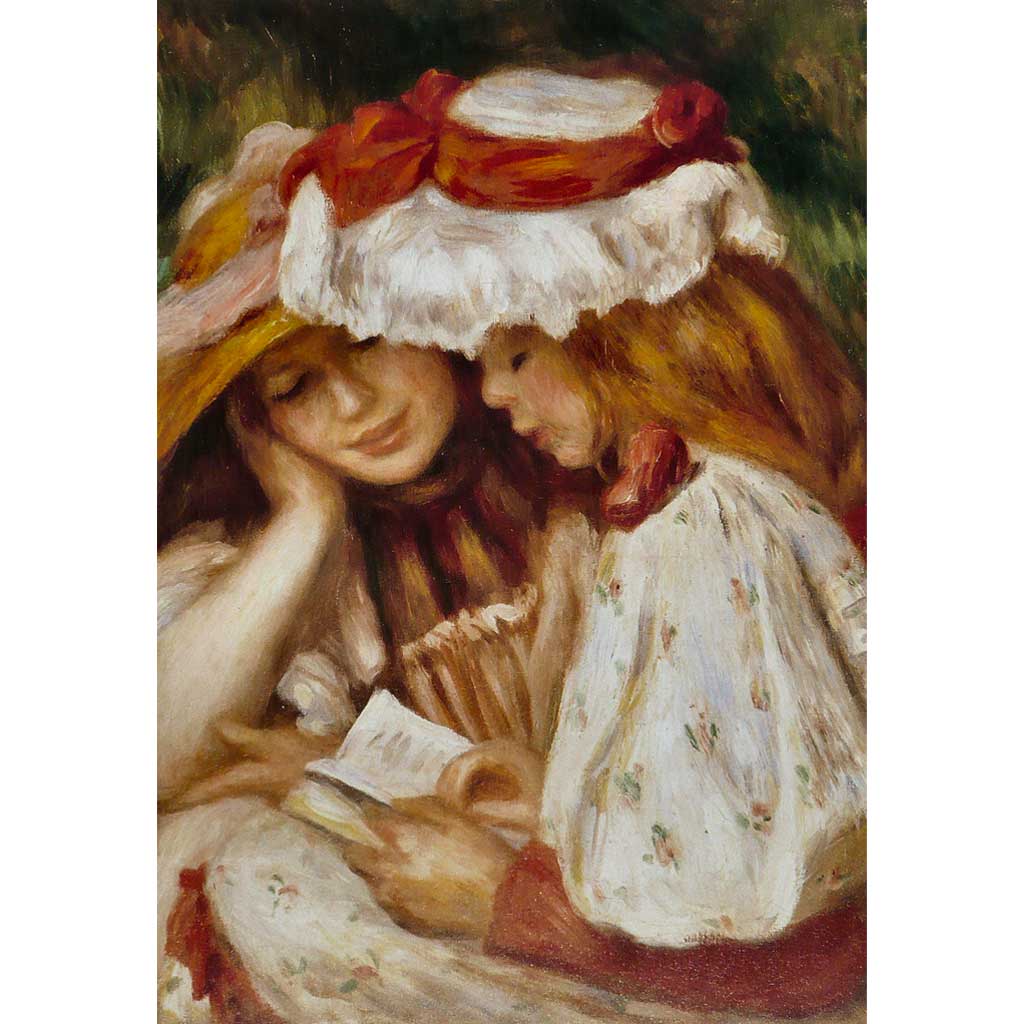
Discover the puzzle Two girls reading Renoir to learn about one of the most well-known and elaborate studies of modern and Impressionist art.
Also composing one of our impressionist puzzles You will be able to have fun and be excited as you discover the art of the great masters piece by piece.
Questo puzzle è momentaneamente esaurito.
Nel frattempo, ti suggeriamo alcuni puzzle d’arte che potrebbero piacerti!
Renoir’s puzzle of two girls reading is one of the best-known and most elaborate studies of Impressionist art and the skilful encounter between modern and classical painting.
In fact, Two Girls Reading by Renoir is an oil painting on canvas dated between 1890 and 1891. Made by Pierre-Auguste Renoir The painting is an interesting study among Renoir’s works of art. Indeed, during this period and throughout his career, the French master demonstrated a mastery of both Impressionist art and classical painting techniques.
Thanks to this beautiful 1000-piece art puzzle from D-Toys you can discover all the wonder of the impressionist art of the French painter Pierre-Auguste Renoir.
Two Girls Reading by Renoir is an oil on canvas painting created between 1890 and 1891. In this painting, Pierre-Auguste Renoir demonstrates his ability to synthesize various pictorial currents by mixing both Impressionist art and classical painting techniques.
 | Number of pieces 1000 |  | Brand D-Toys |
 | Puzzle dimensions (cm) 68 x 47 |  | Box dimensions (cm) 38 x 26.5 x 5.5 |
Well finished box
Wonderful gift idea
Sought-after art subject
bright colors
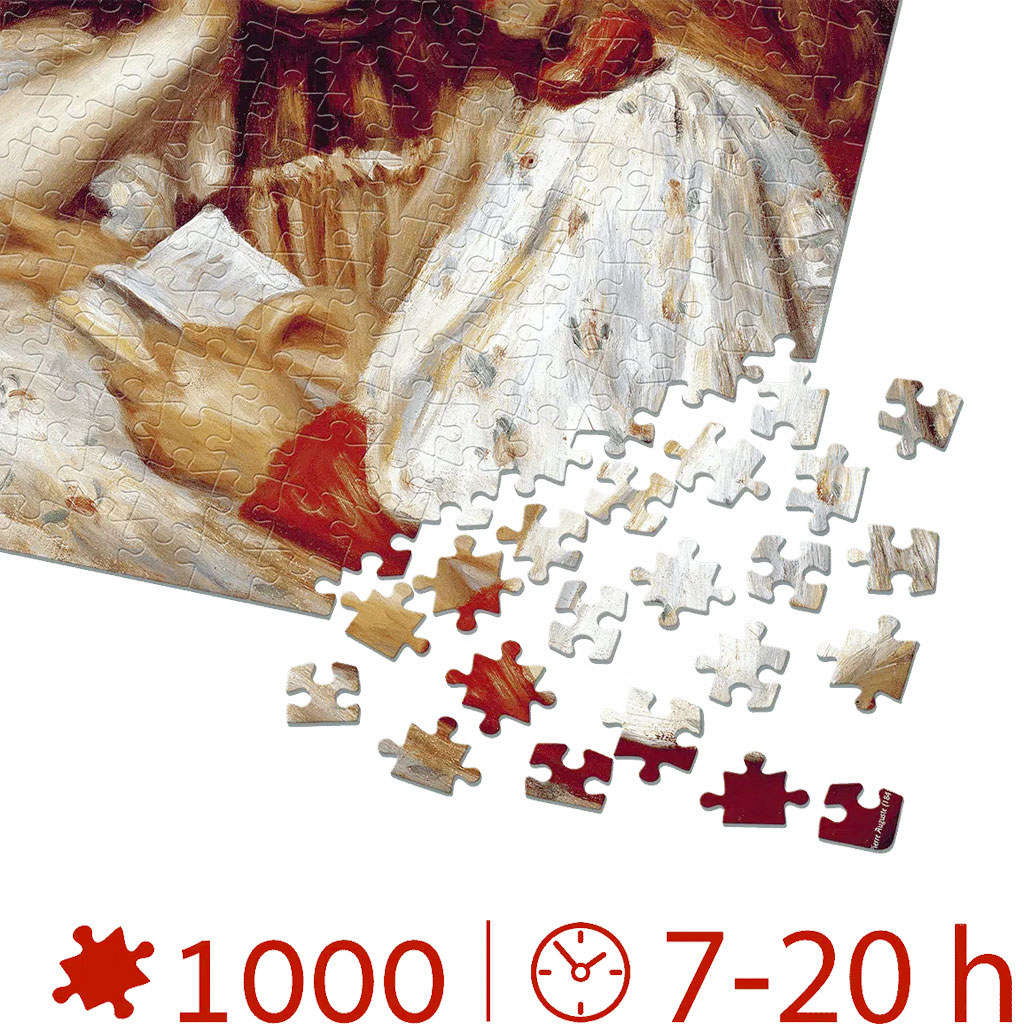
1000 pieces
Standard grid
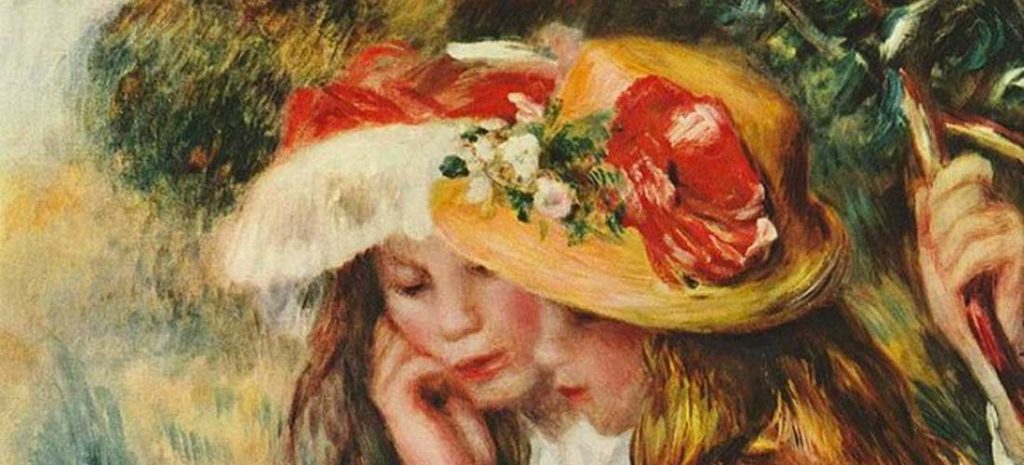
Two Girls Reading is an oil painting on canvas dated between 1890 and 1891. Made by Pierre-Auguste Renoir The painting is an interesting study among Renoir’s works of art. Indeed, during this period and throughout his career, the French master demonstrated a mastery of both Impressionist art and classical painting techniques.
Towards the end of his painting career, Renoir moved away from Impressionist painting and tried to become more creative by mixing classical art techniques and modern art techniques.
Renoir’s Two Girls Reading is an excellent example of a meeting of two completely divergent painting techniques. Classical paintings typically focused heavily on idealized images. Impressionist art, on the other hand, focused on light and color.
In this painting, Renoir blended these two aspects, creating a painting that has long been a point of reference.
Two Girls Reading is a phenomenal painting. The blend of classical painting and Impressionist painting techniques is striking.
The painting, as the name suggests, depicts two girls reading a book. The balance of light and color creates a sense of space and the rendering of the two figures’ volumes. The painting perfectly captures the light falling on the girls. The background blends seamlessly with the images and clearly highlights the subject: the two girls reading.
The painting was a great inspiration and influenced the careers of many contemporary and subsequent painters. The work is characterized by large, strong brushstrokes alternating with small touches that create atmosphere and depth in the image.
Renoir was a great lover of both classical and impressionist painting. He was therefore able to work and interact with many styles and techniques. Indeed, during his artistic training, he studied at art school in Paris and was mentored by the famous landscape painter Charles Gleyre.
Under Charles Gleyre , he met other young painters such as Alfred Sisley, Frédéric Bazille and Claude Monet.
In fact, Renoir and Monet , despite having different tastes and education, shared a fraternal friendship.
In the summer of 1869, the two painters went together to Bougival, a picturesque village on the banks of the Seine, about twenty kilometers west of Paris.
The main natural attraction of the place was the islet of Croissy, which, located in the middle of the Seine, divided its course into two branches. Connected to the mainland by a bridge, it was equipped with a characteristic open-air restaurant, set up on a raft moored to the bank, and with several beach facilities surrounded by vegetation.
The entire complex was known by the joking name of Grenouillère, which literally means “frog pond” but which, in spoken French, also refers to a place where many girls eager to have fun gather.
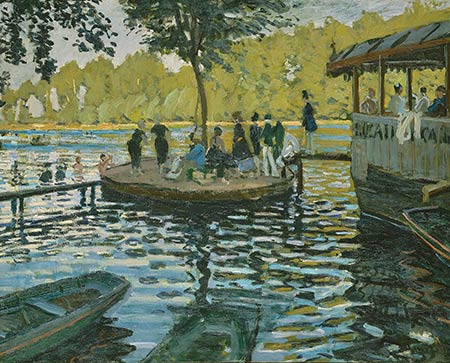
Renoir and Monet then set up their easels next to each other and within a few hours each created their own Grenouillère. Monet ‘s painting is now housed at the Metropolitan Museum in New York , while Renoir ‘s is at the National Museum in Stockholm.
A parallel analysis of the two works allows us to better understand the different Impressionist approaches of each artist. Their perspective is virtually identical, but their focus on the scene is different.
While Monet emphasizes the overall image, distancing the central island in perspective, Renoir is more sensitive to the human presence, which, despite the hazy indeterminacy of small, rapid brushstrokes, nevertheless appears better defined than his friend’s. Monet’s figures, in fact, are drawn not unlike the plants and the rest of the surrounding nature, with which they appear in perfect balance.
Monet’s attention, therefore, always remains extremely synthetic.
Where both artists gave their best, however, in the representation of the movement of the water and the thousand reflections that color it, Monet uses a few colors applied in horizontal brushstrokes, identifying the areas of light and shadow with abrupt chromatic changes, such as around the boats and the central islet or near the opposite shore.
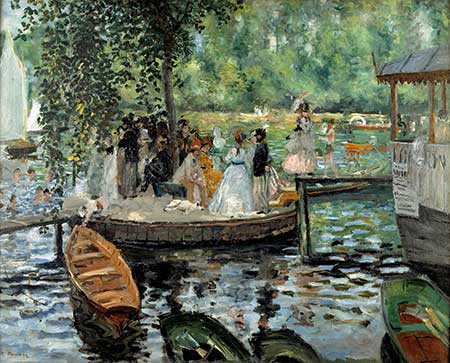
Renoir, on the other hand, uses a finer brushstroke, breaking the light into small patches of color and giving the whole a sense of joyful liveliness.
Renoir’s Grenouillere is undoubtedly more festive and bright , like all his paintings, while Monet ‘s interpretation of it is perhaps less showy but certainly more rigorous.
Complimenti!
hai una vera passione per l'arte!
Visto che sei arrivato fino a qui, meriti un premio!
Ecco uno sconto del 10% per il tuo prossimo capolavoro! ✨
24,90€
25,00€


Reviews
There are no reviews yet.