
| Numero pezzi | |
|---|---|
| Marca | |
| Atmosfera | |
| Artista | |
| Occasione | |
| Museo d'arte | |
| Dimensioni dell'opera | 50 cm x 100 cm |
| Movimenti artistici | |
| Difficoltà | |
| Dimensioni puzzle | 50.8 x 63.5 cm |
| Dimensioni scatola | 33 x 25 x 5 cm |
| EAN | 9780764983061 |
5 motivi per acquistare i nostri puzzle d'arte




25,00€
25,00€
1 in stock
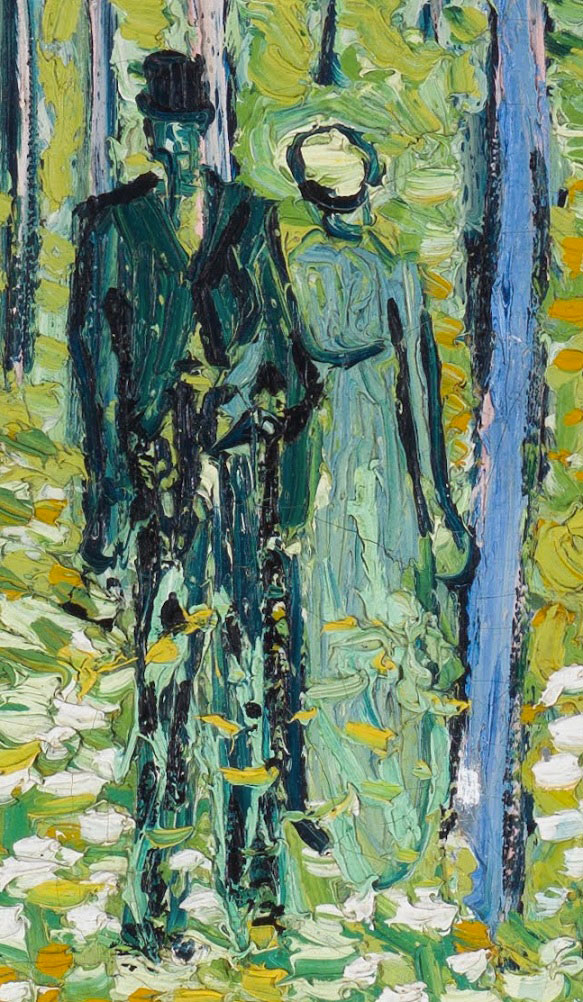
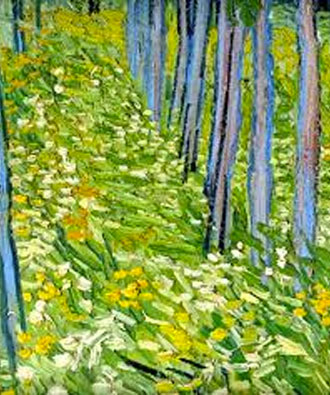
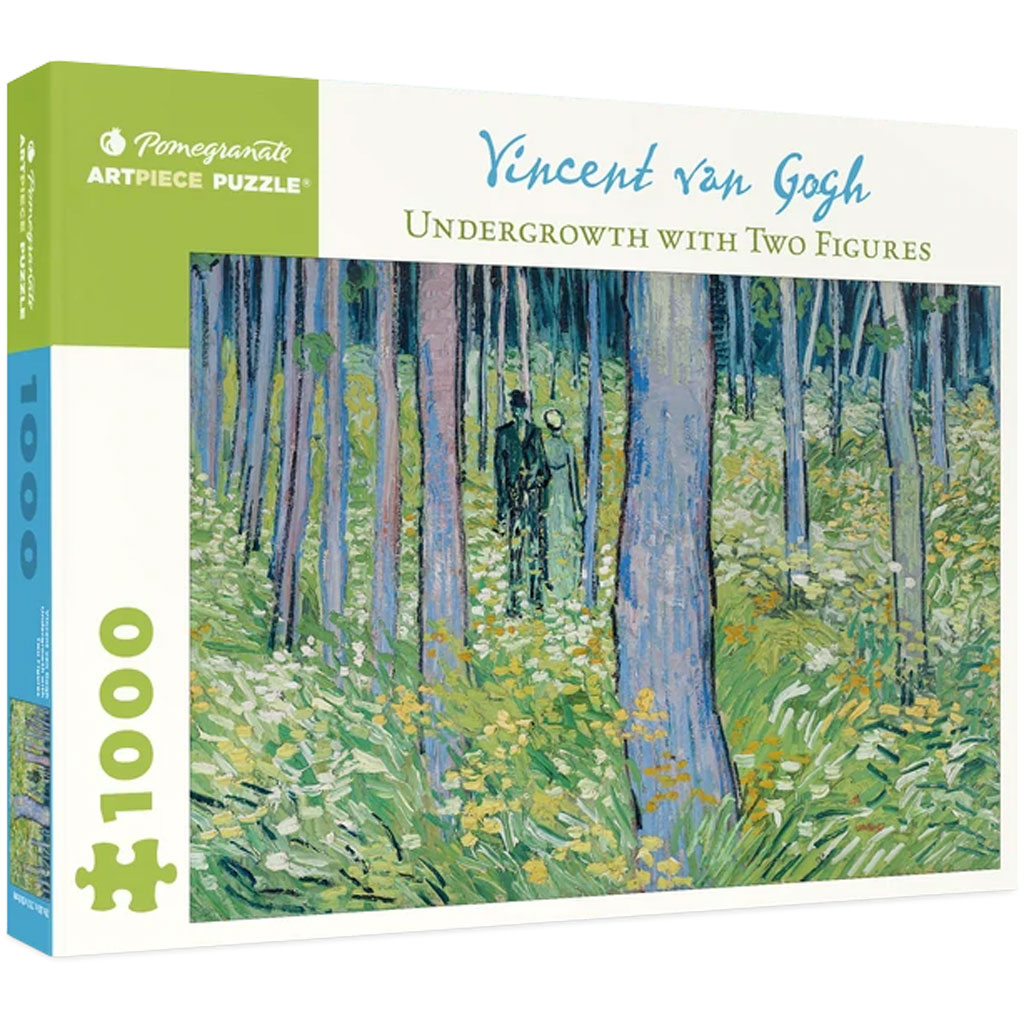
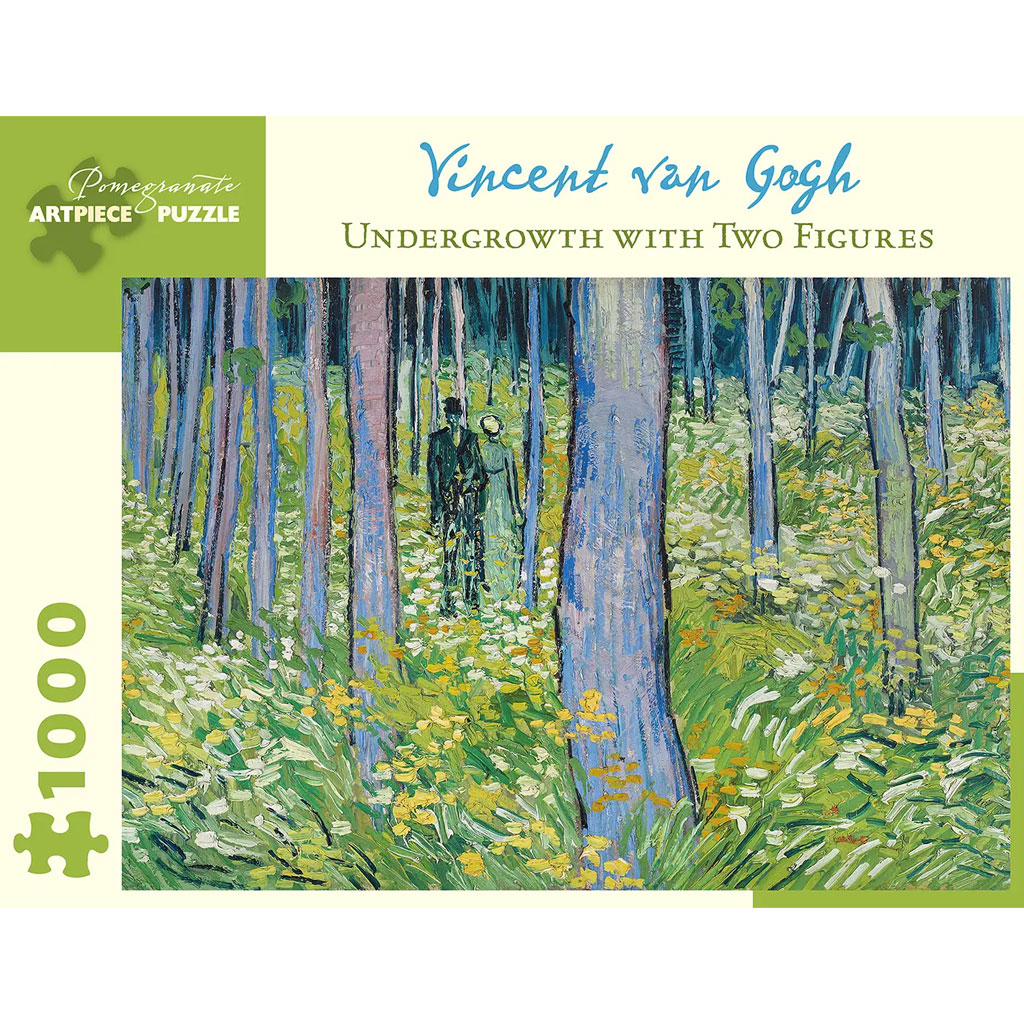
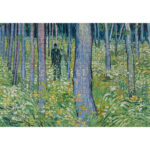
In Van Gogh’s Undergrowth with Two Figures we can notice the fusion between the Impressionist style and Vincent Van Gogh’s technique, which is also highly recognizable here, especially thanks to the type of brushstroke that dominates many of his other famous works.
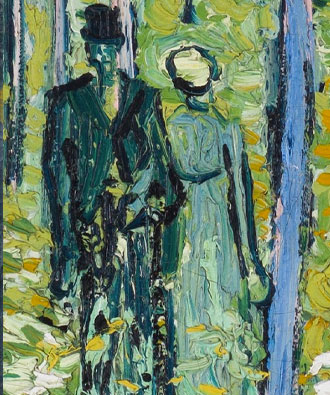
There is not enough evidence to define the two figures who posed for the canvas, since the painter did not even focus on rendering the details of their faces, but preferred to sketch only their basic features and the clothing they were wearing.
The couple wears clothes that are very reminiscent of those worn by Parisians during the holidays: it is worth noting that during the holidays it was common to go for walks in the numerous parks or natural spaces both within and near the capital to relax.
Questo puzzle è momentaneamente esaurito.
Nel frattempo, ti suggeriamo alcuni puzzle d’arte che potrebbero piacerti!
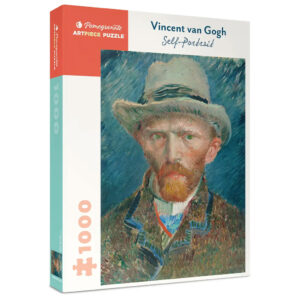
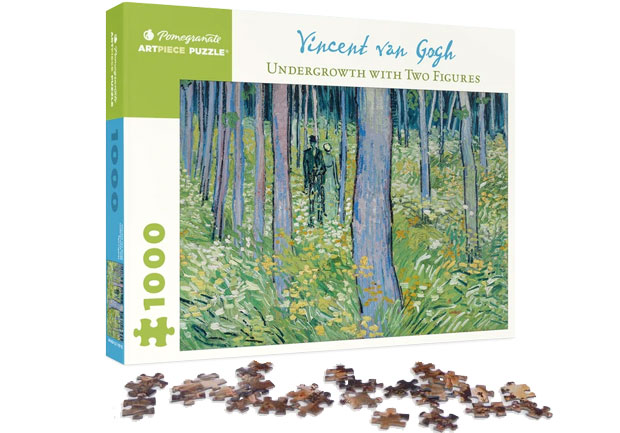
Van Gogh Undergrowth Puzzle is one of the most fun and fascinating ways to discover art piece by piece.
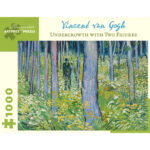
Thanks to this beautiful 1000-piece art puzzle from the Pomegranate brand, you can discover all the emotional strength and density of the colors of the great master of post-Impressionist art: Vincent Van Gogh.
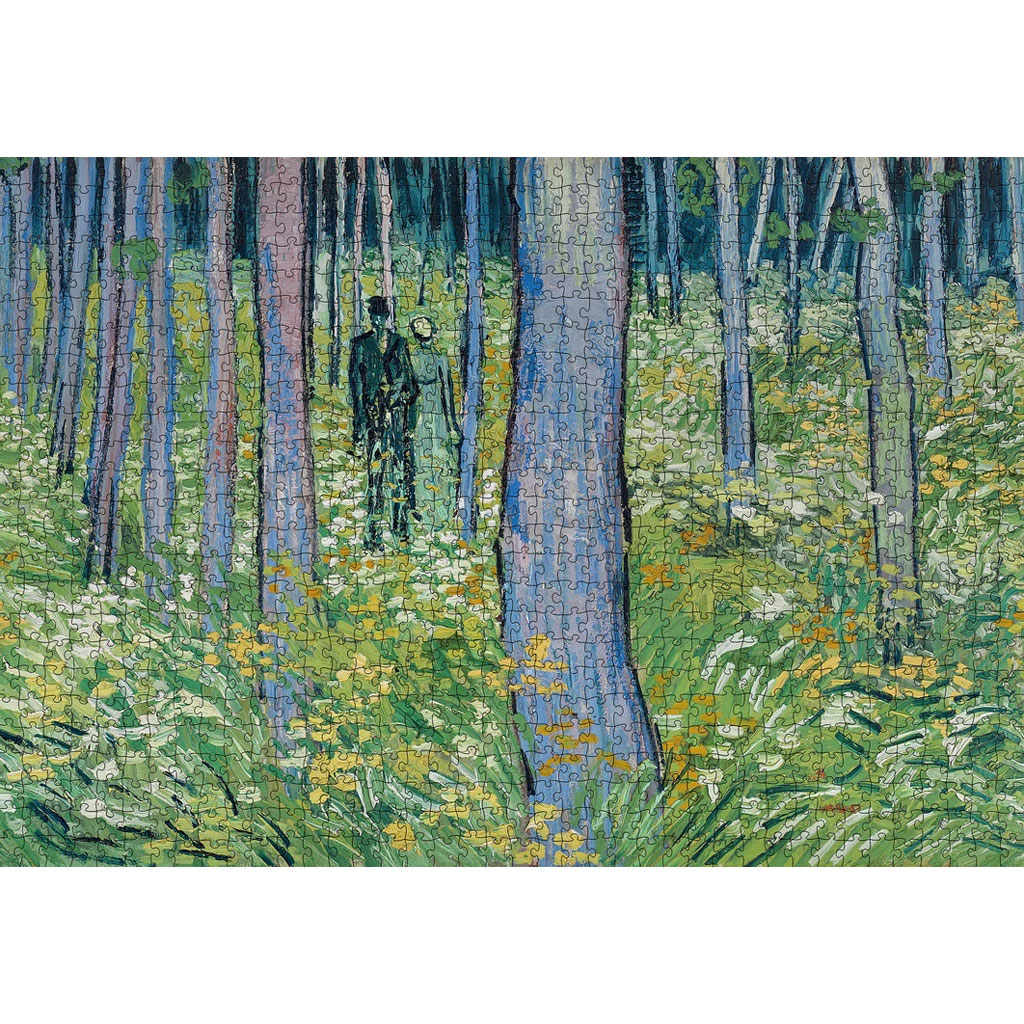
This puzzle is suitable for both experienced puzzle builders and those less experienced thanks to its two-dimensionality and clearly identifiable colored areas that make it easier to build.
Pomegranate ’s 1000-piece Van Gogh ’s Forest Floor Puzzle is a fascinating example of post-impressionist art.
In fact, the works of this great painter are considered the connecting works between the Impressionist movement of the late nineteenth century and the artistic avant-garde of the early decades of the twentieth century.
Although this undergrowth with two figures is one of the last paintings of Van Gogh’s life, his technique and the colors used do not reveal any psychological torment, but, on the contrary, nature and peace reign supreme.
 | Number of pieces 1000 |  | Brand Pomegranate |
 | Puzzle dimensions (cm) 50.8 x 63.5 |  | Box dimensions (cm) 33 x 25 x 5 |
Well finished box
Wonderful gift idea
Original work
Bright colors
1000 pieces
Standard grid
Van Gogh’s Undergrowth with Two Figures is a painting by Vincent Van Gogh and is housed in the Cincinnati Art Museum, United States of America.
The painting was created in 1890 and represents further proof of how much the artist was linked to the Impressionist school, which favored the creation of nature scenes using the en plein air technique .
In the center of the painting, a couple is surrounded by lush flora mixed with trees that fill the entire canvas. Everything the artist captured on canvas was then brought back to the studio, where he corrected elements or added effects. In this work, we see the fusion of Impressionist and Van Gogh techniques, recognizable above all by the brushstrokes that dominate so many of his other famous works. There isn’t much evidence to identify the two figures seen in the work, but from the clothes they wear, they strongly resemble those of Parisians during the holidays. On these occasions, people used to take walks in the parks.
In Van Gogh’s view, art requires complete dedication, which becomes a radical lifestyle choice: his refusal to constrain himself by ordinary work can be understood precisely as the artist’s desire to free himself from social obligations and devote himself entirely to painting, a goal he was able to achieve thanks to the financial support of Theo, who understood the great artist his brother was—a human and cultural partnership that proved to be enormously important. He didn’t empathize with nature; he empathized with nature itself; he forced it to bend, to shape itself according to the forms of his thought, to follow him in his stylistic flourishes. And everything, beneath the brush of this bizarre and powerful creator, comes alive with a mysterious life, independent of the very thing he paints, which is within him and which is him.
Van Gogh spent thirty years preparing for painting; what he sensed came true. Starting from Impressionism, drawing on the lessons of the East in his use of arabesque drawing and exquisite color, he reconnected with the Romantic movement, but surpassed it with the exaggerated intensity of his vision. He did not sever ties with Naturalism, but went beyond it; his magnificent hallucinations, which in no way or at any time prelude to abstract art, paved the way for Expressionism. He was its first founder, or, as some say, its greatest culprit. His brushstrokes did not outline, but rather highlighted a powerful element in the subject; his dazzling, sun-drenched color, which almost only found shadows in the creases of his brushstrokes. And all this would have a profound influence on the painters of the following generation.
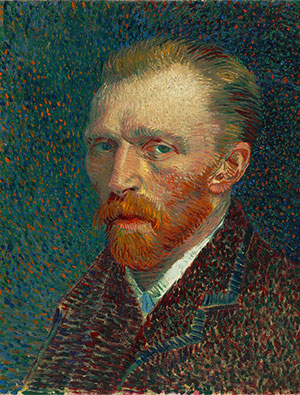
Vincent Van Gogh was born in Zundert, Holland in 1853 and died in Auvers-sur-Oise in 1890.
He was the author of 864 canvases and more than a thousand drawings.
A brilliant painter but not always understood during his lifetime, he trained at the Barbizon school (a town not far from Fontainebleau – landscape realism of a group of painters including Corot and Daubigny) and was influenced by the ethical and social message of the work of Jean François Millet.
Having undergone the experience of Impressionism, he laid the foundations for the subsequent artistic movement, Expressionism.
Nature is the almost absolute protagonist in Van Gogh’s paintings… cypresses, sunflowers, irises, flower gardens, wheat fields, olive groves, starry skies, etc.
In fact, the painter tries to penetrate deeply into the soul of nature, a soul that is not always good but can also be bad, evil.
That’s why its cypress trees are crooked and menacing, its olive trees are twisted and gnarled, its sunflowers almost always appear faded, its stars are menacing, its irises have broken stems, its wheat fields are infested with crows.
After a whole life of virile research, of hand-to-hand combat with nature, I want to die.
According to some scholars, the painter killed himself when he finally understood that he too was only a small life form in this unforgiving nature.
Perhaps this is why we remain in almost religious silence before a Van Gogh painting, in awe and aware of the message of pain and suffering it conveys to us.
Show only reviews in English (0)
Complimenti!
hai una vera passione per l'arte!
Visto che sei arrivato fino a qui, meriti un premio!
Ecco uno sconto del 10% per il tuo prossimo capolavoro! ✨
25,00€
22,90€
 Hot
Hot

1 review for Van Gogh’s Undergrowth with Two Figures – 1000-Piece Jigsaw Puzzle
There are no reviews yet.