Alfons Mucha was born in 1860 in the Czech Republic. Drawing was his main hobby since childhood. In fact, he began working as a commercial artist in his late teens, painting primarily portraits and theater sets.
In 1895, the impoverished young Czech went to Paris to create a poster for Gismonda, a play starring Sarah Bernhardt , the most famous actress of the time. Bernhardt was so enamored with Mucha’s work that she signed him to a six-year contract.
Soon, “ le style Mucha ” later known as the Art Nouveau Mucha movement came to describe the new spirit transforming the city.
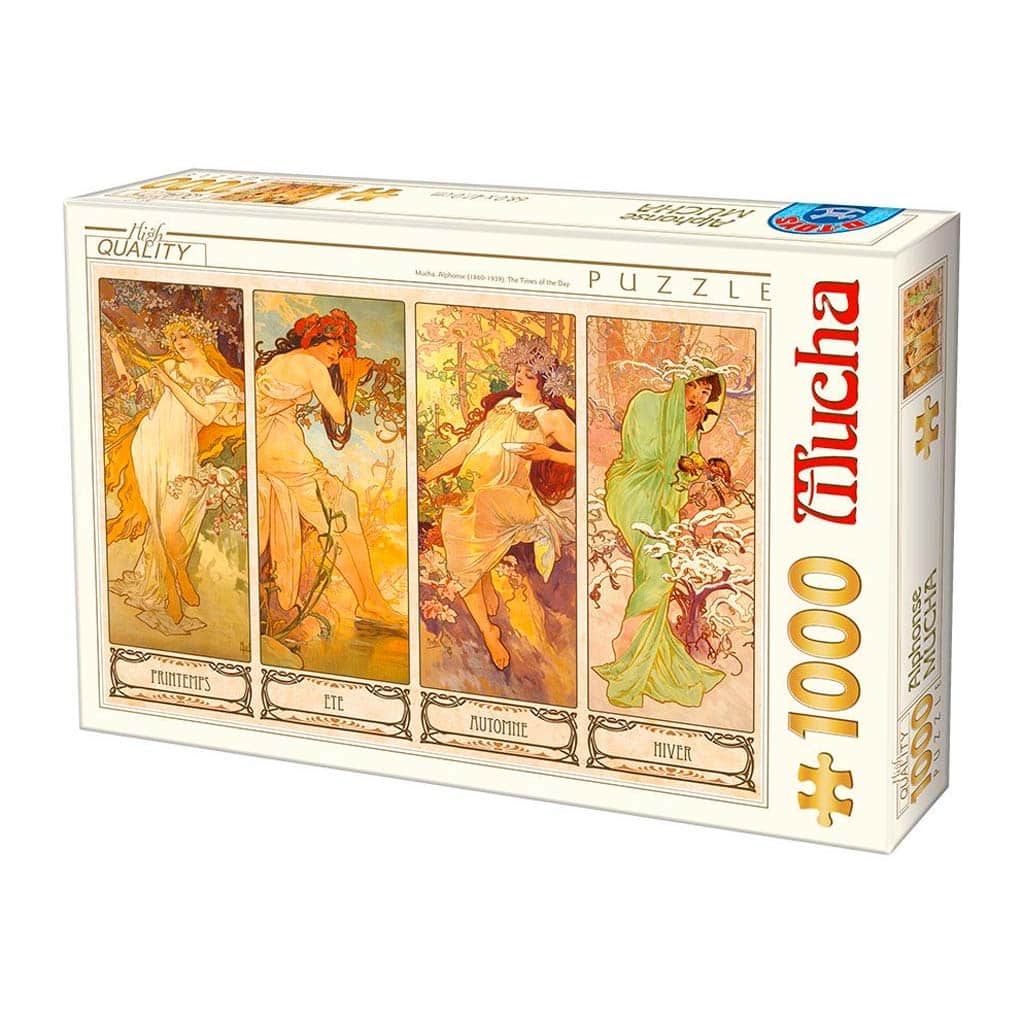
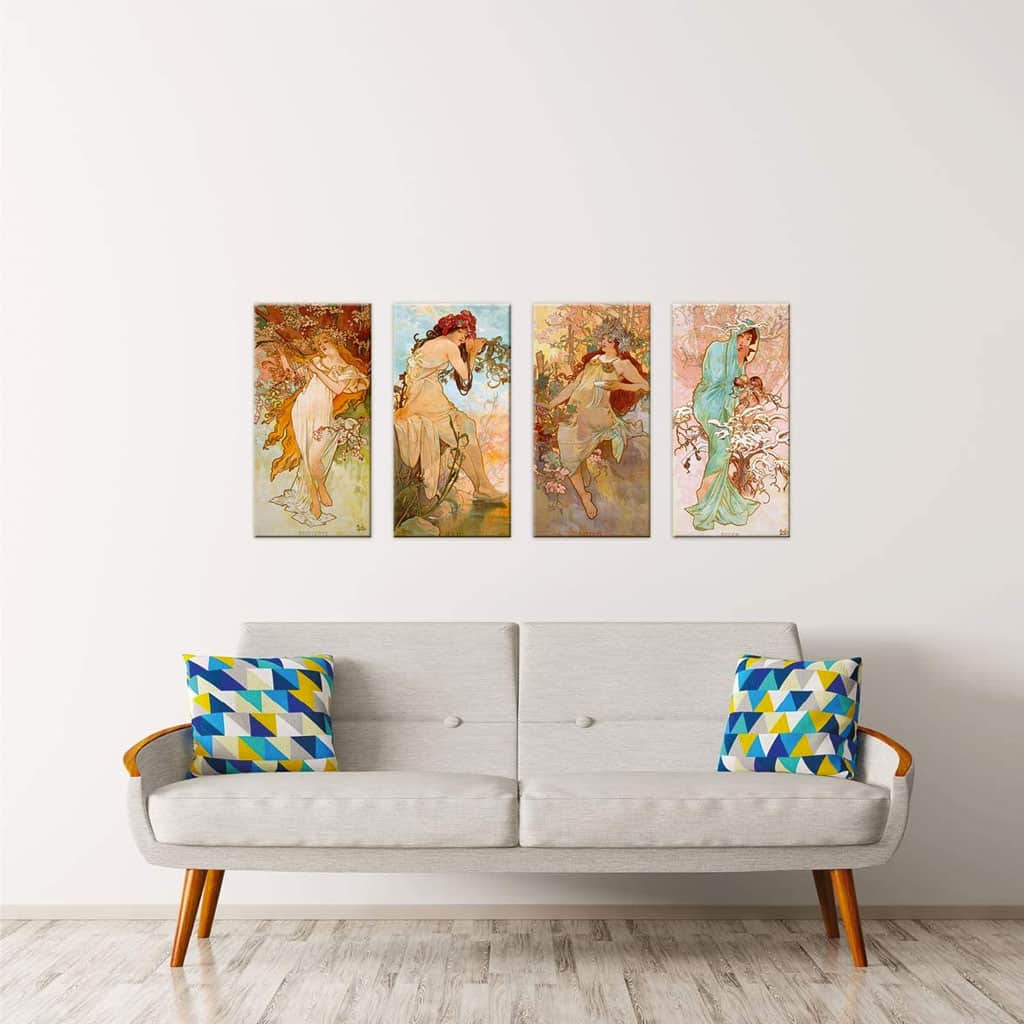
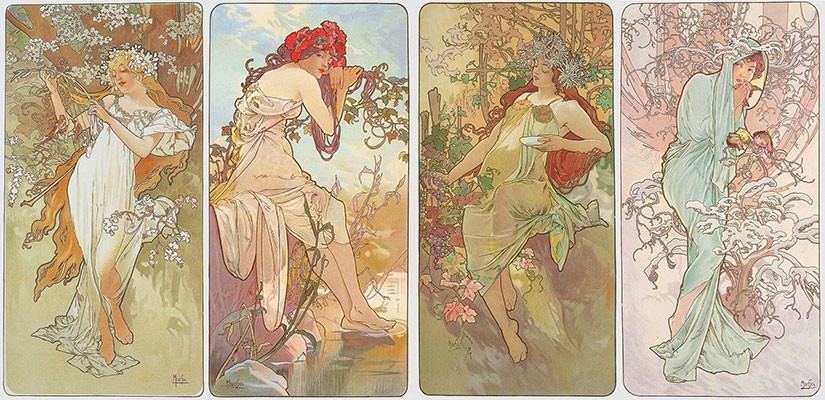
Gismonda’s popularity led to an influx of work for Mucha. “The Seasons” represents one such commission. They represent a set of four decorative panels for Champenois, a wealthy patron, who commissioned two more sets of panels with the same theme.
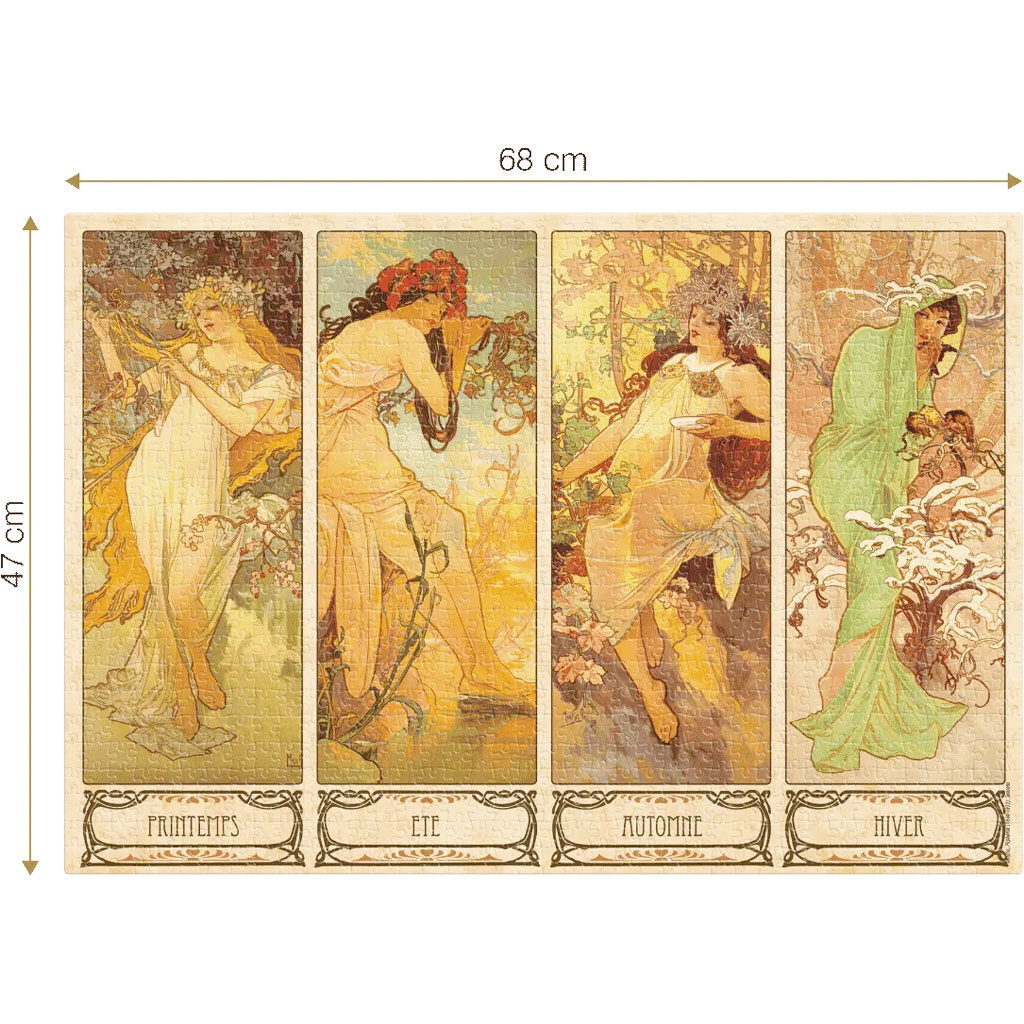
The Seasons Mucha series from 1896
The Seasons series of 1896 was Mucha’s first series of decorative panels and became one of his most popular. In fact, it became so popular that Champenois asked Mucha to produce at least two more sets based on the same theme in 1897 and 1900.
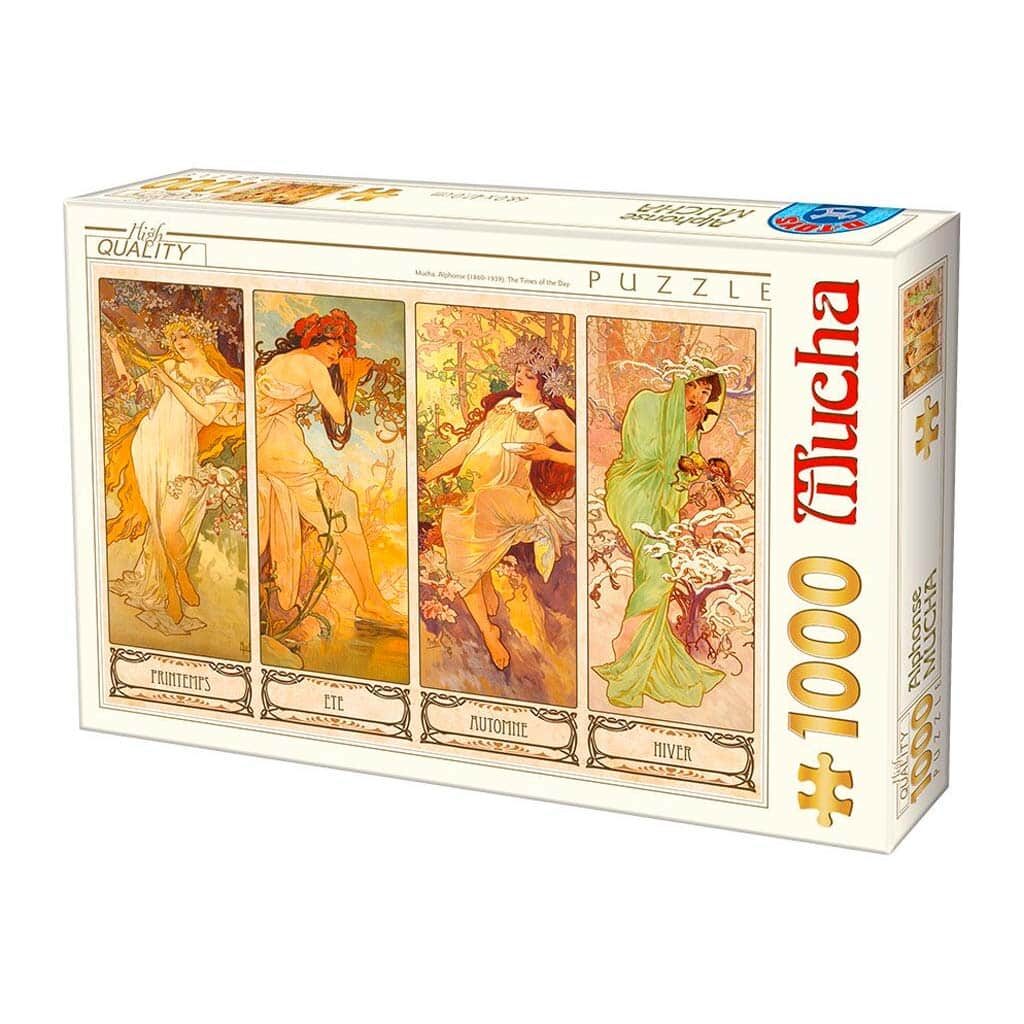
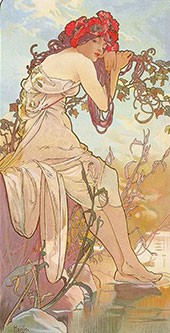
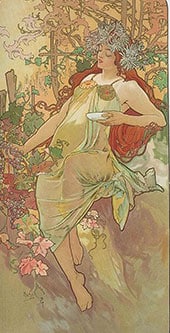
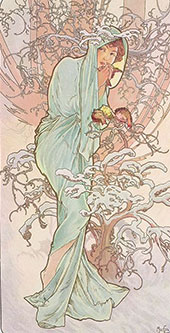
In the four seasonal panels shown, Mucha captures the moods of the seasons: spring, summer, autumn, and winter, representing the cycle of nature.
Mucha personifies Spring as a blond, innocent figure. The translucent white dress is a metaphor for virginity, the potential for new life.
In his hand he holds a branch shaped like a lyre. Three little birds sit on the lyre, a symbol of new life.
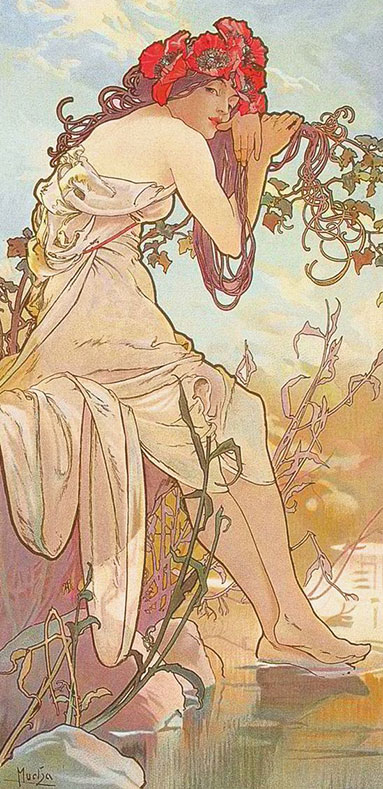
In the 1896 painting, Summer is depicted against a delicate blue sky. Mucha portrays Summer as a sensual, dark-haired woman sunbathing under the glorious sunshine.
Lazing among the red poppies, Summer leans against a vine, dabbing her feet in the shallow pool below. This serene image, a metaphor for adulthood , is beloved by many.
Autumn is depicted as a playful and generous figure . Embedded in a rich tapestry of autumnal plants, fruits, and flowers, her long auburn hair supports a wreath of chrysanthemums. She picks grapes from a bountiful vineyard, a metaphor for the abundant provisions that autumn offers.
Instead, in Winter the influence of Japanese culture and woodcuts is best exemplified.
Standing in a frozen, snow-covered landscape and huddled in a green cloak (representing future growth), the Winter Woman warms a baby bird, while three other birds look on enviously.









 Hot
Hot


Reviews
There are no reviews yet.