

| Numero pezzi | |
|---|---|
| Marca | |
| Atmosfera | |
| Artista | |
| Occasione | |
| Museo d'arte | |
| Dimensioni dell'opera | 44.2 x 34.3 cm |
| Difficoltà | |
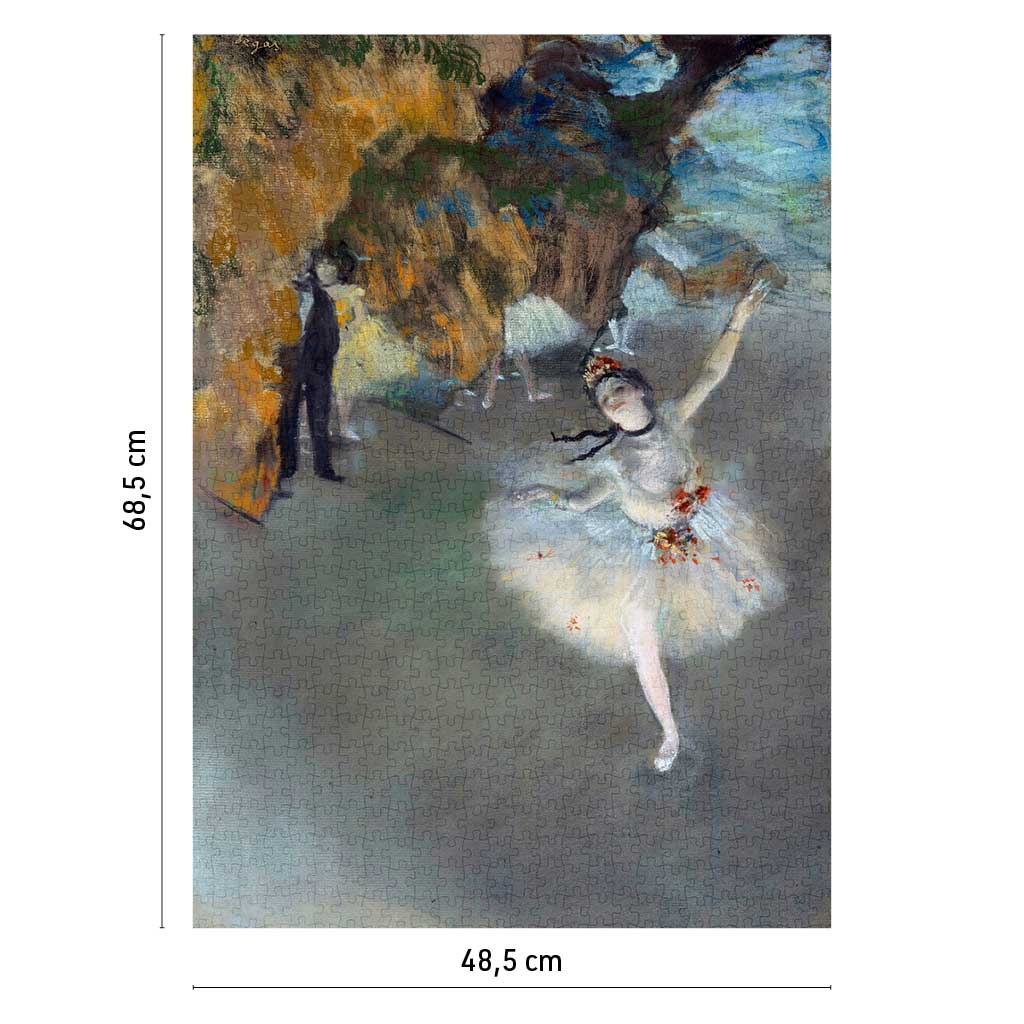
| Dimensioni puzzle | 48.5 cm x 68.5 cm |
| Dimensioni scatola | 42 x 14 x 5 cm |
5 motivi per acquistare i nostri puzzle d'arte





 Hot
Hot
25,00€
25,00€
13 in stock
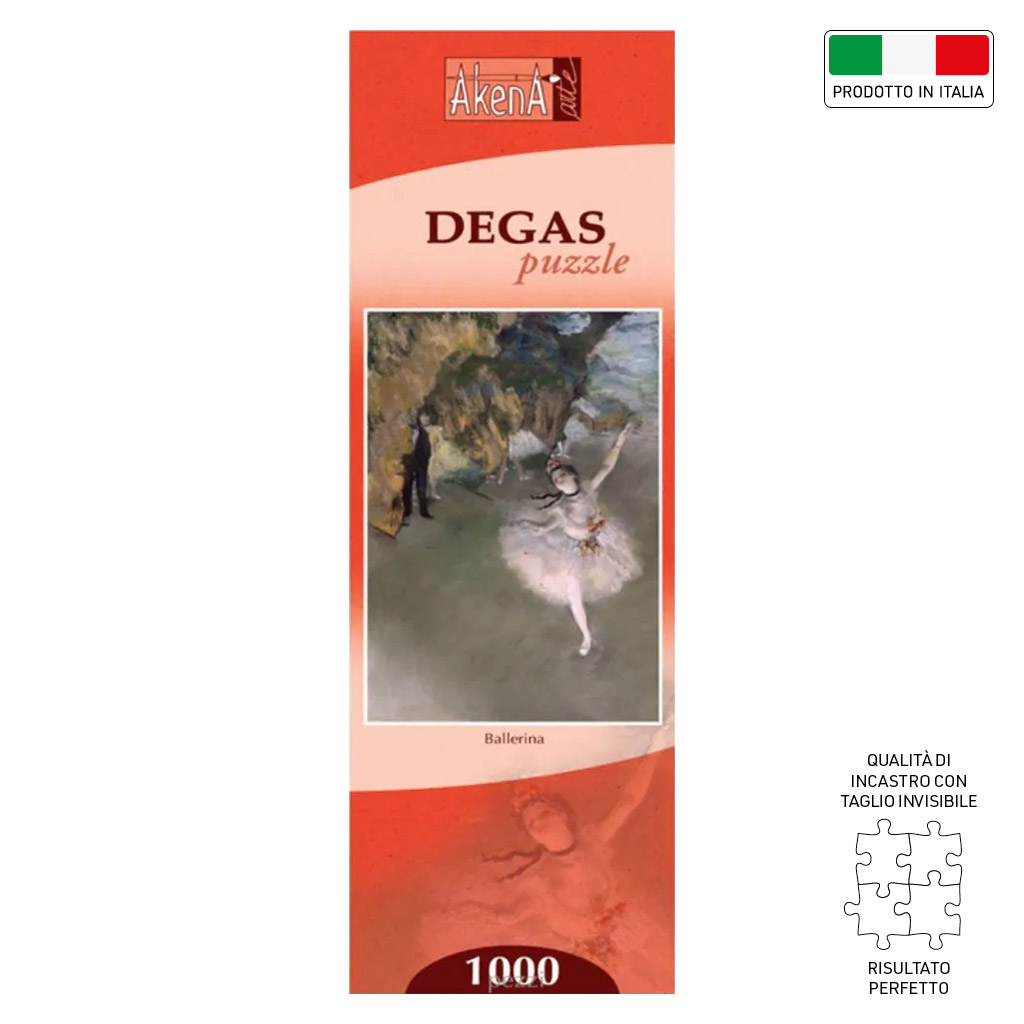
The 1000-piece puzzle The Dancer by Degas from AkenA is a fascinating example of late nineteenth-century modern art . The Dance Class is the first of Degas’s large-scale dance paintings from the Ballerinas series. Created between 1873 and 1875 , it was exhibited at the Nadar photography studio in 1874 during the first Impressionist exhibition and already encompasses all the themes of Degas’s artistic maturity .
Questo puzzle è momentaneamente esaurito.
Nel frattempo, ti suggeriamo alcuni puzzle d’arte che potrebbero piacerti!

Degas’s Dancer puzzle is inspired by one of the most fascinating and celebrated works in the history of art. With this puzzle, we want to transport you to the atmosphere of 19th-century ballet and immerse you in the artistic world of the period. By putting together this puzzle, you can enjoy and be moved as you discover, piece by piece, one of Degas ‘s most famous masterpieces, a symbol of modern art.
Edgar Degas ‘s “Dancer” is one of his works dedicated to the theme of ballerinas and dance, which the artist explored with great sensitivity and attention to detail. This painting captures an intimate and evocative moment, where grace and movement unite in a scene of great poetry.
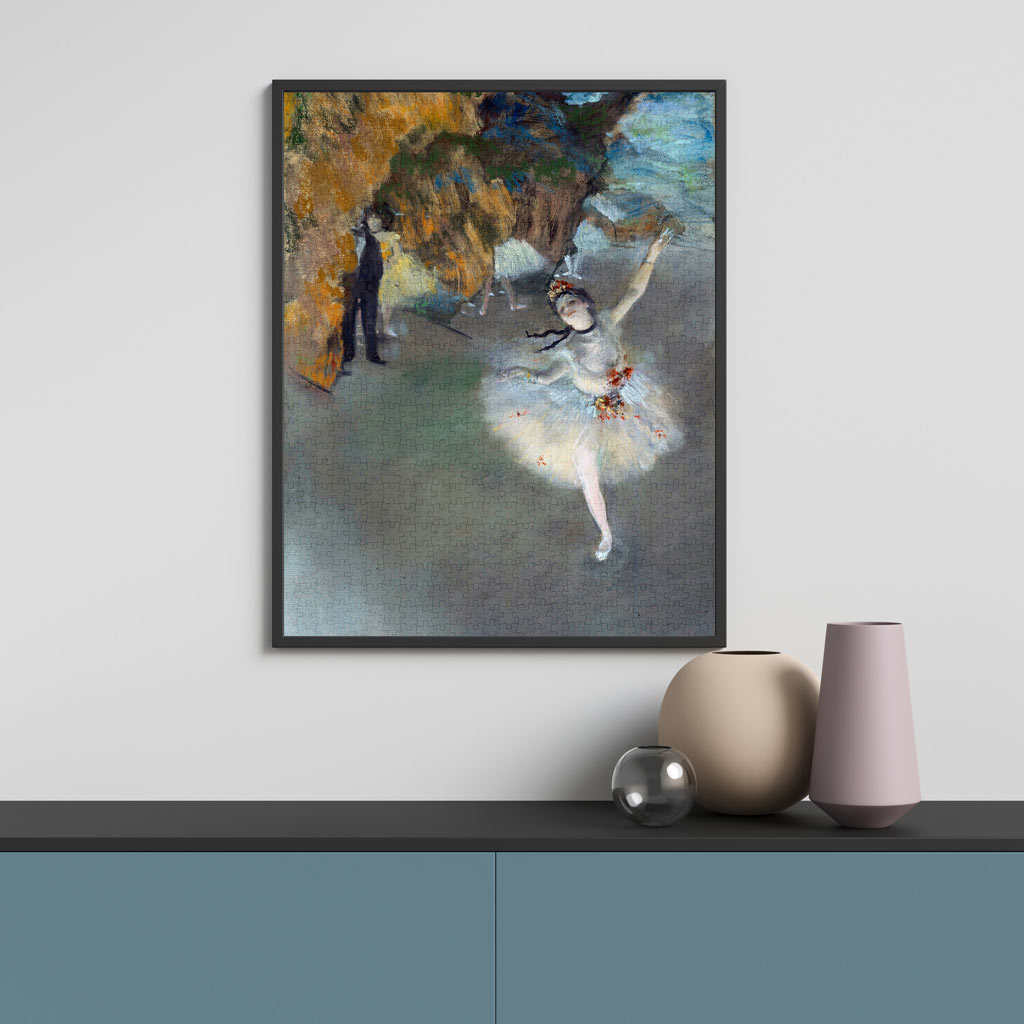
Once you have completed the Degas Dancer puzzle, you will be able to hang a timeless work of art, capable of giving elegance and refinement to the walls of your home, adding a touch of charm and history.
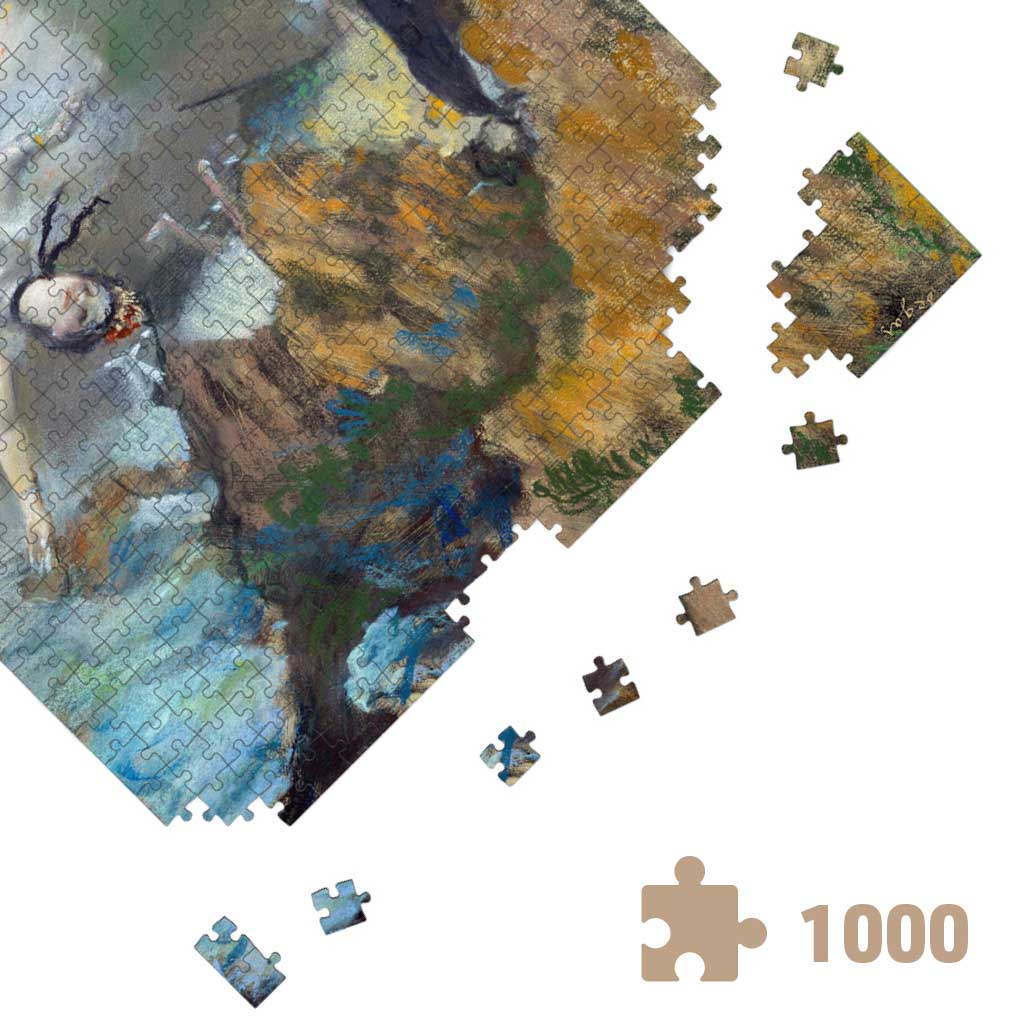
The 1000-piece puzzle Degas’s Dancer , by AkenA, is a fascinating example of late 19th-century modern art.
The subject of Degas’s Dancer is highly evocative and captures one of the French artist’s most beloved masterpieces, reflecting in each piece the mastery and delicacy with which Degas portrayed his ballerinas. The colors of the puzzle are intense and luminous, fully conveying the painter’s technique and skill in capturing the grace of movement.
The image details are of the highest quality, and the puzzle pieces are cut with extreme precision, ensuring a perfect fit. The puzzle is packaged in an elegant and carefully crafted box, making it an ideal gift for anyone who appreciates art and timeless beauty.
 | Number of pieces 1000 |  | Brand AkenA |
 | Puzzle dimensions (cm) 48.5 x 68.5 |  | Box dimensions (cm) 42 x 14 x 5 |
Well finished box
Wonderful gift idea
Most famous work of art
Italian Renaissance
1000 pieces
Standard grid
The subject of Degas’s puzzle, The Dancer, is one of the first large paintings in the series dedicated to dance and dancers, which Degas created between 1873 and 1875, shortly before the first Impressionist exhibition in Nadar’s studio in 1874. In this work, the artist already encompasses the key themes of his artistic maturity.
Degas depicts an intimate scene in which a young ballerina practices a few steps under the watchful eye of her master, while other girls patiently await their turn, arranged in a semicircle that creates an almost suspended atmosphere. The composition is bold and photographically inspired: some figures are partially out of the frame, as if capturing the moment in a snapshot.
This apparent spontaneity, however, hides a long and thoughtful process, with the work completed only after three years of reflection and numerous preparatory sketches.
Degas himself stated: “No art is as unspontaneous as mine… what I do is the result of reflection and study of the great masters. Of inspiration, spontaneity, and temperament… I know absolutely nothing.”
In The Dancer , Degas succeeds in his attempt to blend formal rigour, inspired by his love for the Renaissance masters, with modern reality, replacing the mythological figures with dancers, transformed into true divinities of nineteenth-century everyday life.
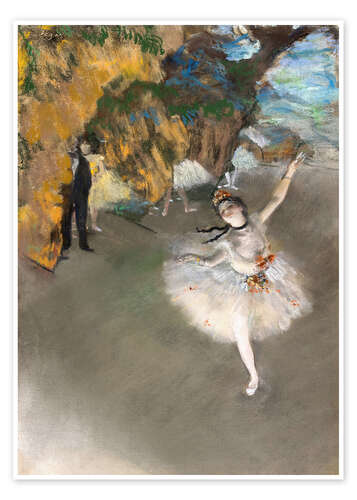
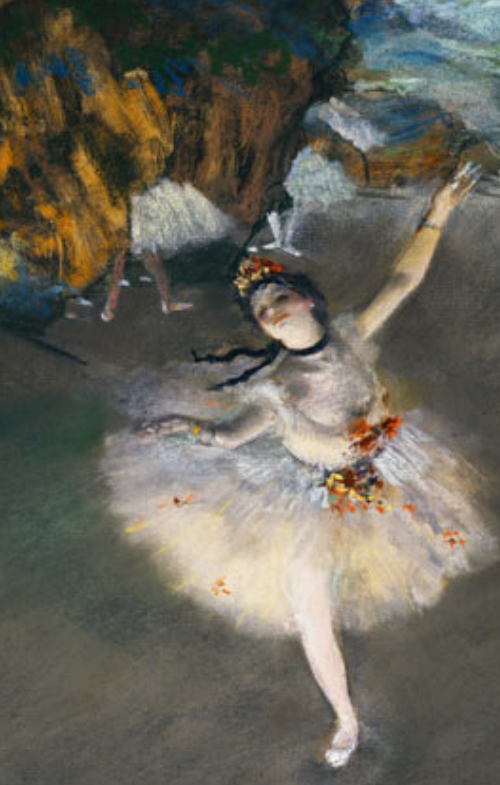
The work reveals an almost photographic approach : Degas experiments with a bold compositional approach, giving the image a spontaneous look, as if it were a stolen shot. Some parts of the scene almost seem to emerge from the frame, lending the image a freshness and modernity that contrasts with the work’s lengthy development, the fruit of meticulous study and numerous preparatory sketches.
In terms of lighting, Degas uses soft, diffused light coming from multiple directions, perhaps a side window and an opening in the background, which envelops the ballerina in a delicate atmosphere. This light not only enhances the figure’s grace, but also gives the tutu a sense of lightness and transparency, accentuated by the chromatic contrasts between the whites of the fabric and the shadows.
Technically, Degas departs from Impressionist theories that eschew traditional perspective and the emphasis on detail. Here, the artist introduces a rigorous composition with an external vanishing point and a high horizon line, accentuating the volume of the ballerina’s figure and her central presence in the scene. Every fold of the tutu , every detail of the ribbon and hair is rendered with precision, creating a balance between formal rigor and the impression of naturalness.
The burnished parquet floor and the pale green walls contribute to the work’s sense of quiet realism, highlighting the delicate tutu and highlighting the ballerina’s figure against a neutral background. Degas succeeds in capturing not only dance but also the essence of an era, in which scenes of everyday life replace mythological narratives, and young ballerinas become the true protagonists of his art, almost like deities of the modern world.
Degas’s Dancer is therefore a work in which rigorous technique, realism, and attention to detail blend to capture the essence of dance and the daily lives of young ballerinas, paying homage to the beauty of the discipline and its importance in the culture of the time.
Complimenti!
hai una vera passione per l'arte!
Visto che sei arrivato fino a qui, meriti un premio!
Ecco uno sconto del 10% per il tuo prossimo capolavoro! ✨

24,90€
49,90€





Reviews
There are no reviews yet.