






Additional information

Numero pezzi

Marca

Atmosfera

Artista

Occasione

Museo d'arte

Difficoltà

Dimensioni puzzle

50.8 x 63.5 cm

Dimensioni scatola

33 x 25 x 4.5 cm

EAN

9781087500966

5 motivi per acquistare i nostri puzzle d'arte

Puzzle Ricercati Puzzle Arte

Puzzle d’arte rari e ricercati

Spedizione Gratuita Puzzlearte

Spedizione gratuita sopra i 50€

Consulenza Puzzlearte

Consulenza e assistenza da veri esperti

Progetti Rimboschimento Puzzlearte

Progetti di rimboschimento

Bambini Puzzlearte

Progetti educativi per i più piccoli

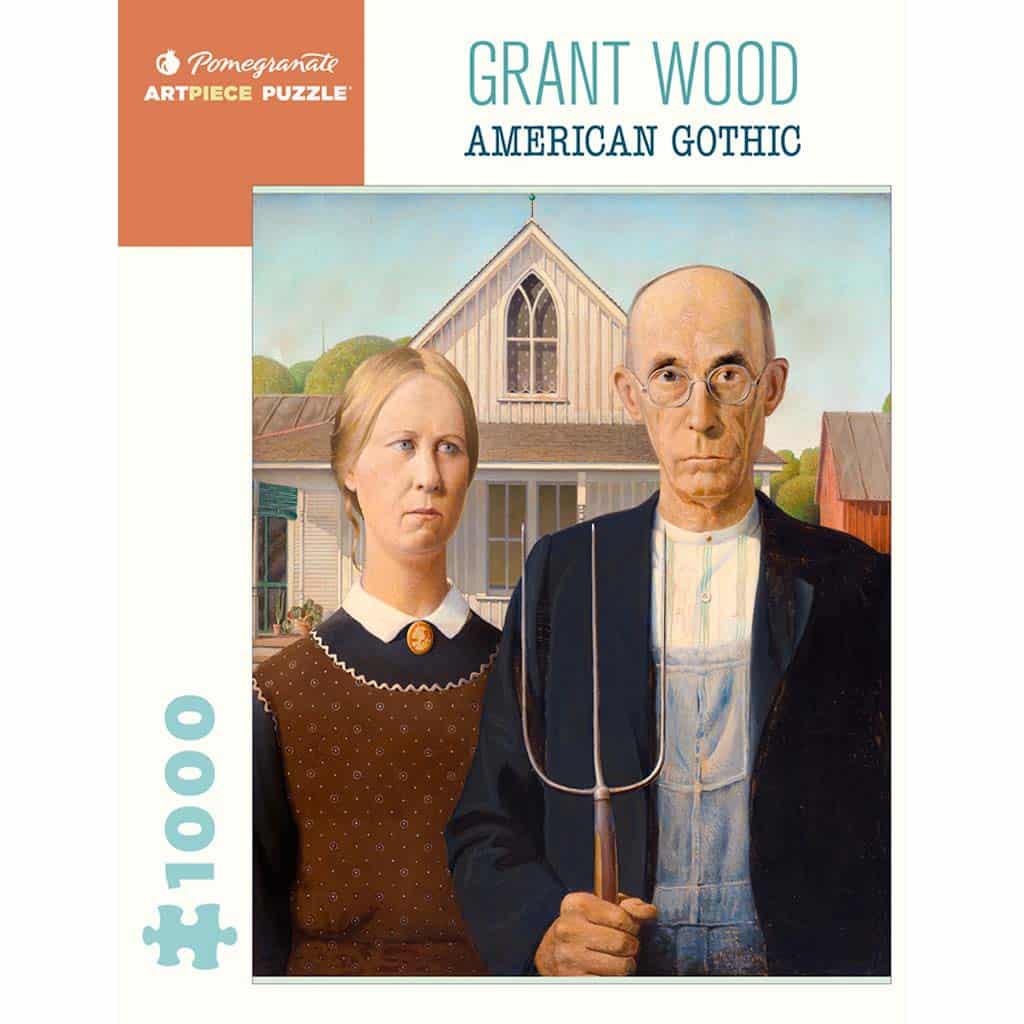
Grant Wood american gothic Puzzle – 1000 pieces

Novità!

19,99

19,99

7 in stock

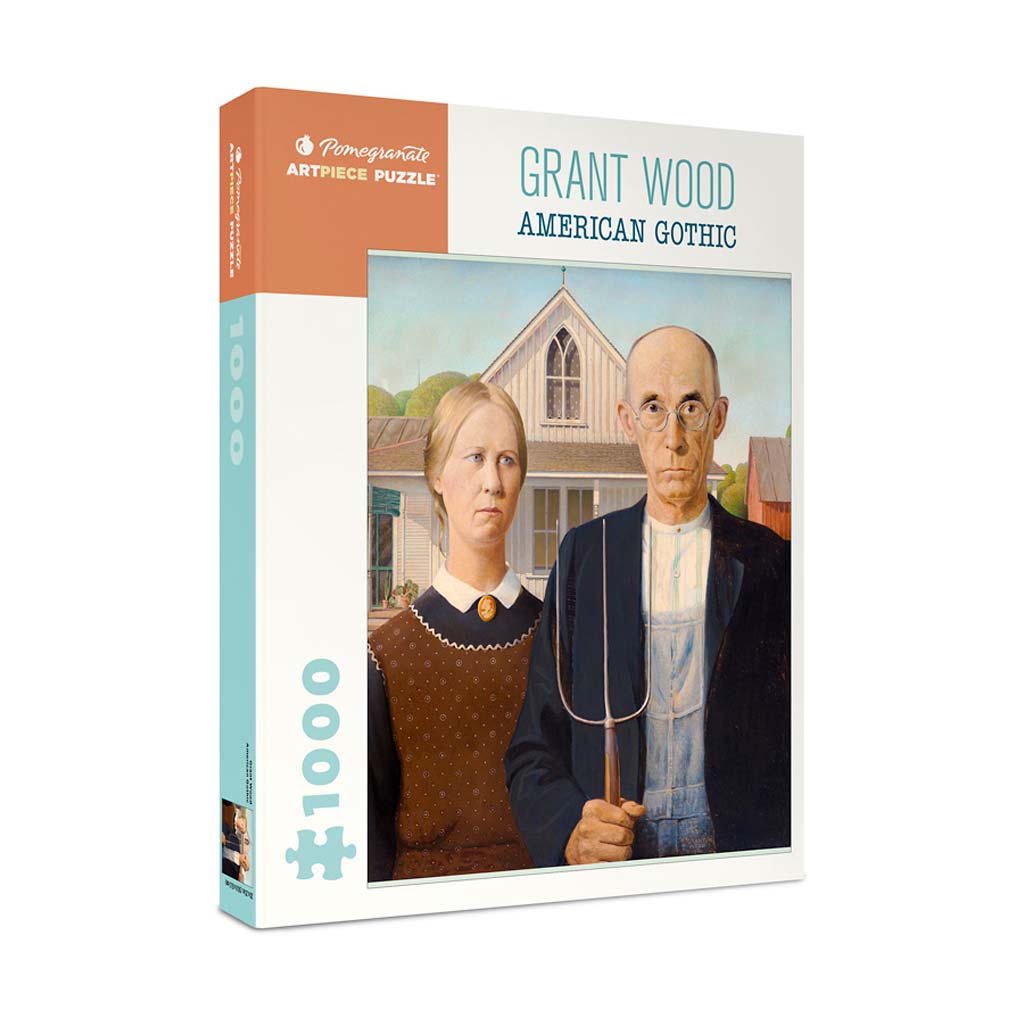
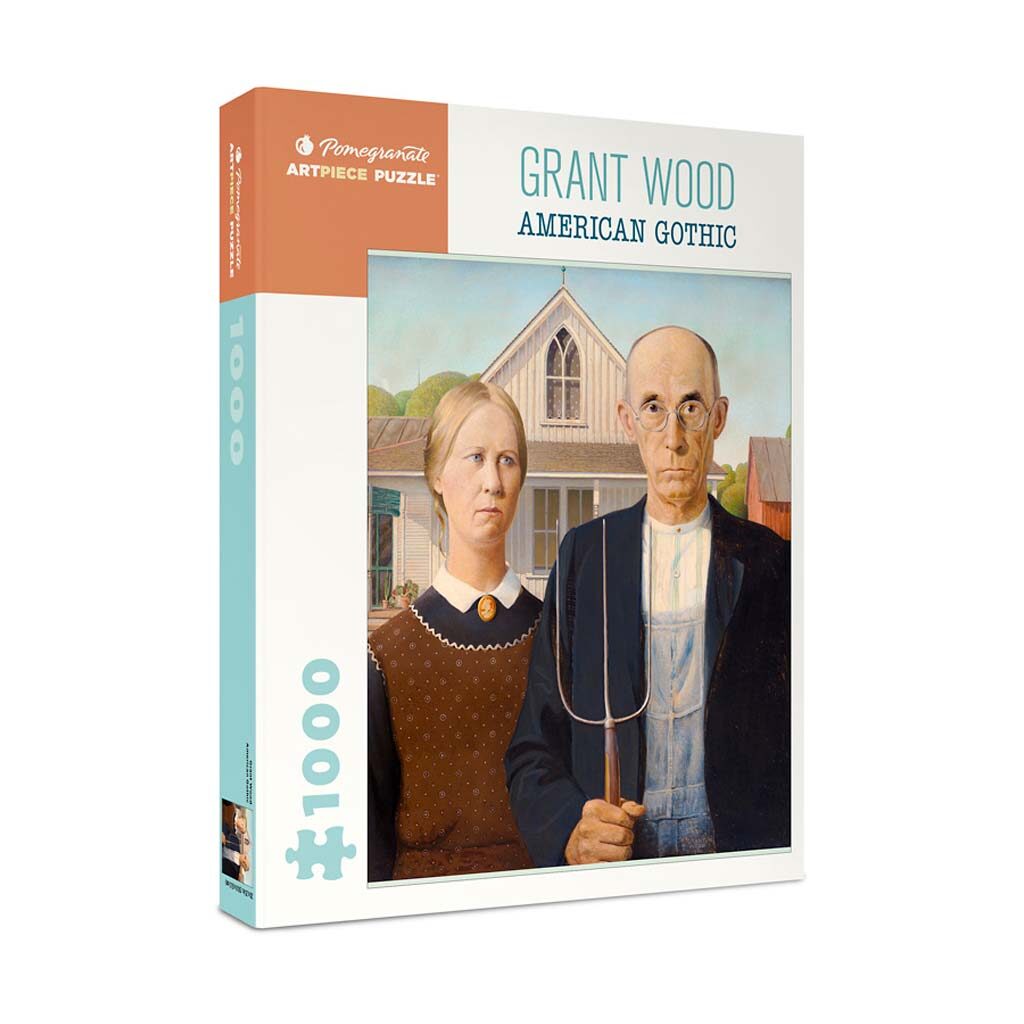
Discover the style of contemporary art and challenge yourself with one of the most iconic puzzles of American art, the Grant Wood American Gothic 1000-piece puzzle.

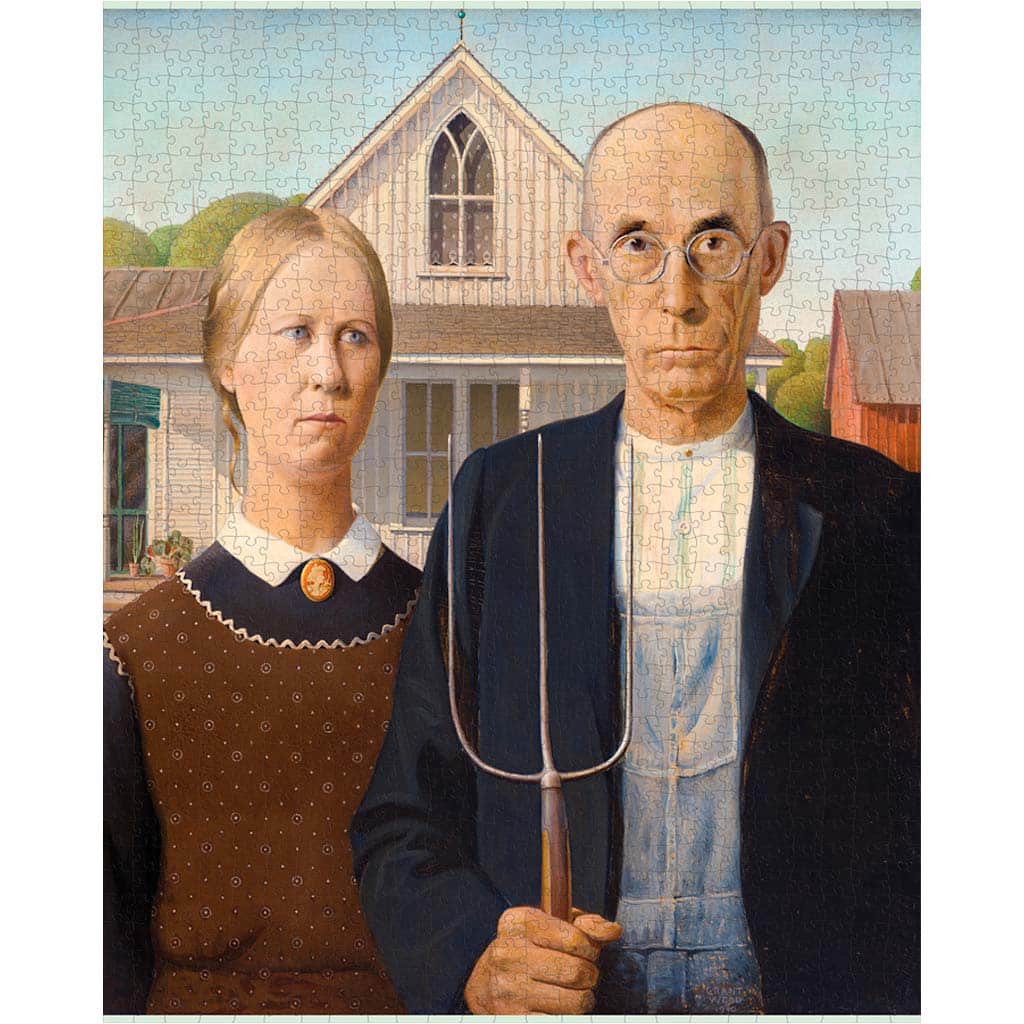
Grant Wood was inspired to paint what is now known as the American Gothic House in Eldon by picturing the kind of people he imagined living there. In the 78 cm × 65.3 cm canvas, he chose to depict a farmer standing next to his daughter, often mistakenly thought to be his wife.

Puzzle Art thanks to the new splendid edition of the brand Pomegranate Communications Inc is pleased to offer you this contemporary art puzzle to discover art piece by piece

Questo puzzle è momentaneamente esaurito.

Nel frattempo, ti suggeriamo alcuni puzzle d’arte che potrebbero piacerti!

Altri puzzle della stessa marca

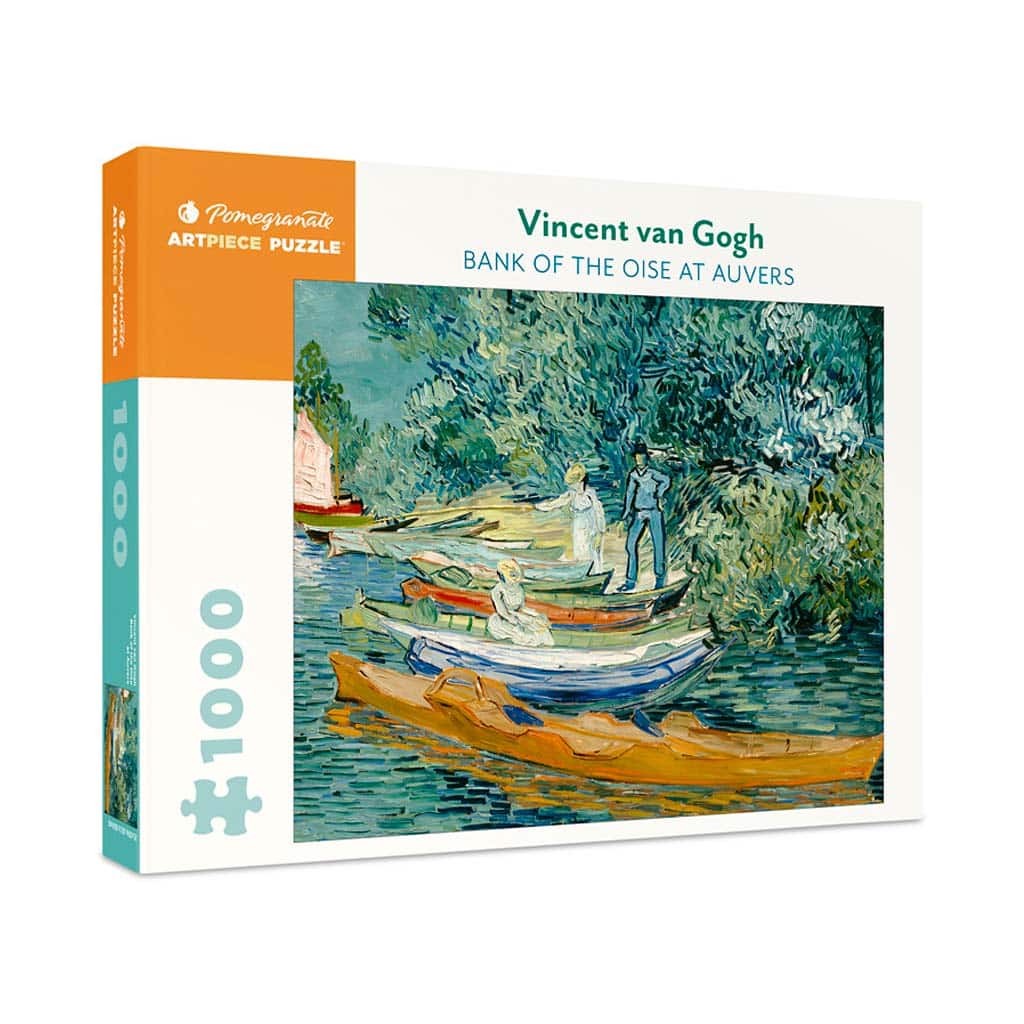
Riva Dell'oise Ad Auvers
Banks of the Oise at Auvers, Van Gogh – 1000-piece puzzle
25,00
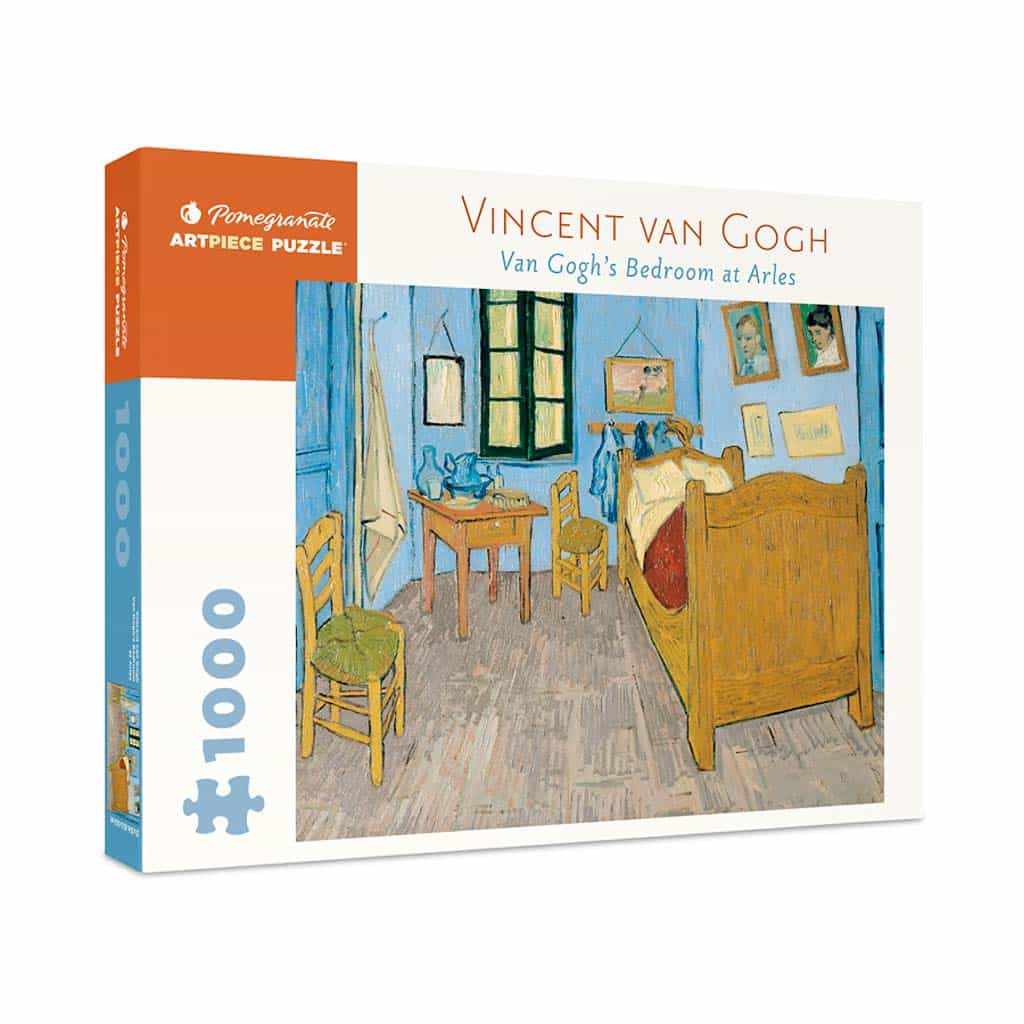
La Camera Di Van Gogh
Van Gogh’s Bedroom in Arles – 1000-Piece Puzzle
25,00
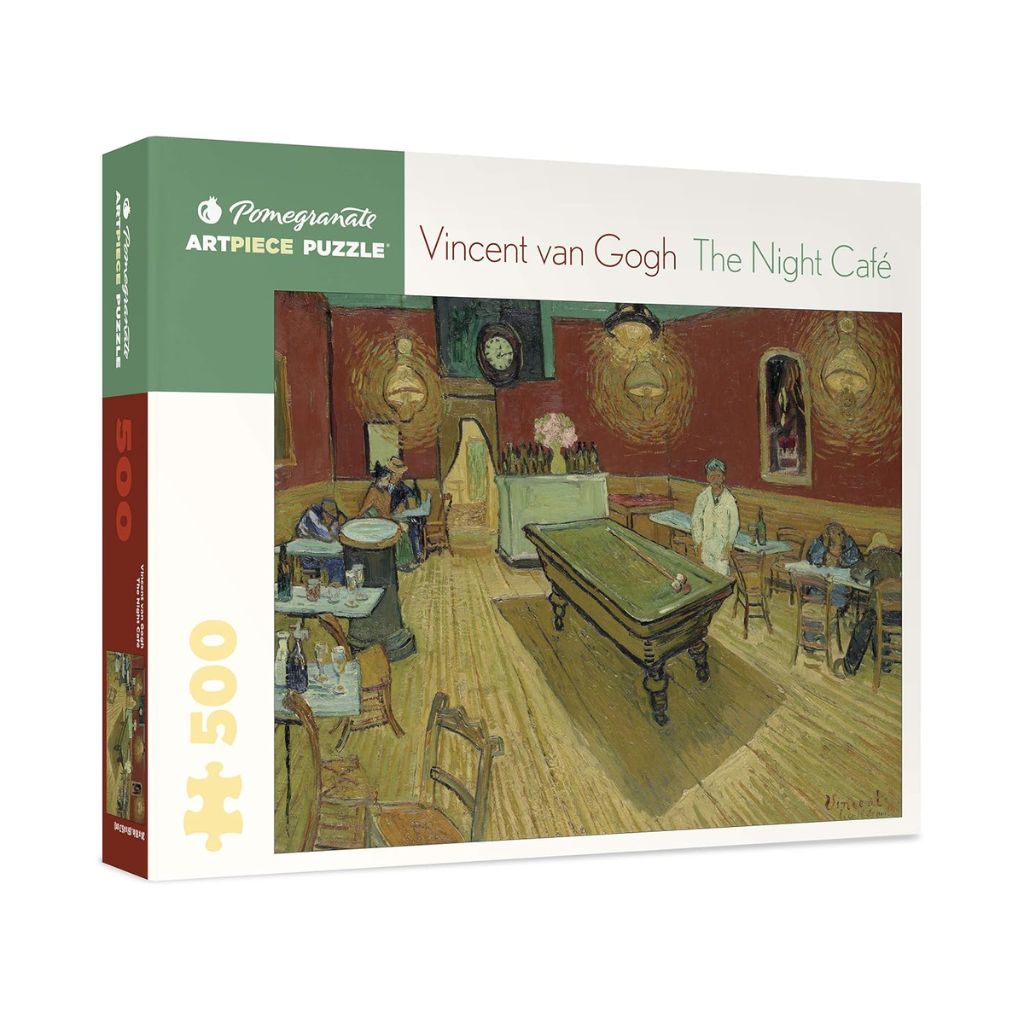
Il Caffè Di Notte Vincent Van Gogh
The Night Café by Vincent Van Gogh – 500-piece puzzle
19,99

Puzzle Features

Grant Wood’s American Gothic puzzle is a wonderful example of contemporary art and a challenge for true puzzle enthusiasts.

American Gothic is a 1930 painting by painter Grant DeVolson Wood, now in the collection of the Art Institute of Chicago . The painting takes its name from the architectural style of the house . The figures were modeled by Wood’s sister, Nan Wood Graham , and their dentist, Dr. Byron McKeeby.

Grant Wood American Gothic puzzle in detail

Grant Wood’s 1000-piece American Gothic puzzle from Pomegranate is a stunning example of contemporary art puzzle design.
The subject is very famous and a wonderful tool for discovering piece by piece the Regionalist art of the last century in America.
The colors of the puzzle are very bright and the details are extremely accurate and refined. The puzzle pieces are sturdy and fit together well.

Number of Puzzle PiecesNumber of pieces
1000
Puzzle BrandsBrand
Pomegranate
Puzzle DimensionsPuzzle dimensions (cm)
50.8 x 63.5
Puzzle Box DimensionsBox dimensions (cm)
33 x 25 x 4.5

Well finished box
Wonderful gift idea

Famous work of art
Contemporary art

1000 pieces
Standard grid

Description of the artwork

American Gothic is a 1930 painting by the painter Grant DeVolson Wood held in the collection of the Art Institute of Chicago .

Grant Wood was inspired to paint what is now known as the American Gothic House in Eldon by picturing the kind of people he imagined living there. In the 78 cm × 65.3 cm canvas, he chose to depict a farmer standing next to his daughter, often mistakenly thought of as his wife.

The painting takes its name from the architectural style of the house . The figures were modeled by Wood’s sister, Nan Wood Graham , and their dentist, Dr. Byron McKeeby.

When looking at the painting, it’s important to realize the extent to which Wood designed and conceptualized American Gothic. Indeed, at first glance, many people mistake American Gothic for a realistic painting.
Looking at the painting, it’s clear that Wood rendered a realistic version of the house. Likewise, Wood’s two models, his sister Nan Wood Graham and his dentist, Dr. B.H. McKeeby, are realistically recreated, although when looking at a photograph of Nan, you can see her sister’s face is somewhat elongated.

Wood’s free use of reality can also be seen in the addition of a barn and the creation of a scene, a man and woman posing in front of the house, which never actually occurred. The models for the artwork never posed together when they were drawn before or during the painting of American Gothic.
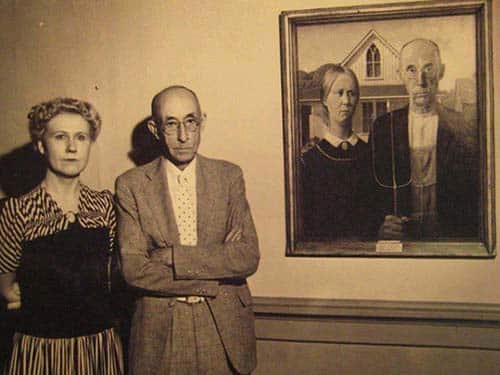
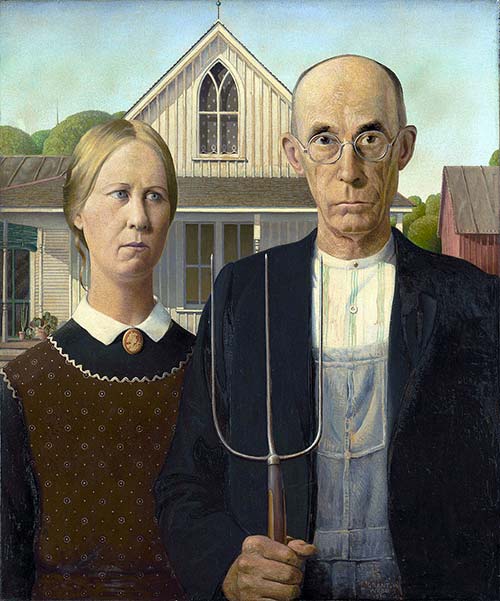
American Gothic Grant Wood

This picture was first publicly exhibited at the Art Institute of Chicago, winning a three hundred dollar prize and instant fame for Grant Wood.

The impetus for the painting came while Wood was visiting the small town of Eldon in his native state of Iowa.
In Iowa he located a small wooden farmhouse, with a single large window, built in a style called Carpenter Gothic.

“I imagined American Goths with their long, drawn-out faces to match this American Gothic house. I used his sister and my dentist as models for a farmer and his daughter, dressing them as if they were photographs from my old family album.”

The highly detailed, refined style and the rigid frontality of the two figures are inspired by Flemish Renaissance art, which Wood studied during his travels in Europe between 1920 and 1928. American Gothic quickly became one of America’s most famous paintings and is now firmly entrenched in the nation’s popular culture. Wood intended it to be a positive statement on rural American values, an image of reassurance in a time of great hardship and disillusionment.
Man and woman, in their solid and well-built world, with all their strengths and weaknesses, represent the survivors.

Grant Wood's Regionalism

Born in rural Iowa, Grant showed an early interest in the act of creation with an apprenticeship in a local metal shop. After high school, he enrolled in an art school in Minneapolis known as The Handicraft Guild. In 1913, Grant enrolled at the Chicago School of Art.
Wood’s work is often referred to as Regionalism, a painting movement largely centered in the Midwest. It bucked European trends toward abstraction and produced strong figurative portraits.

Wood made numerous trips to Europe to study European painting styles. He was interested in learning more about Impressionism and Post-Impressionism and was particularly influenced by the work of the Flemish painter Jan van Eyck. He enjoyed exploring the fine details of Flemish realism and learning to meticulously control his brushstrokes to capture his subjects in their truest form.
During his life he also used his talents in numerous commercial works, from advertising design to wallpaper design.

American Gothic was first exhibited at the Art Institute of Chicago in 1930 and remains there today. When it was first shown, many critics considered it a commentary on the repression and austerity of rural life in America.

American Gothic, the painting by Grant Wood

The house in southern Iowa visible in the background of the painting inspired Wood. So the painter looked for models (his dentist and his sister) to represent the type of person he imagined would live in such a house.
The tips of the three-pronged pitchfork are in the center of the painting.
The figures in the painting have exaggerated features, reflecting the long Gothic window visible behind them. To many, the exaggerated faces and expressions of the painting’s subjects seem to present a kind of satire of rural American life.

Wood never clarified whether the image was intended to be sincere or satirical. Throughout his life, he made a series of confusing statements in response to the question.

“There is satire in it, but only as there is satire in every realistic statement.”

The pitchfork sits squarely in the center of the painting, its white tips reflecting us between the two protagonists. As a symbol of peasant culture, a rake would have seemed the obvious choice, but Wood’s use of a pitchfork seems far more powerful.

The three-pronged spear can be seen as a symbol of hard work. It seems to play on the American idea of ​​the self-made man and the American dream. Those who work hard will reap the rewards. The human subjects in this painting appear to be standing against a tree-filled backdrop, with their Gothic-style house behind them.
But judging by their expressions, they don’t seem to be living fulfilled or joyful lives. There’s an austerity to the painting and its depiction of working-class America in the 1930s.

The pitchfork stands between the viewer and the subjects of the painting, mirroring their long, slender forms. But we cannot ignore the fact that the viewer’s gaze also reflects and mimics the cold glare of the farmer and his daughter.
The pitchfork is almost a third character in the image, intervening between the subject and the viewer and creating a subtle, hostile division.

There are other ways to interpret this image. When Wood created this painting, the Great Depression was depriving many Americans of basic necessities. The pitchfork seems to suggest steadfastness and determination. A willingness to work hard and persevere.
The pitchfork is a richly symbolic object. Referred to as a trident in Greek mythology, it was the symbol of the mighty Poseidon, god of the sea. In Christianity, the pitchfork came to be associated with the devil and evil activities. It is also still often seen on Halloween as a symbol of dark forces.

Pitchforks are regularly used on Midwestern farms to collect the chaff after it has been separated from the grain. In Wood’s American Gothic, the pitchfork seems to signal a boundary, a hostile divide between viewer and subject. It seems to speak of hard work, grit, and a certain degree of danger, a harshness in an environment that at first appears pleasant and serene.
It is unclear whether Wood intended to satirize American values ​​or capture a way of life, but either way, the pitchfork figure is central to the painting and the atmosphere Wood attempted to create.

American Gothic parodies

American Gothic is one of the few images that has become a popular icon and is one of the most reproduced and most parodied.
Many artists have replaced the painting’s characters with famous couples and the house with familiar buildings. References and parodies of the painting regularly appear in postcards, magazines, advertisements, comics, and television programs.

Two parodies occur in the film Night at the Museum: Battle of the Smithsonian , in which it comes to life and the two characters move to avoid an Egyptian spear, and in the American cartoon The Fairly OddParents, in which Timmy Turner gives a correct interpretation of the painting (i.e. “symbol of the American family”) and instead his professor, Crocker, unfairly corrects him.
The painting also appears in the seventh episode of the fifth season of The Simpsons when, while cleaning the house, Bart absentmindedly rubs the dishcloth over the painting, completely erasing it. In its place, the writing appears:

If you see this message, you’ve rubbed too hard.

The familiar image that most people interpret as a farmer and his wife holds the distinction of being the “most parodied” painting in history.

Reviews

There are no reviews yet.

Be the first to review “Grant Wood american gothic Puzzle – 1000 pieces”

Your email address will not be published. Required fields are marked *

Complimenti!

hai una vera passione per l'arte!

Visto che sei arrivato fino a qui, meriti un premio!
Ecco uno sconto del 10% per il tuo prossimo capolavoro! ✨

Cosa se ne pensi di questi puzzle d'arte simili...

Novità!
Hot Hot

29,90

In offerta!
Novità!
Hot Hot

Original price was: 29,99€.Current price is: 26,50€.

Novità!
Hot Hot

25,00