

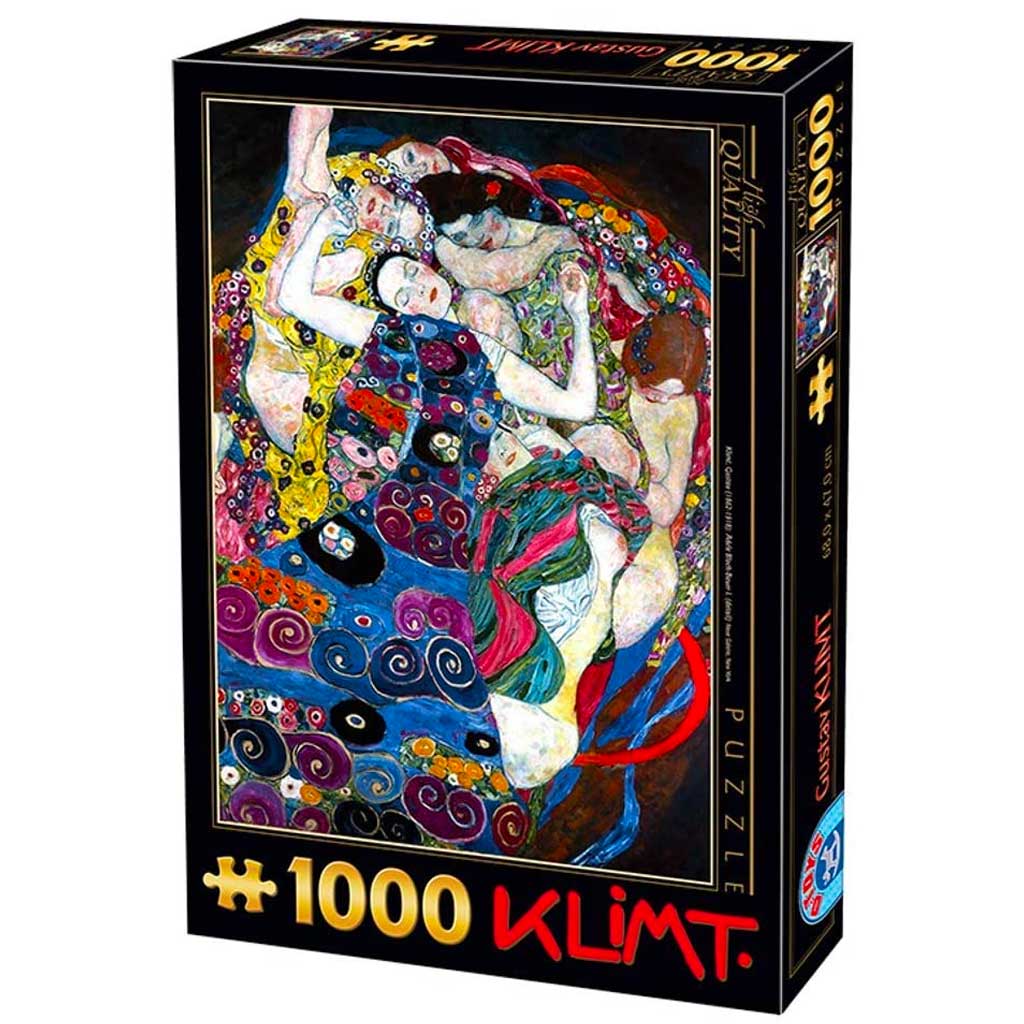











The 1909 Kunstschau had brought to light the artistic orientations of the younger generations, who were taking a very different path from that indicated by the secessionist utopia, throwing Klimt into a creative impasse.
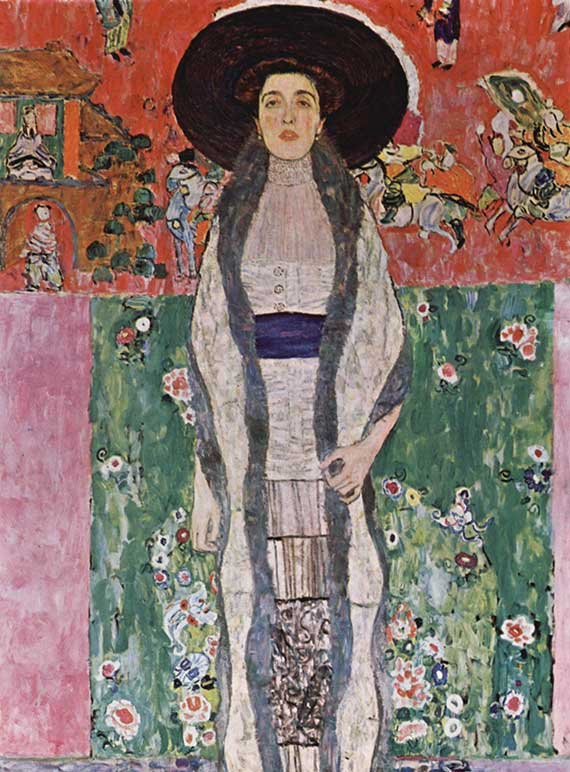
In fact, for three years the master produced very little, but in 1912, starting with the second portrait of Bloch-Bauer, he found his own path, now far from the “golden period” and usually called “florid style”.
This last phase owes its name to the chromatic vivacity that characterizes it, but also to a renewed interest in decoration, although the artist now uses an ornamental repertoire no longer inspired by Byzantium or Assyrian bas-reliefs, but by the Far East.
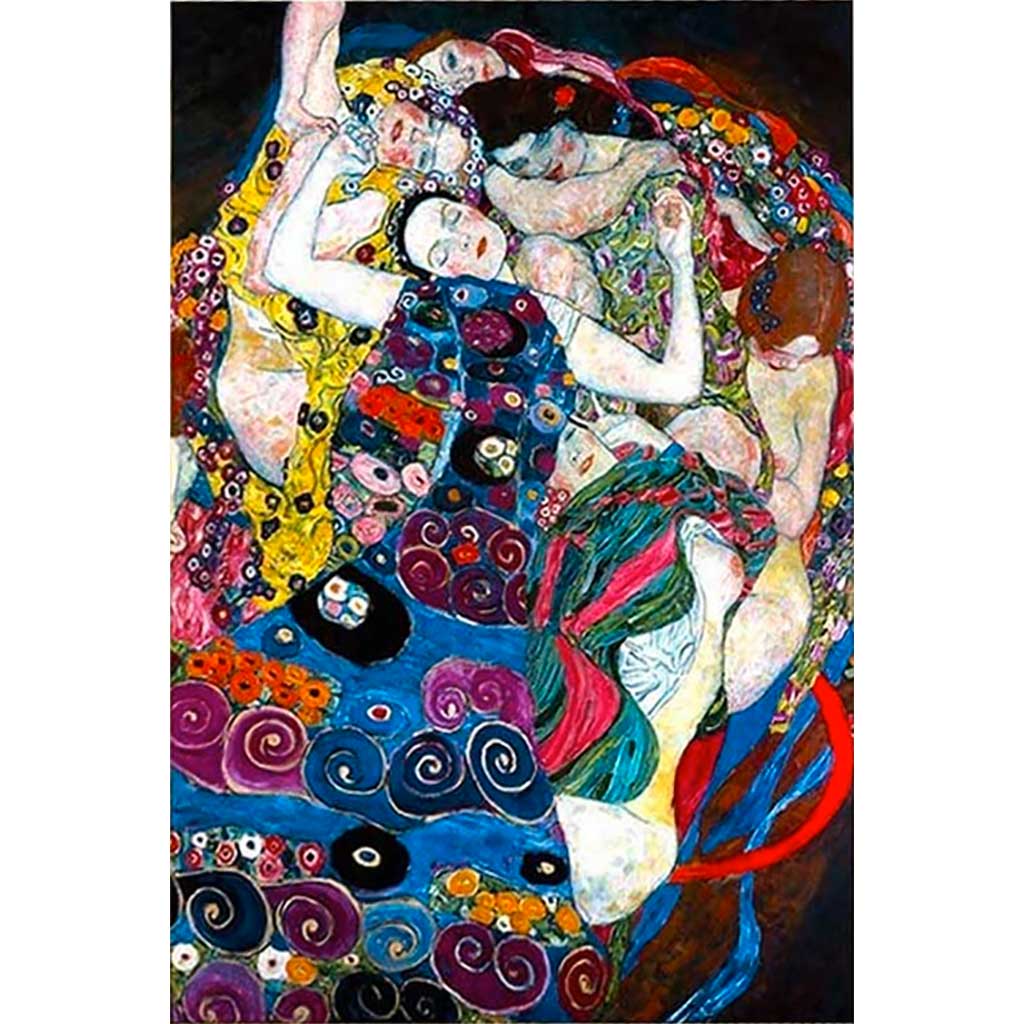
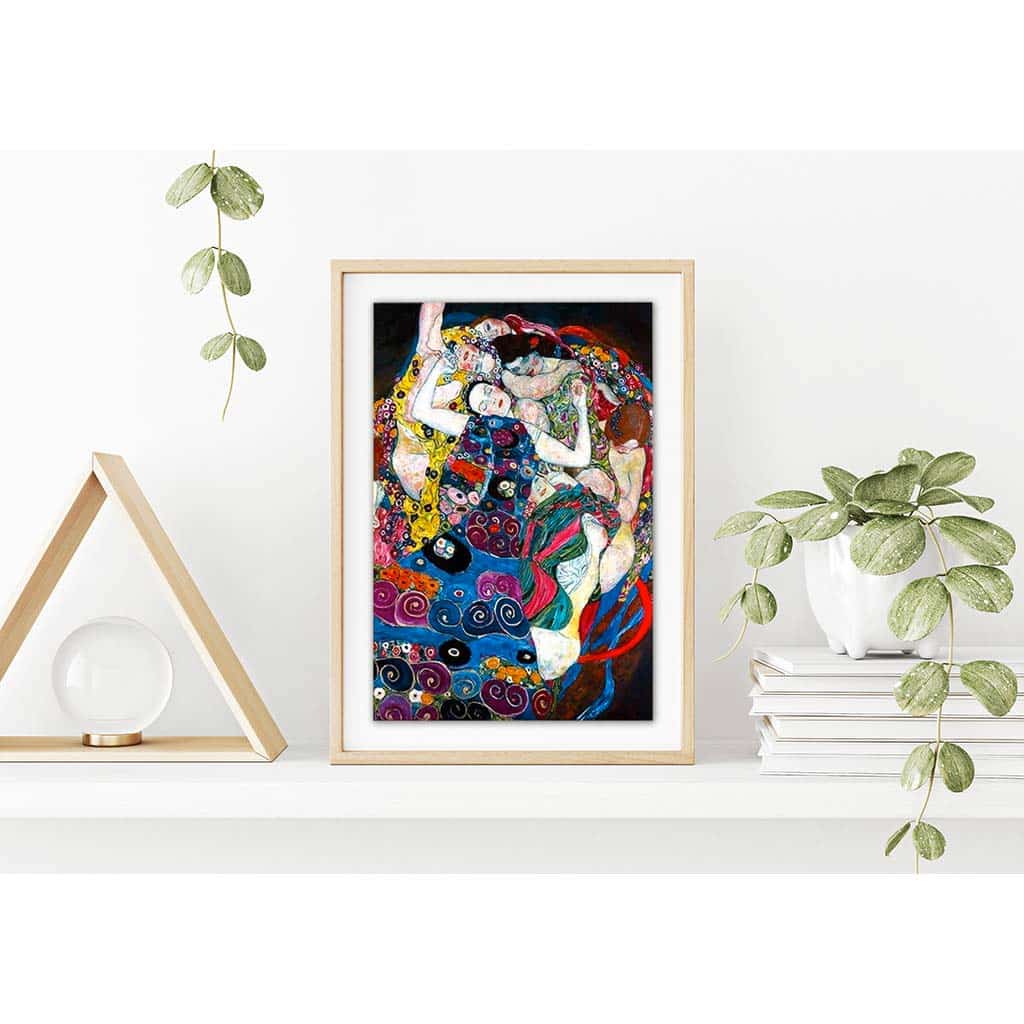
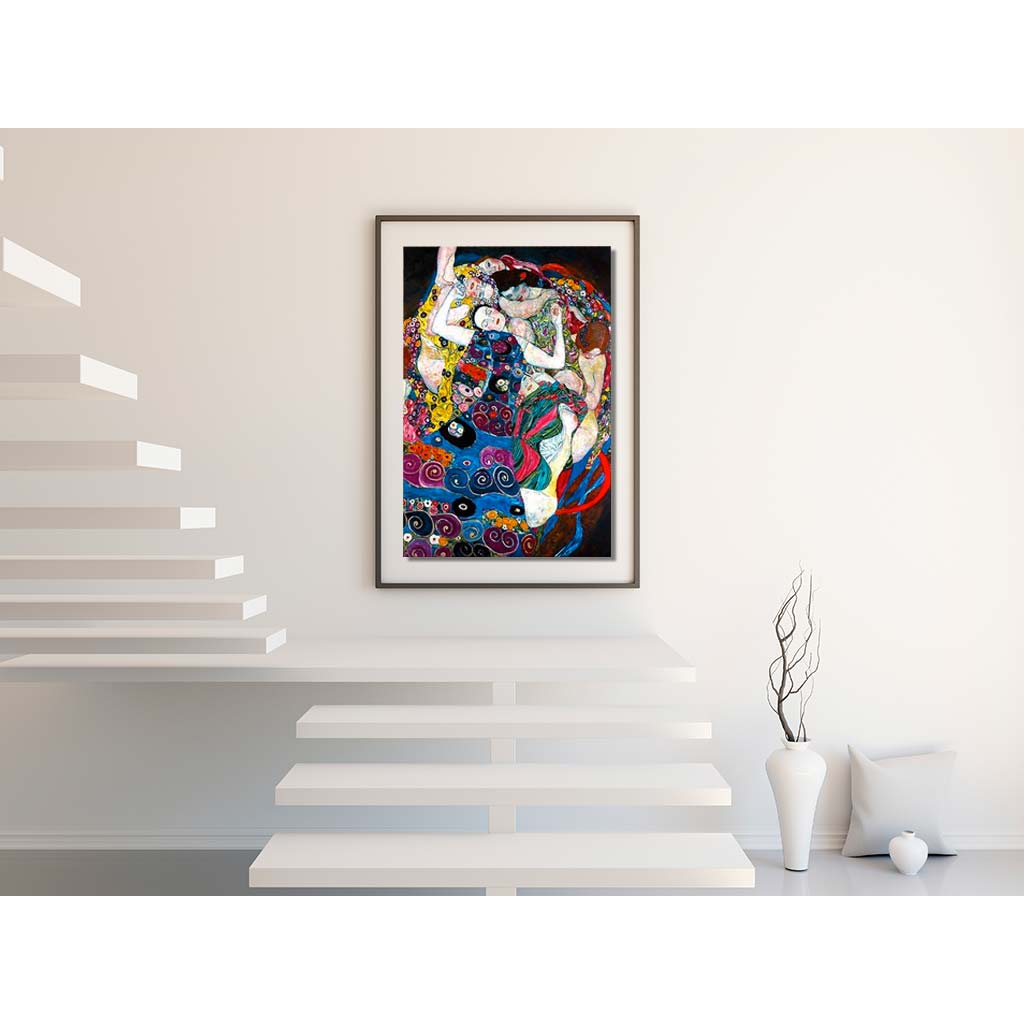
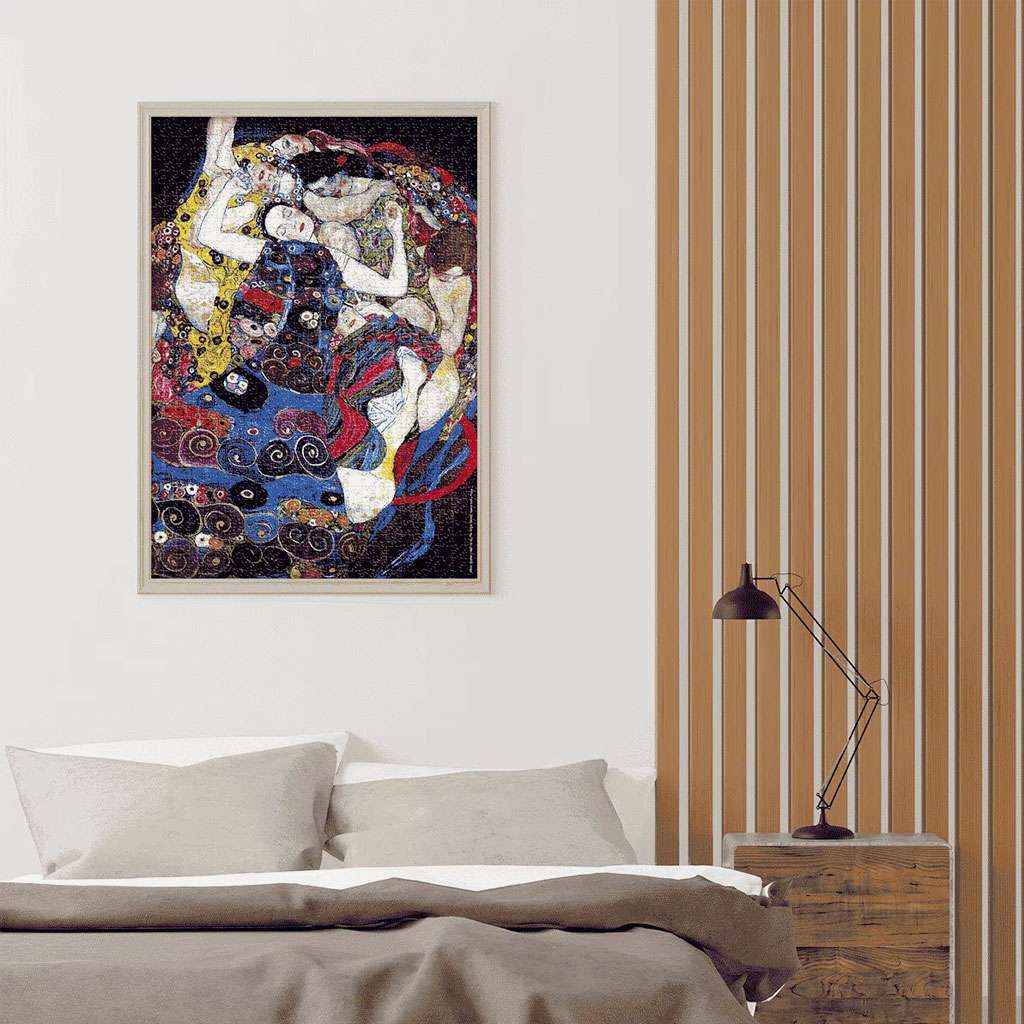
For this reason, in the Virgin, the explosion of bright colors of blue, yellow, red, green and purple also takes on a symbolic value, referring to the young woman’s psychological condition.
The whirlwind of sensations that animate her is well expressed by the tangled composition and is amplified in the wheel of female bodies that surround the protagonist.
The virgin is captured in the moment of sleep, represented by her bowed head, closed eyes and open arms, but this time the painter does not emphasize the abandonment, but rather the intense dream activity.
In fact, dreams and sensuality are once again linked and materialize in the languid and provocative figures, whose eyes are wide open, emerging from the girl’s consciousness.
It is an exclusively female universe. In fact, the sleeper’s fantasy is not projected onto a man, but rather focuses on herself, on the instinct and power that characterize Klimt’s women.
The work included a pendant (a painting made as a couple) called The Bride , which was not finished due to the painter’s death in 1918.
 Hot
Hot

Reviews
There are no reviews yet.