

| Weight | 1 kg |
|---|---|
| Numero pezzi | |
| Marca | |
| Atmosfera | |
| Artista | |
| Occasione | |
| Dimensioni dell'opera | 34.4 cm × 24.5 cm |
| Museo d'arte | |
| Difficoltà | |
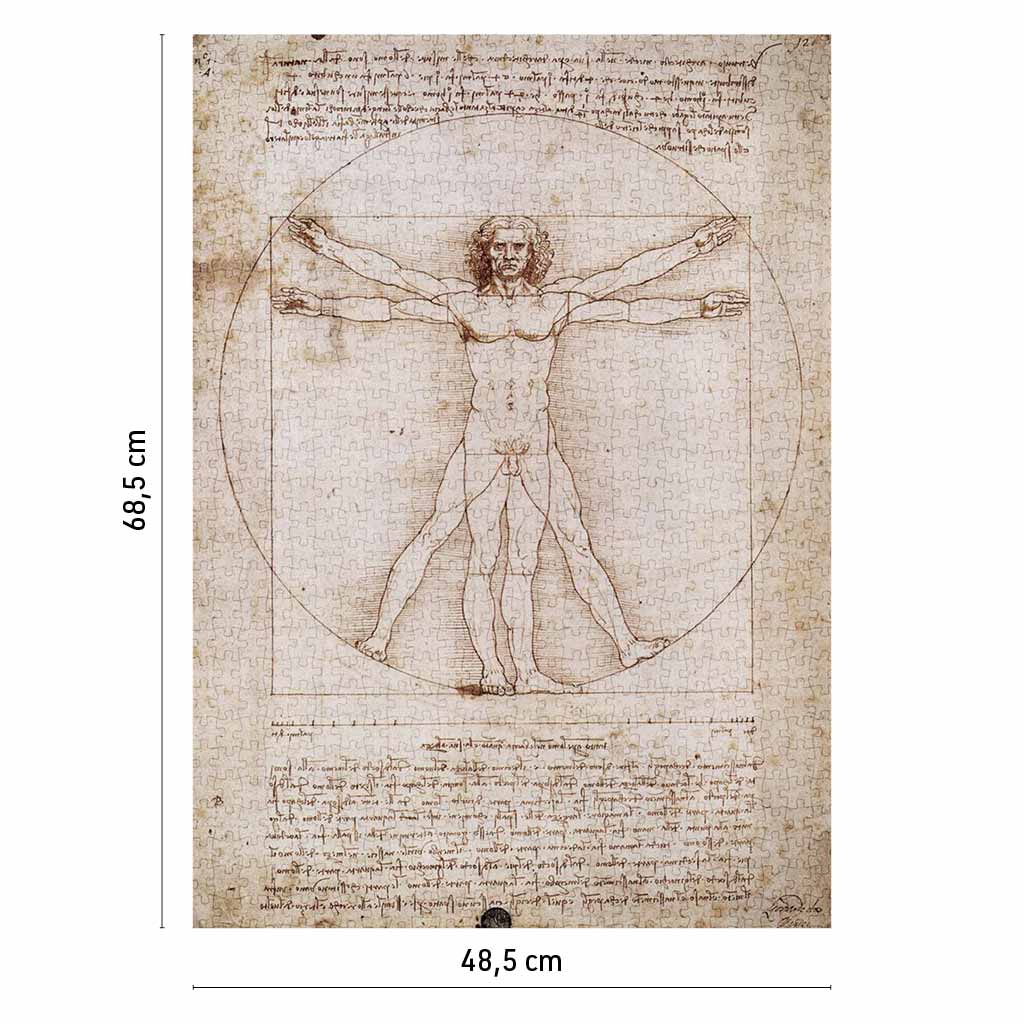
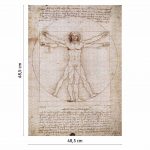
| Dimensioni puzzle | 68 cm x 48 cm |
5 motivi per acquistare i nostri puzzle d'arte





23,99€
23,99€
8 in stock
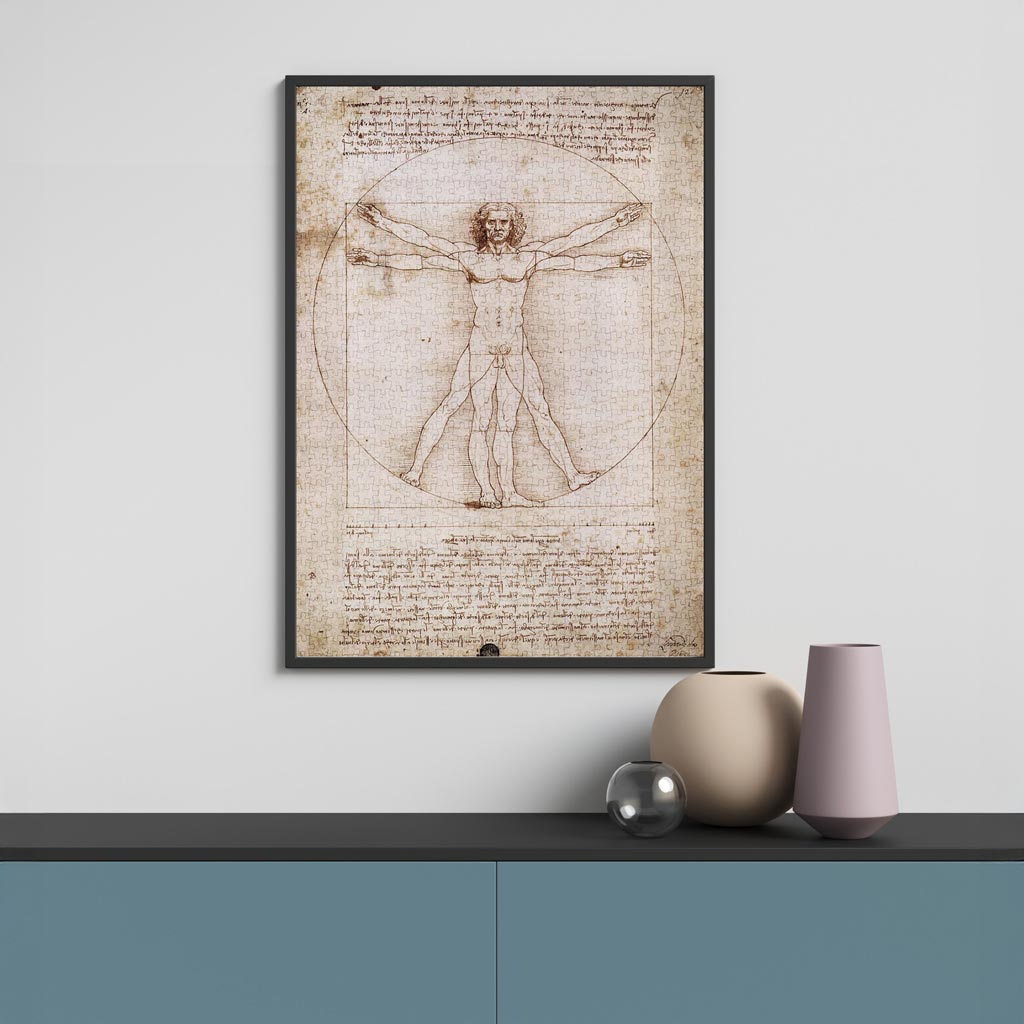
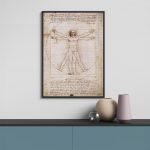
Discover Leonardo da Vinci’s Vitruvian Man Puzzle, one of the greatest drawings and mysteries of all Renaissance art.
By putting together this magnificent puzzle of Renaissance art, you will be able to discover piece by piece one of the most fascinating works of art by the Tuscan master: Leonardo da Vinci.
Questo puzzle è momentaneamente esaurito.
Nel frattempo, ti suggeriamo alcuni puzzle d’arte che potrebbero piacerti!

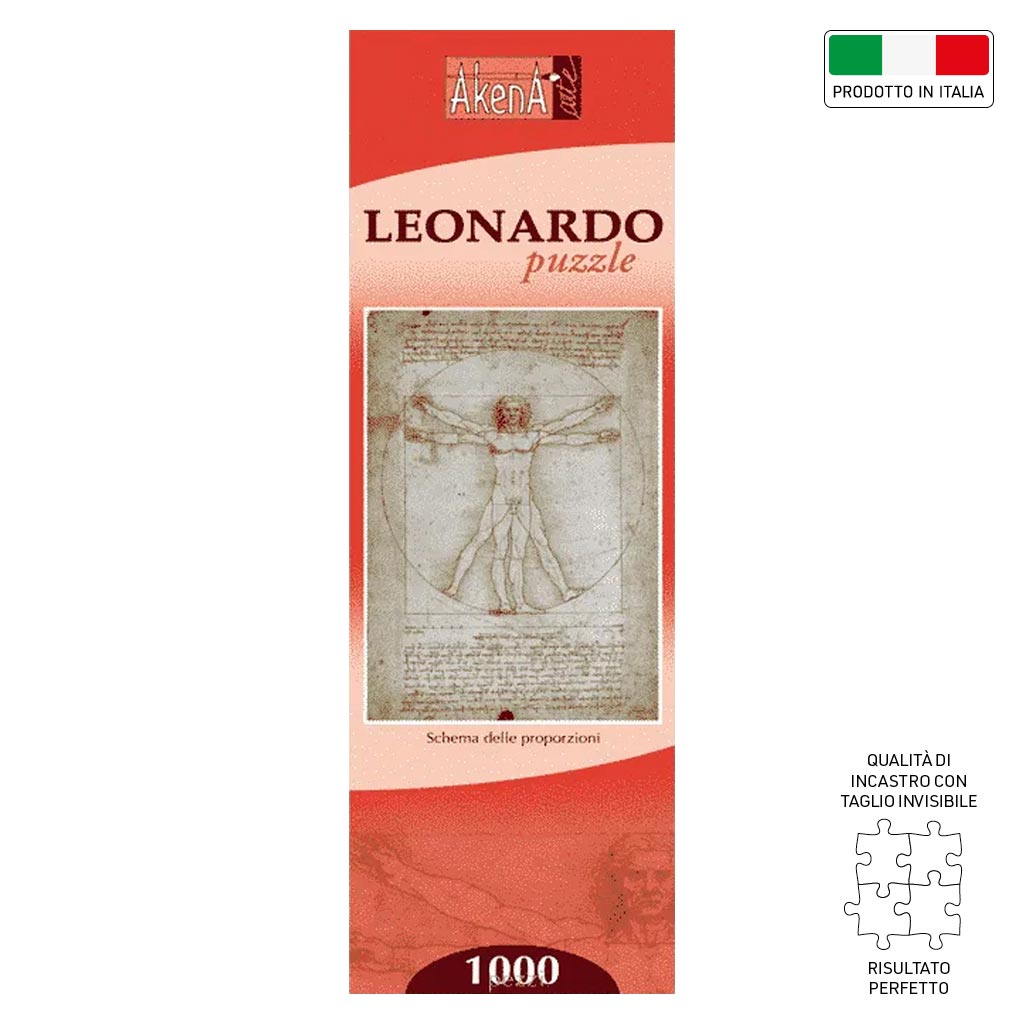
Leonardo da Vinci’s Vitruvian Man Puzzle is one of the most famous and well-known works in the history of art. Indeed, through this magnificent Renaissance art puzzle , you can discover, piece by piece, one of the most fascinating works of 15th-century art.
The Vitruvian Man is a pen and ink drawing on paper measuring 34.4 cm x 24.5 cm by Leonardo da Vinci. It is housed in the Cabinet of Drawings and Prints of the Gallerie dell’Accademia in Venice.
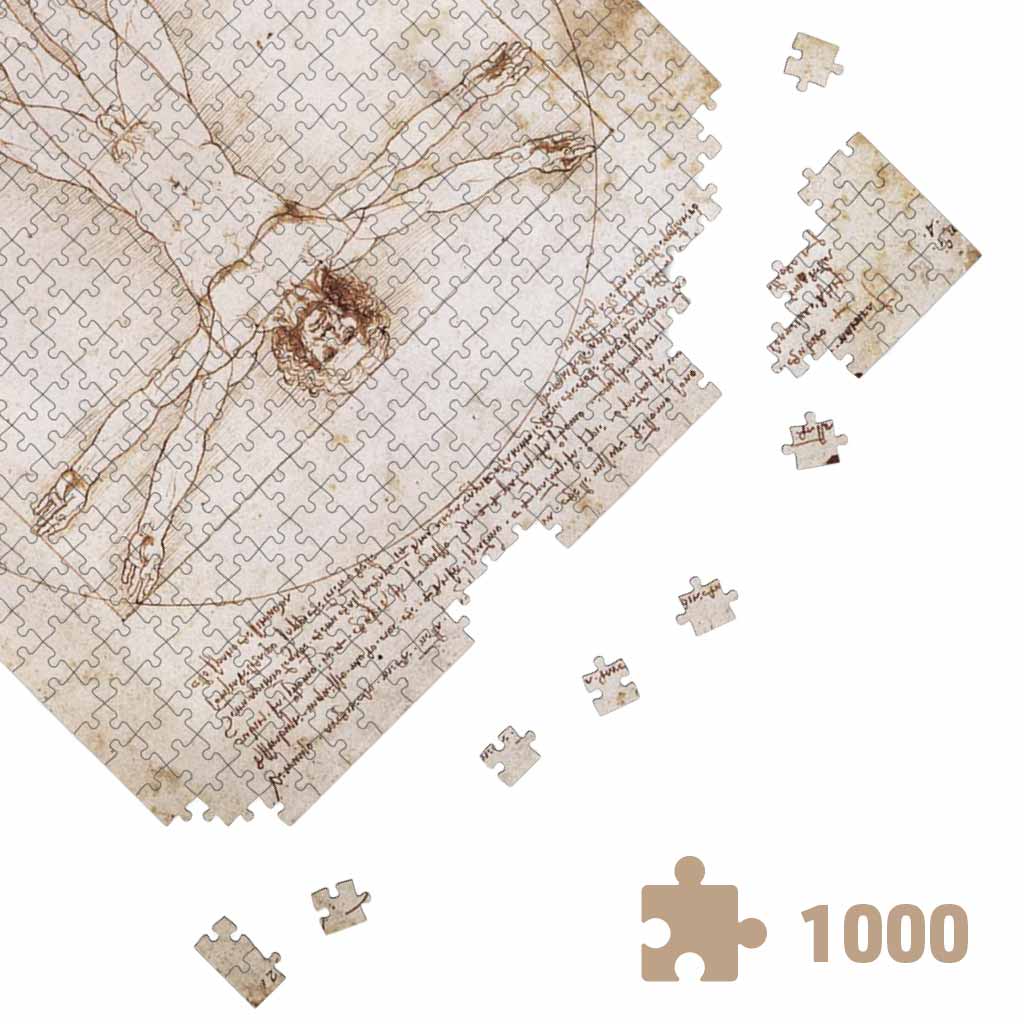
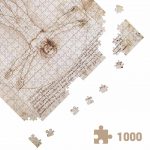
Thanks to this beautiful 1000-piece art puzzle from Akena, you can also enter the magnificent world of Leonardo da Vinci’s art and understand the beauty of the works of the great Tuscan master.
Leonardo da Vinci’s Vitruvian Man Puzzle is one of the greatest examples of Italian Renaissance art. Indeed, this drawing captures the very essence of the Florentine Renaissance.
The Leonardo da Vinci puzzle in question is one of the most famous subjects in the history of art and is suitable for both the most avid puzzle builders and beginners.
The Vitruvian Man puzzle by Akena is handcrafted.
Puzzle 100% made in Italy.
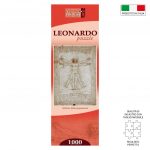
 | Number of pieces 1000 |  | Brand Akena |
 | Puzzle dimensions (cm) 68 x 48 |  | Box dimensions (cm) 42 x 14 x 5 |
Vertical layout box
less cumbersome
Famous art subject
Italian Renaissance art
1000 pieces
Standard grid
English art historian Kenneth Clark described Leonardo da Vinci as the most doggedly curious man in history.
Indeed, his broad range of interests and his artistic and scientific abilities were astonishing, but there was a price to pay for this versatility: too often Leonardo did not complete his projects because while he was working on them his mind became passionate about new adventures.
This defect was well known and in the 16th century Giorgio Vasari wrote in his Lives of the Most Excellent Architects, Sculptors and Painters that Leonardo could have achieved greater results if he had not been so fickle and inconstant, because he was able to apply himself to many activities, but abandoned them as quickly as he began them.
Leonardo’s clients often complained about his tendency to neglect completion, and in one case they launched a lengthy legal action against him, accusing him of breaching the terms of a contract. On another occasion, it is said that, as soon as he accepted a commission for a painting, Leonardo began studying the protective varnish, prompting the client to say that the artist would never accomplish anything, since he was thinking about how to finish the work before even starting it.
Leonardo himself was aware of the drawbacks inherent in the multiplicity of his genius. In the last years of his life he tried in vain to organize his papers, where often on the same sheet there could be notes and drawings relating to totally different subjects. But
at a certain point he turns to the reader, begging him not to blame him because the arguments were numerous and his memory could not retain them.
Among these papers was Leonardo da Vinci’s famous Vitruvian Man.
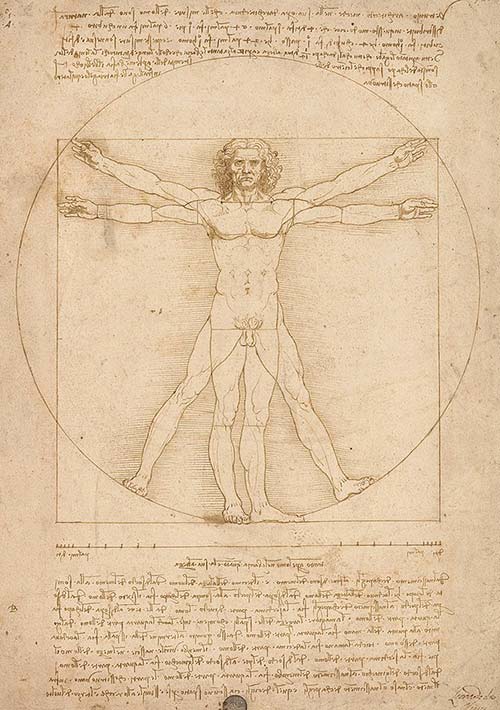
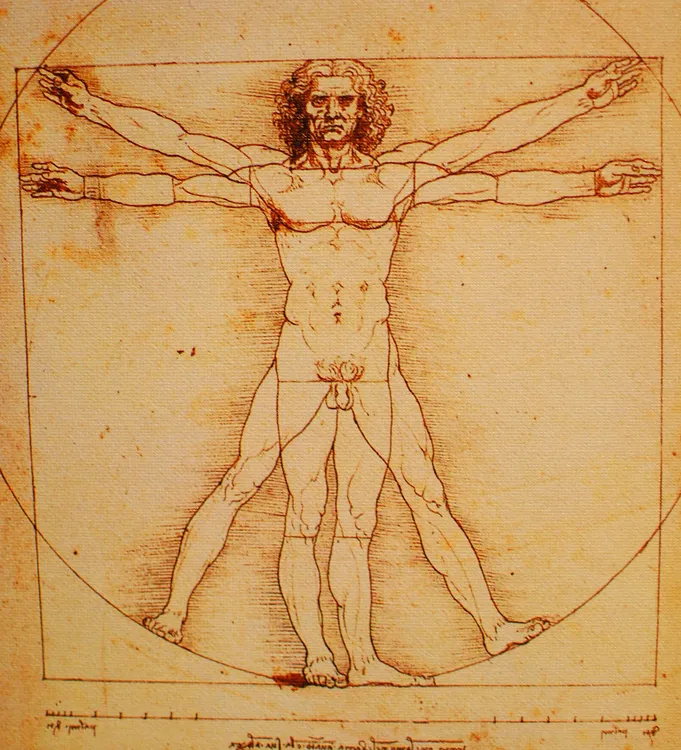
The Vitruvian Man, originally known as The Proportions of the Human Body According to Vitruvius, is a drawing by Leonardo da Vinci made around 1490.
It is accompanied by notes based on the work of the Roman architect Vitruvius, from whom it takes its name and inspiration. The drawing, ink on paper, depicts a man in two superimposed positions with his arms and legs apart, inscribed within a circle and a square.
The drawing represents Leonardo’s concept of the ideal proportions of the human body .
Its inscription in a square and a circle comes from a description by the ancient Roman architect Vitruvius in Book III of his treatise De architectura .
The Vitruvian Man is housed in the Cabinet of Drawings and Prints at the Gallerie dell’Accademia in Venice. Like most works on paper, it is only occasionally exhibited to the public and is therefore not part of the museum’s regular exhibition.
Leonardo was fascinated by the human body: his knowledge, gained through the dissection of cadavers, was very advanced for his time, and his work is rich in anatomical observations such as the study of hearts and blood vessels.
In his portraits, the artist created faces of extraordinary beauty, but also images of stark realism, such as the five grotesque heads. The famous diagram, taken from Vitruvius’s De Architectura, relating to the proportions of the human body illustrates how a man standing erect with outstretched arms can be perfectly inscribed within a circle and a square.
For Leonardo, drawing is the letter, the word, the sentence, the sentence: instead of expressing himself with words, he expresses himself through drawing with silverpoint, pencil, charcoal, or pen. His is an ideal form of writing, following the movements of his thoughts, his gaze upon the life of things, recording them with extraordinary immediacy.
In addition to free drawings in which he expressed his feelings and ramblings, Leonardo also left us numerous sketches that illustrate the genesis of his painted and sculpted works: they are studies that capture details of the composition—a flower, an animal, a simple tuft of grass—but above all, they are faces and figures that reveal the artist’s insistence on a pose, a gesture, an attitude for each work, until he found the expression capable of giving form to his creation.
Show reviews in all languages (1)
Complimenti!
hai una vera passione per l'arte!
Visto che sei arrivato fino a qui, meriti un premio!
Ecco uno sconto del 10% per il tuo prossimo capolavoro! ✨
25,00€ Original price was: 25,00€.19,90€Current price is: 19,90€.
 Hot
Hot


Dianora Batini –
Splendido puzzle perfetto per il salotto di casa mia