

| Numero pezzi | |
|---|---|
| Marca | |
| Atmosfera | |
| Artista | |
| Occasione | |
| Museo d'arte | Art Institute of Chicago, Chicago, São Paulo Museum of Art, Brazil |
| Dimensioni dell'opera | 92 cm x 65 cm |
| Difficoltà | |
| Dimensioni puzzle | 68 cm x 48 cm |
| Dimensioni scatola | 38 cm x 26.5 cm x 5.5 cm |
| EAN | 4062069351833 |
5 motivi per acquistare i nostri puzzle d'arte





27,00€
27,00€
Out of stock
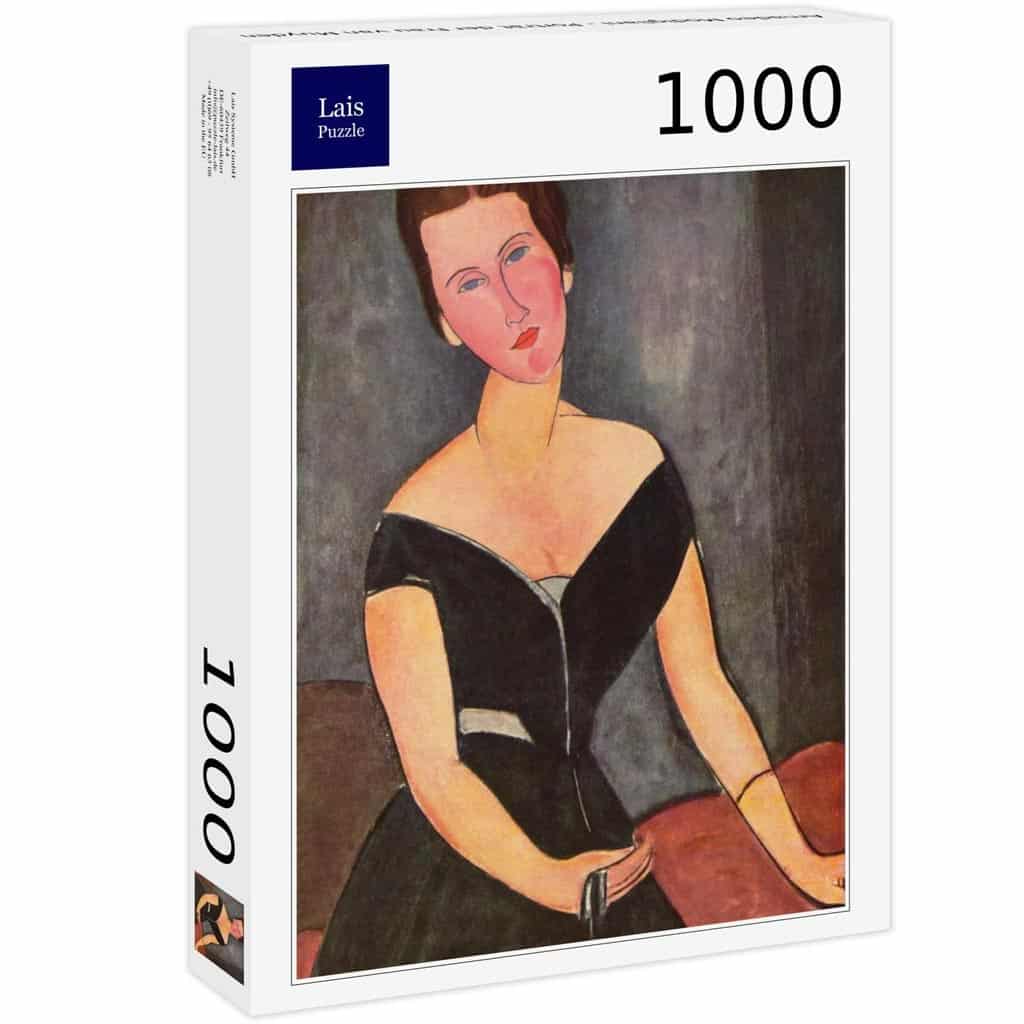
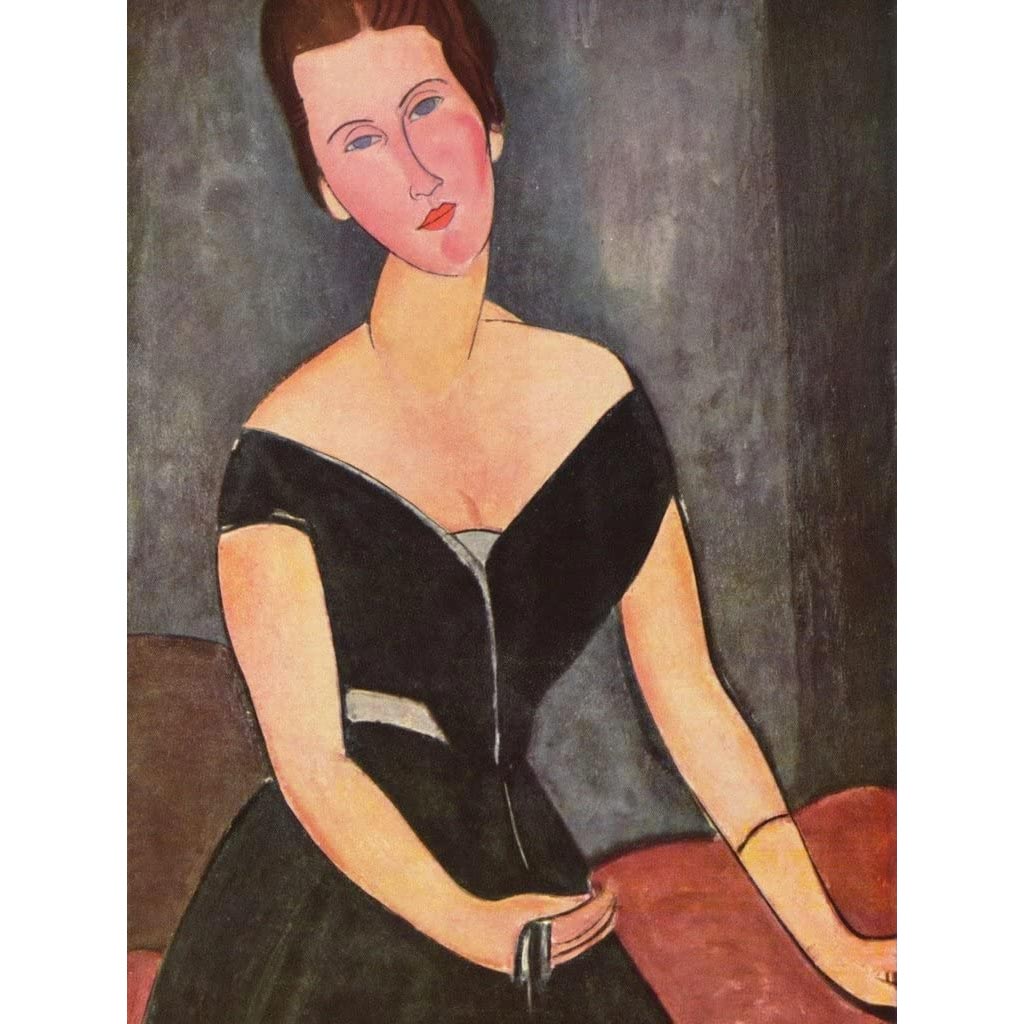
Discover Modigliani’s art style and challenge yourself with the wonderful 1917 portrait, Modigliani Portrait of Mrs. Van Muyden 1000-piece puzzle
Created in 1917 by the Italian painter Amedo Modigliani, it portrays one of the many women who experienced the beauty of being painted by this great master in his portraits.
Puzzle Art thanks to the new splendid edition of the Lais brand is pleased to offer you this art puzzle.
Questo puzzle è momentaneamente esaurito.
Nel frattempo, ti suggeriamo alcuni puzzle d’arte che potrebbero piacerti!
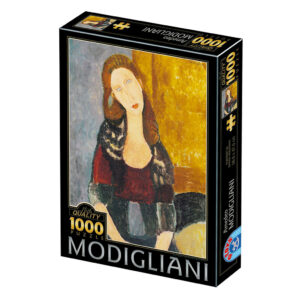
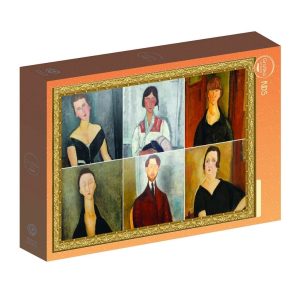
The Modigliani Portrait of Mrs. Van Muyden puzzle is a wonderful example of artistry and a challenge for true puzzle enthusiasts.
In fact, Modigliani’s Portrait Puzzles are wonderful canvases where you can learn, piece by piece, each individual panel by the Italian artist Amedeo Modigliani. The painting Portrait of Mrs. Van Muyden is a masterpiece.
This work is one of the most recognizable paintings in Modigliani’s art and is exhibited in the halls of the São Paulo Museum of Art in Brazil .
Discover Modigliani’s artistic style and challenge yourself with the wonderful 1917 portrait, Modigliani Portrait of Mrs. Van Muyden 1000-piece jigsaw puzzle.
Puzzle Art thanks to the new splendid edition of the Lais brand is pleased to offer you this art puzzle.
The colors of the puzzle are very bright and the details are extremely accurate and refined. The puzzle pieces are sturdy and fit together well.
 | Number of pieces 1000 |  | Brand Lais |
 | Puzzle dimensions (cm) 68×48 |  | Box dimensions (cm) 38 x 26.5 x 5.5 |
Well finished box
Wonderful gift idea
Rare work of art
Natural colors
1000 pieces
Standard grid
Portrait of Cécile van Muyden is an oil on canvas painting created in 1917 by the Italian painter Amedeo Modigliani.
It is currently preserved in the Museum of Art of São Paulo in Brazil.
Modigliani devoted much of his short, intense life to portraiture. His subjects were people chosen at random, sometimes genuine clients, and more often friends.
In each person portrayed, the artist tries to define the forms so that they speak of the soul they contain, this is especially true when Modigliani portrays his numerous friends, or transfers his own tormented and melancholic soul to them.
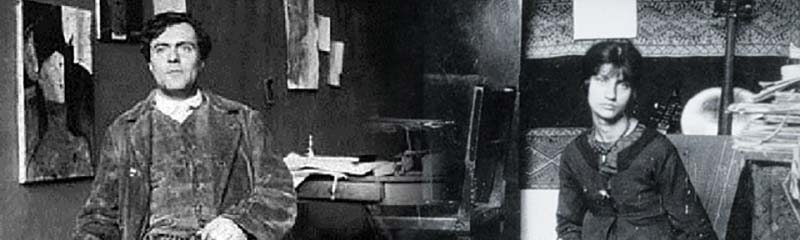
Modigliani was a nonconformist and reclusive artist. Indeed, he developed an unmistakable style in his art, creating paintings that depict close-ups of stylized human figures, embellished with intense, enameled colors.
His profound stylistic research, far removed from the fashions of the period, successfully blends rounded lines with a singularly bold harmony of colors. The transfiguration of faces seems to unfold in a melodious sequence of curves that reveal a moving and intimate humanity. Indeed, this refined deformation of figures, often mysterious and misunderstood, has kept his name from slipping into oblivion.
“Life is a gift from the few to the many: from those who know and have to those who do not know and have not.”
Despite his poor health, Amedeo Modigliani decided to move to Paris in 1906 and settled in Montmartre where he came into contact with the greatest artistic personalities of the time such as Picasso, Toulouse-Lautrec, Renoir, and Cézanne.
In the French capital, he led an unsuccessful and impoverished life, which forced him to frequently return home to his family and abandon sculpture, dedicating his attention solely to the art of the brush. In fact, it is said that his financial situation was so precarious that he often paid for drinks by drawing small pencil portraits called “dessins à boire,” or drinking drawings.
From his numerous lovers he had two children, both unrecognized.
However, the woman of his life was Jeanne Hébuterne, also a painter and model, nicknamed “noix de coco” or coconut, for the beauty of her face and long brown hair.
Amedeo Modigliani met Jeanne Hébuterne in April 1917. Their passionate and overwhelming union lasted just under three years, during which the artist portrayed her numerous times.
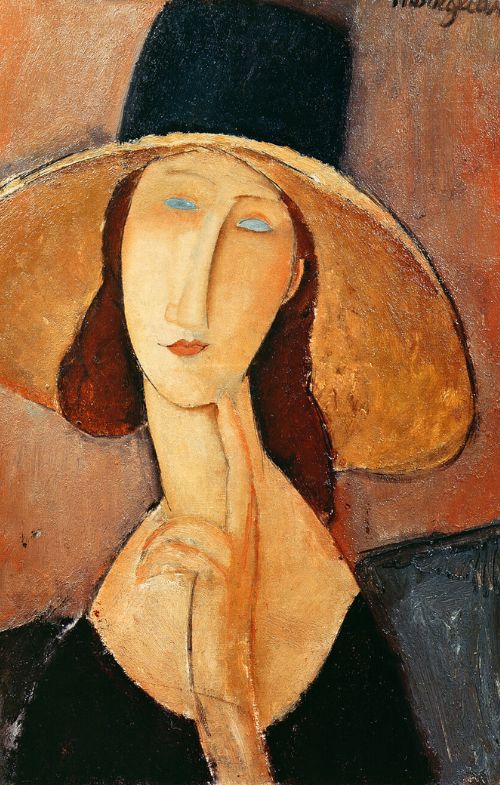
The painting showing her wearing a wide-brimmed hat, which seems to isolate her from her surroundings and almost protect her, dates back to 1918. The pensive pose that distinguishes her, with two fingers raised to her chin, is rendered melancholy by the tilt of her head, as in
Their relationship was so troubled and full of excesses that their furious arguments became famous throughout the neighborhood.
They had a daughter in 1918, also named Jeanne, whom her father, however, did not recognize. Two years later, as business began to improve, Modigliani agreed to marry Jeanne, who was pregnant with their second child.
Complimenti!
hai una vera passione per l'arte!
Visto che sei arrivato fino a qui, meriti un premio!
Ecco uno sconto del 10% per il tuo prossimo capolavoro! ✨
25,00€
 Hot
Hot

Reviews
There are no reviews yet.