

| Numero pezzi | |
|---|---|
| Marca | |
| Atmosfera | |
| Artista | |
| Occasione | |
| Museo d'arte | |
| Dimensioni dell'opera | 44 cm x 37.5 cm |
| Movimenti artistici | |
| Difficoltà | |
| Dimensioni puzzle | 50.8 cm x 68.58 cm |
| Dimensioni scatola | 33 x 25 x 5 cm |
| EAN | 9781087502526 |
5 motivi per acquistare i nostri puzzle d'arte





Home / Shop / Avant-garde art puzzle / Self-Portrait Van Gogh – 1000-piece jigsaw puzzle
22,90€
22,90€
Out of stock
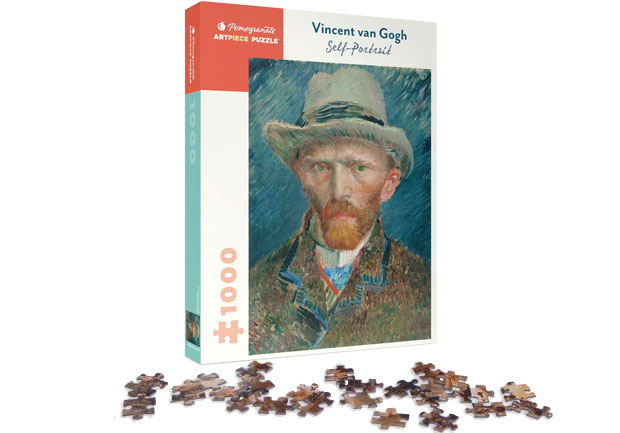
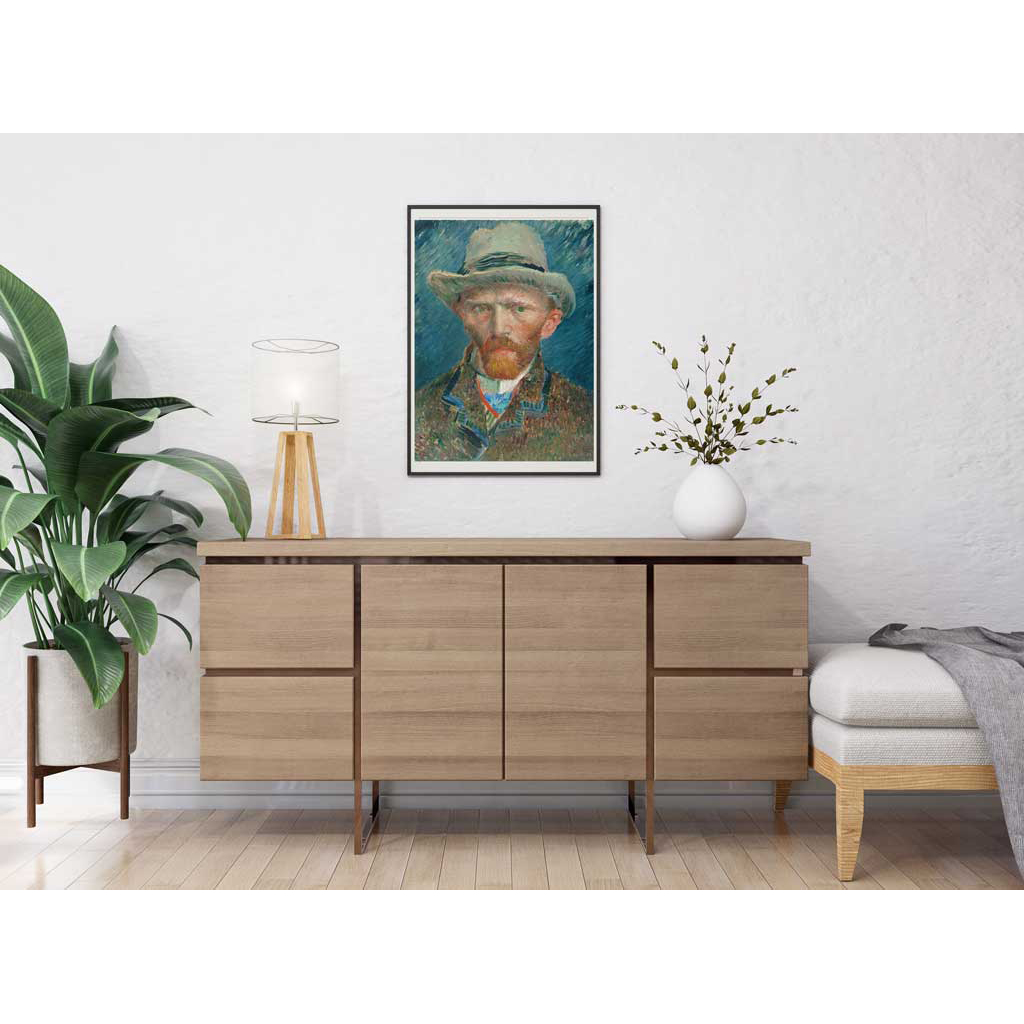
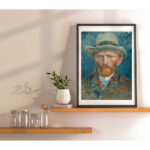
Self-Portrait Van Gogh is an important work, as it allows the observer to understand the artist’s state of mind . During the years in which this painting was created (1887), the painter was living with his brother Theo in Paris and here he met other famous painters such as Toulouse-Lautrec and Émile Bernard who in one way or another influenced the style of this legendary artist; these two being Impressionist painters, they led Van Gogh to use lighter tones in his works that allowed the entire painting to stand out completely.
Questo puzzle è momentaneamente esaurito.
Nel frattempo, ti suggeriamo alcuni puzzle d’arte che potrebbero piacerti!
Self-Portrait Van Gogh Puzzle is one of the most fun and fascinating ways to discover art piece by piece.
Thanks to this beautiful 1000-piece art puzzle from the Pomegranate brand, you can discover all the emotional strength and density of the colors of the great master of post-Impressionist art: Vincent Van Gogh.
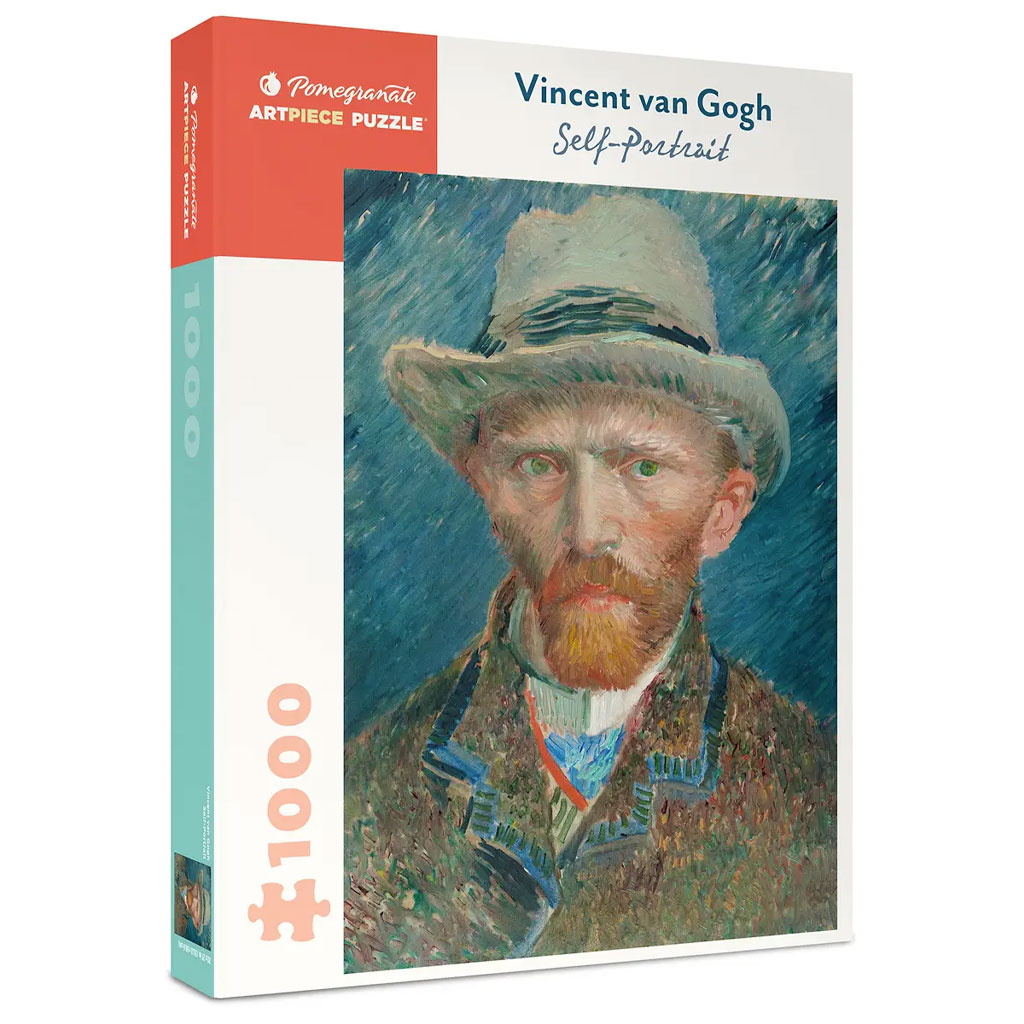
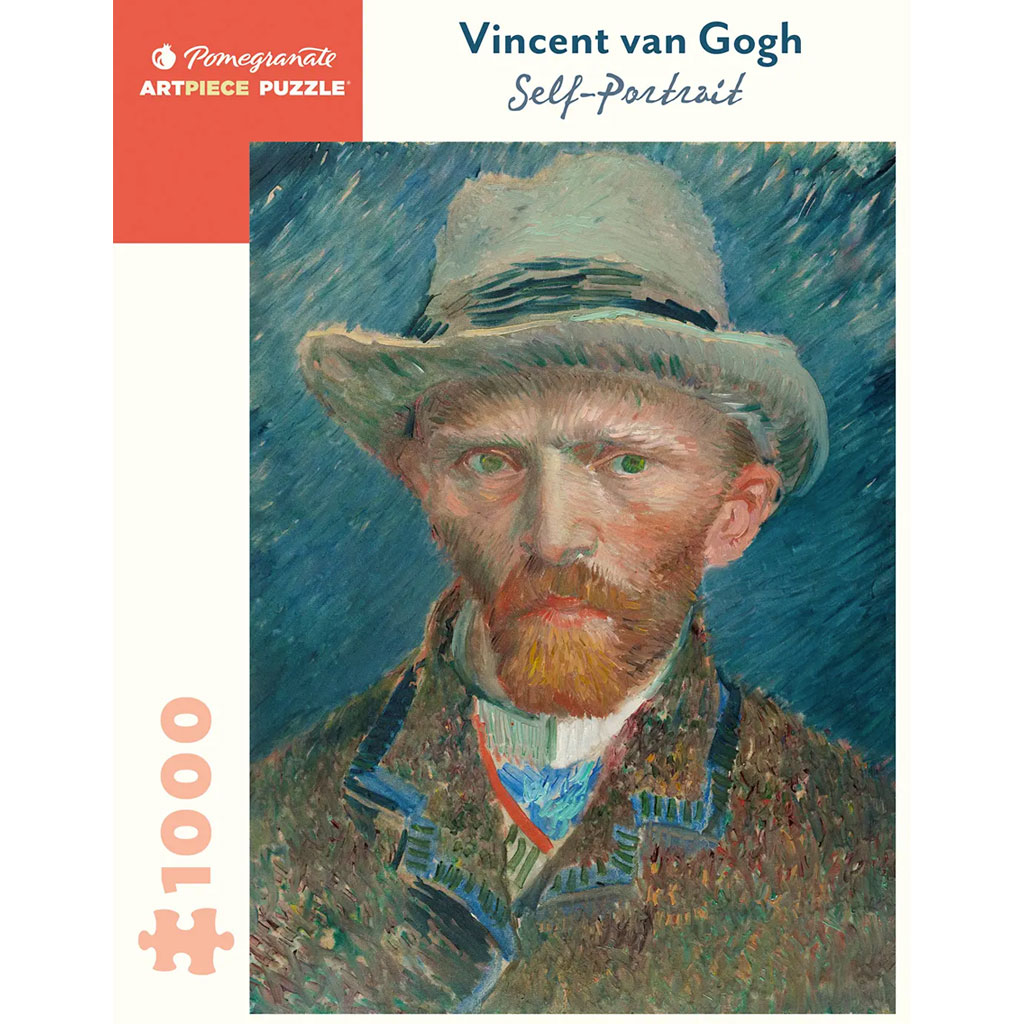
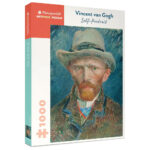
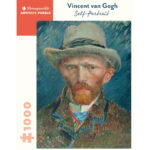
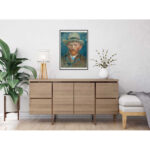
The subject of the puzzle It is the self-portrait of the Dutch painter Vincent van Gogh, made in 1887.
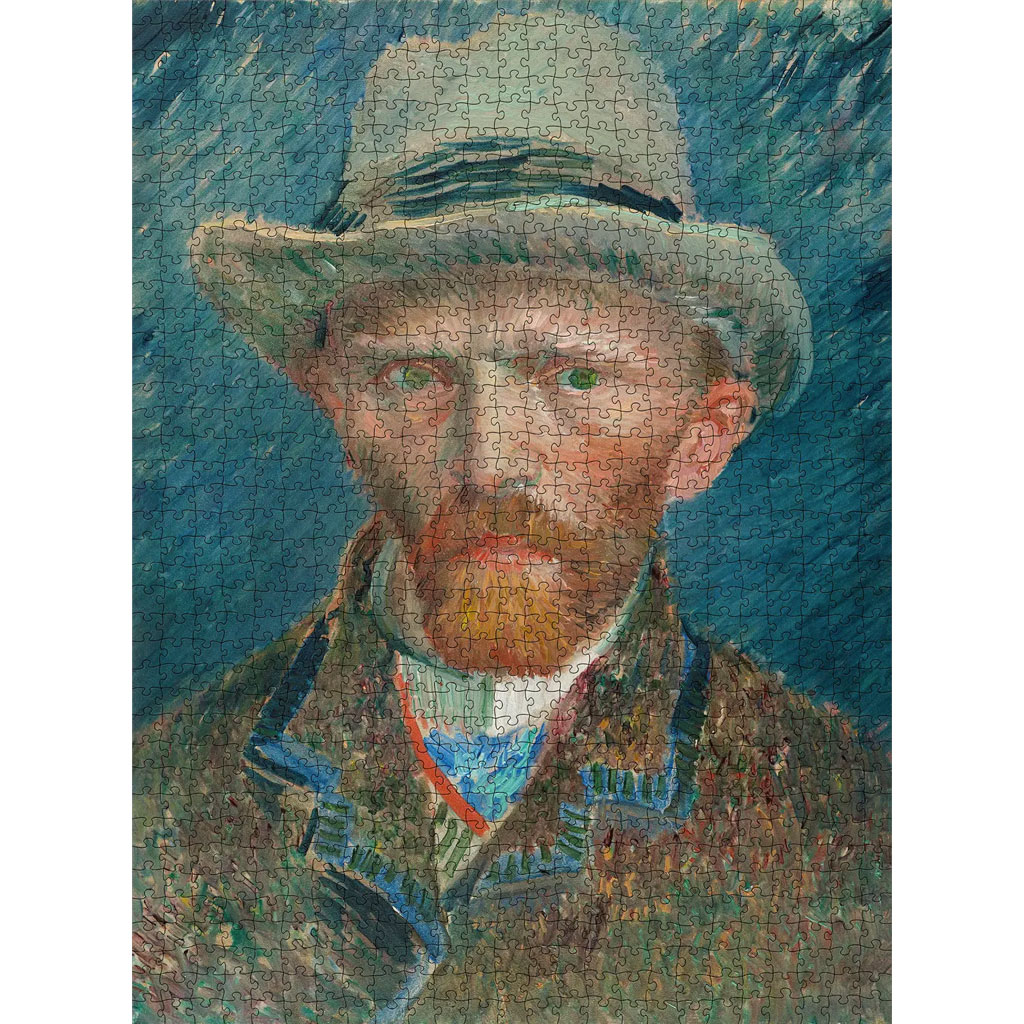
This puzzle is suitable for both experienced puzzle builders and beginners thanks to its two-dimensionality and clearly identifiable colored areas that make it easy to build.
The 1000-piece Van Gogh Self-Portrait puzzle from Pomegranate is a fascinating example of post-impressionist art.
There are over 43 self-portraits by the painter, painted or drawn, created over a decade of work. But among all his self-portraits, the one held at the Musée d’Orsay is perhaps one of his finest, if not his best. The work dates back to a particularly difficult time for Vincent: it was painted in September 1888 at the asylum in Saint-Rémy, a small town in Provence. The artist was admitted there because, following a two-month bout of madness, he attempted to kill himself by ingesting his own paints. Van Gogh looks at himself in the mirror without complacency, perhaps because painting one’s own portrait is an act that can raise many questions that can disturb an artist’s identity.
 | Number of pieces 1000 |  | Brand Pomegranate |
 | Puzzle dimensions (cm) 50.8 x 63.5 |  | Box dimensions (cm) 33 x 25 x 5 |
Well finished box
Wonderful gift idea
Famous work
Bright colors
1000 pieces
Standard grid
The Van Gogh Self-Portrait , made in 1887 when the artist had several recurring motifs throughout his work: landscapes, night scenes, floral still lifes and the self-portrait was the one he returned to often.
With his iconic red beard and bright green eyes, this painting shows the artist during his stay in Paris, when he was beginning to experiment with brighter colors. The self-portrait reproduced as this 1,000-piece puzzle is one of over 25 he completed during his two years in the City of Light.
This painting also contains all the characteristics that made Van Gogh famous, such as the typical brush stroke and the colours.
In this painting, in fact, Van Gogh portrays himself wearing the clothes of a typical Parisian: hat, jacket and tie and with a stern and attentive gaze that seems to be projected onto something in front of him.
He painted this picture immediately after his encounter with the Impressionists, which allowed him to approach some new techniques, such as Seurat ‘s divisionism, which he takes up again in this work with some reformulations.
During the years in which this painting was created, the painter was living with his brother Theo in Paris and there he met other famous painters such as Toulouse-Lautrec and Émile Bernard , who in one way or another influenced the style of this legendary artist. Being these two Impressionist painters, they encouraged Van Gogh to use lighter tones in his works that allowed the entire painting to stand out completely.
Analyzing this Van Gogh self-portrait in detail, several distinctive elements emerge; starting from the most superficial elements, the subject’s very serious expression immediately catches the eye. The center of the painting is the painter’s melancholic gaze , from which all the brushstrokes seem to emanate.
Van Gogh’s brushstrokes seem to have a life of their own, snaking in different directions, creating a dynamic, textured effect. The fixed gaze and apparent calm, conveyed by his gaze and facial expression, contrast with the agitation and movement of his brushstrokes.
“I prefer to paint the eyes of men than cathedrals, because there is something in the eyes of men that is not in cathedrals.”
With these words Van Gogh explains his obsession with human figures and his incessant search for the innumerable facets of humanity not only in others but above all in himself.
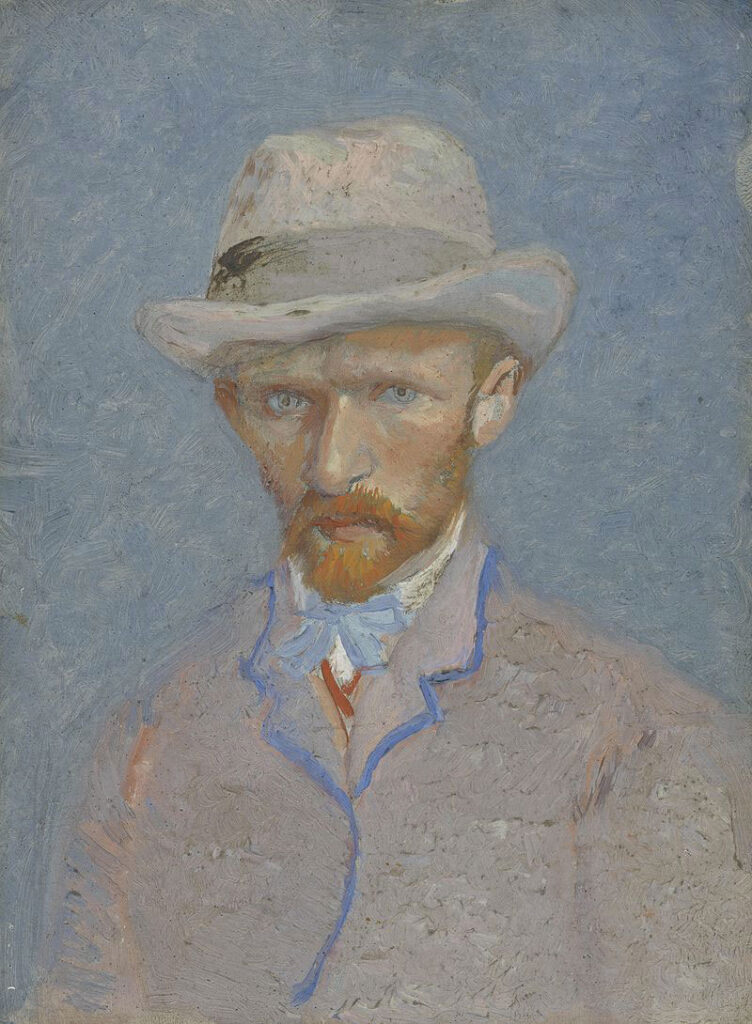
Van Gogh’s self-portraits fully represent a new awareness of the artist’s conception of his role: a marginal figure in relation to society, not integrated into it, but precisely for this reason capable of seeing further.
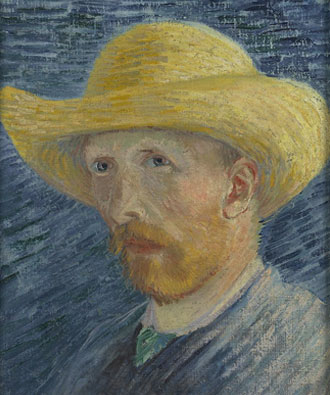
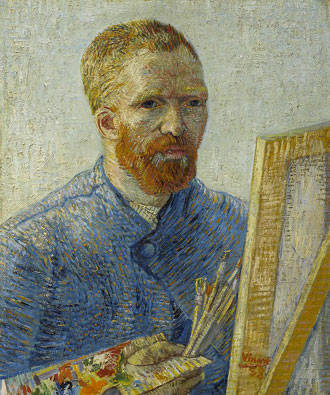
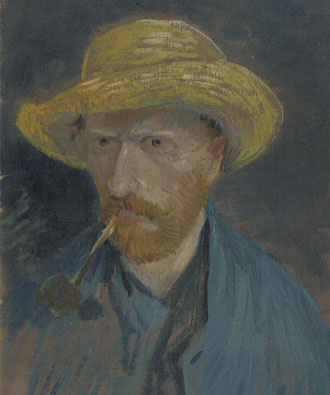
In fact, he paints himself a lot because he considers his person central to his painting, so much so that he dedicates a self-portrait to each step of his artistic evolution.
For Van Gogh, self-portraits became an opportunity to experiment with perspective and the representation of his own reflection in the mirror. What appears to be the right side of his face is actually the left side, as he looks in the mirror. These paintings didn’t just serve as a pictorial exercise; on the contrary, he sought to capture all his distress on canvas, each time capturing different aspects of himself and his personality. Therefore, celebrating one’s image and body is no longer a way to elevate one’s self, but a therapeutic exercise, and this is precisely the best explanation for such a dense series of self-representations.
Complimenti!
hai una vera passione per l'arte!
Visto che sei arrivato fino a qui, meriti un premio!
Ecco uno sconto del 10% per il tuo prossimo capolavoro! ✨
49,99€

Reviews
There are no reviews yet.